
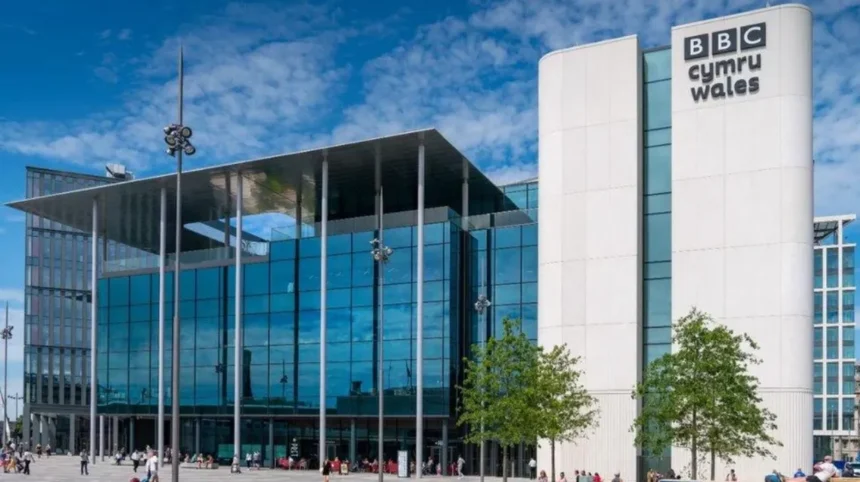
For decades, British television operated on an unspoken rule – if you wanted to make a big-budget drama, you had to be in London. That rule is officially dead. Wales has become one of the biggest backdrops in today’s television.
One of the biggest shows that have been produced here in Cardiff is BBC’s Sci-Fi show Doctor Who. In September 2003, the BBC announced that Doctor Who would return and be filmed in Cardiff. Iconically, when the show aired in 2005, we saw Cardiff get transformed into London, with the Queen Arcade in Cardiff central becoming a London Underground station.
The show was produced by BBC Wales and the Welsh independent production company Bad Wolf. The programme did not just show off Wales in the United Kingdom but on a global scale, as Disney+ picked up the show in 2023. Currently, the show has been put on hiatus by the BBC to give the show time to find a new production company, as the show has been put out for tender. During an interview about Doctor Who and the end of the ‘Bad Wolf Era’ on BBC Radio Wales, CEO of Bad Wolf Jane Tranter said, ‘I am absolutely sure it will be Wales based’, when Doctor Who makes its return.
Additionally, the hit Netflix show The Crown also filmed in Wales, during its production of its third series. Caernarfon Castle was used to recreate the 1969 investiture ceremony of Prince Charles (now King Charles) as the Prince of Wales. Caernarfon Castle was not the only location used; the Big Pit National Coal Museum in Pontypool was also used for mining-related scenes in the iconic retelling of the Aberfan disaster episode. The third season of The Crown was watched in 21 million households globally during its first four weeks on Netflix.
We can’t talk about the Welsh television scene without mentioning one of our own soap operas. Pobol y Cwm is the longest-running television soap opera produced by the BBC, with it starting in 1974 on BBC One Wales, it later moved to S4C in 1982. In 2019, the show reached its 8000th episode, and in 2024, the show celebrated its 50th anniversary. The show’s production locations have not moved outside of Wales, with it originally being filmed at Broadcasting House, Llandaff. In 2011, it moved to BBC Studio: Raoth Lock, where it still films. Back in June 2026, S4C released its week-ending viewing figures, with Pobol y Cwm bringing in 43,000 viewers, making it one of S4C’s biggest and most-watched shows, still 52 years after its first broadcasting.
Not only has Wales hosted some of the biggest shows on television, but Cardiff is widely recognised as one of the UK’s largest media production centres outside of London, with it ranking the third-largest film and television cluster in the country. Cardiff houses over 600 independent TV production firms and major broadcasters, including BBC Wales, ITV Wales and S4C. In the world of digital publishing, Cardiff-based Wales Online became the UK’s biggest regional news brand, pulling in over 8.9 million monthly visitors, with many smaller independent outlets making their own way up.
As one of the UK’s biggest growing media outlets, Wales has proven that world class television does not always have to come from London; it can come from small towns in Wales. From the streets of Cardiff being disguised as London Underground stations to global streaming giants taking over our small communities, Wales has rewritten the rules of where British television needs to come from. Wales is no longer the best-kept secret in media production; it is a powerhouse in its own right.