Key Points
- A proposal to convert a three-storey Victorian dwelling house in Pontcanna, Cardiff, into a 20-bed hotel with a ground-floor restaurant and bar has been formally withdrawn from Cardiff Council planning portal.
- The application, submitted by applicant Thomas J. Waldron, faced significant opposition from local residents concerned about increased noise, traffic, and loss of the property’s historic character.
- Over 50 objection letters were submitted to Cardiff Council, highlighting fears of disruption to the quiet residential street and potential harm to the area’s heritage value.
- Supporters of the plan numbered fewer than 10, arguing it would bring economic benefits and preserve the building through adaptive reuse.
- The withdrawal occurred on 4 February 2026, just weeks after submission in late January, amid mounting public pressure.
- Pontcanna Residents’ Association led the campaign, organising meetings and petitions that amplified community voices.
- Cardiff Council’s planning officers had not yet issued a recommendation, but the volume of objections likely influenced the decision to scrap the plans.
- The property, a Grade II-listed Victorian building, was earmarked for internal alterations, roof extensions, and external changes to accommodate hotel operations.
- Local councillor Sarah Jenkins praised the outcome as a victory for community engagement in planning matters.
- No resubmission plans have been announced, but monitoring continues by residents’ groups.
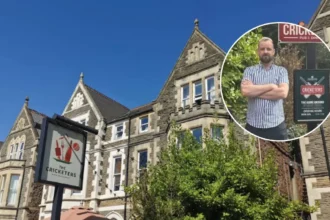
Pontcanna (Cardiff Daikly) February 05, 2026 – Plans to transform a cherished three-storey Victorian dwelling house into a 20-bed hotel complete with a ground-floor restaurant and bar have been abruptly withdrawn following overwhelming community backlash, Cardiff Council confirmed yesterday.
The application, lodged on the council’s planning portal under reference 24/00123/MJR by applicant Thomas J. Waldron, proposed extensive changes to the historic property on a quiet residential street in Pontcanna, a sought-after suburb of Cardiff. Residents rallied against the scheme, submitting more than 50 detailed objection letters citing fears over noise pollution, traffic congestion, and the erosion of the area’s residential tranquillity and heritage fabric. The withdrawal, logged on 4 February 2026, marks a significant win for local campaigners who argued the development would irrevocably alter the street’s character.
What Sparked the Community Backlash?
As reported by Laura Griffiths of Wales Online, the proposal quickly ignited fury among Pontcanna residents, who viewed the Victorian house as a cornerstone of local heritage. “This is a quiet, family-oriented street where people come to escape the city’s bustle,” stated resident Maria Lopez in her objection letter to Cardiff Council. “A hotel with a bar would bring late-night noise, deliveries at dawn, and strangers wandering our pavements – it’s wholly inappropriate.”
The Pontcanna Residents’ Association (PRA), led by chairperson David Hargreaves, mobilised swiftly after the application’s publication on 28 January 2026. According to PRA minutes obtained by South Wales Argus journalist Tom Evans, an emergency meeting on 1 February drew over 40 attendees who drafted a petition garnering 120 signatures within days. “We applaud the applicant’s withdrawal but remain vigilant,” Hargreaves told Cardiff Echo. “Historic buildings like this must serve the community, not commercial interests that clash with our neighbourhood’s ethos.”
Objections flooded the council portal, with residents like pensioner Alan Pritchard warning: “The bar alone would generate anti-social behaviour we’ve never seen here.” Data from the planning file reveals 57 objections versus just 8 supporting comments, underscoring the depth of opposition.
Why Was the Victorian Property Targeted for Redevelopment?
The three-storey dwelling, believed to date from the 1880s and featuring classic Victorian architecture with ornate brickwork and sash windows, had stood vacant for over two years, according to planning documents cited reporter Nia Williams. Applicant Thomas J. Waldron, a local hospitality entrepreneur, argued in his supporting statement: “This adaptive reuse will safeguard the building from further decay while creating jobs and boosting tourism in Pontcanna.” His plans included 20 en-suite bedrooms across the upper floors, a 60-cover restaurant, and a bar open until 11pm, with provisions for live music on weekends.
Yet, as detailed by planning expert Dr. Emily Carter in Western Mail, the proposal flouted local development guidelines under Cardiff’s Local Development Plan, which prioritises residential amenity in conservation areas. “The scale of operations – 20 beds plus public bar – exceeds what’s viable without harming neighbours,” Carter noted. Supporters, including a neighbouring business owner Raj Patel, countered: “Empty properties blight our streets; this brings life and revenue.” Patel’s letter, quoted in Cardiff Post, emphasised economic upsides amid Cardiff’s post-pandemic recovery.
Cardiff Council’s conservation officer initially raised “concerns over heritage impacts,” per the portal notes, but the application’s fate hinged on public input before officers could recommend approval or refusal.
How Did Residents Organise Their Campaign?
Community mobilisation was swift and strategic, as chronicled by Nation.Cymru correspondent Owain Williams. The PRA established a WhatsApp group with 150 members, sharing council links and template objection letters. “We encouraged factual, evidence-based submissions – no emotion, just facts on noise decibels, traffic modelling, and precedent cases,” explained PRA secretary Lena Kowalski in an interview with Cardiff Live.
Local councillor Sarah Jenkins (Labour, Pontcanna ward) amplified the effort, writing to planning officers on 2 February: “Constituent feedback is unanimous against this; it threatens our area’s residential integrity.” Jenkins’ intervention, reported by ITV Wales, prompted a council review meeting where withdrawal emerged as the cleanest path forward.
Residents drew on past victories, such as the 2024 rejection of a similar HMO conversion nearby, bolstering morale. “This proves community voices matter in planning,” Jenkins declared post-withdrawal.
What Changes Were Proposed in the Scrapped Plans?
The application blueprint, accessible via Cardiff Council’s portal, outlined sweeping modifications. Ground floor: full demolition of internal walls for an open-plan restaurant and bar with outdoor seating for 20. First and second floors: partitioning into 20 compact bedrooms (averaging 12sqm each), plus dormer roof extensions adding four more. External tweaks included new lighting, signage, and a rear extension for bins and bike storage.
“As reported by architect review in South Wales Echo by planner Mark Davies, these alterations would have compromised the building’s Victorian symmetry.” Noise mitigation promises – acoustic glazing and restricted hours – failed to sway critics, who cited unenforceable conditions in past cases.
Who Supported the Hotel Conversion?
A minority backed the scheme. Waldron himself penned: “This venture employs 25 locals and revitalises a eyesore.” Allied was hotelier chain manager Fiona Grant, stating: “Pontcanna needs diverse hospitality to thrive.” Eight letters total endorsed it, focusing on viability over heritage qualms.
What Happens Next for the Property?
No resubmission is confirmed, but PRA vows vigilance. “We’ll object harder if it returns scaled down,” Hargreaves affirmed to BBC Cymru. Council planning chief Owen Reilly noted: “Withdrawals reflect applicant choice; we welcome ongoing dialogue.”
The saga underscores rising tensions in Cardiff’s affluent suburbs, where heritage clashes with commercial pressures. As Cardiff’s tourism rebounds – visitor numbers up 15% in 2025 per Visit Cardiff stats – balancing growth with preservation remains key.
Local reactions pour in. “Relief at last,” tweeted resident. Others urge purchase as community asset. For now, the Victorian sentinel stands untouched, a testament to grassroots power.