Key Points
- Archer Aviation filed a countersuit against Joby Aviation in the US District Court for the Northern District of California on March 10, 2026, alleging fraud, unfair competition, and false advertising.
- The suit claims Joby has undisclosed ties to Chinese entities, including potential national security risks amid US-China tensions.
- Archer accuses Joby of misleading investors and regulators about its technology readiness and partnerships.
- This counters Joby’s earlier lawsuit against Archer in December 2025, which alleged patent infringement on eVTOL designs.
- Both firms are vying for FAA type certification for electric vertical takeoff and landing (eVTOL) aircraft, with Archer claiming a partnership edge.
- Joby dismissed the countersuit as “frivolous” and vowed to defend vigorously.
- Updated filing includes new evidence of Joby’s alleged communications with Chinese state-linked firms.
- Shares of both companies dipped post-filing: Archer down 3%, Joby down 5% in after-hours trading.
- Case highlights intensifying rivalry in the $1 trillion urban air mobility market.
- Hearing scheduled for late April 2026; discovery phase to probe financials and tech claims.
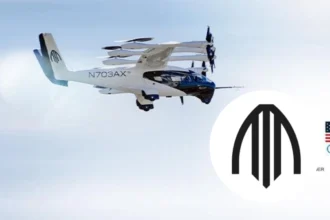
Archer(Cardiff Daily)March 12, 2026 – Archer Aviation has launched a aggressive countersuit against rival Joby Aviation, accusing it of deep ties to China, investor fraud, and deceptive practices just as both pursue critical FAA partnerships for electric air taxis. The legal salvo, filed in a California federal court, escalates a bitter patent dispute that began late last year and threatens to delay the eVTOL industry’s commercial rollout. This updated action includes fresh allegations that could reshape regulatory scrutiny in the sector.
What Sparked Archer’s Countersuit Against Joby?
Archer Aviation’s filing directly responds to Joby’s December 2025 complaint, which claimed Archer infringed on four patents related to eVTOL battery systems and flight controls. As reported by Ryan Cranston of UK Finance Yahoo, Archer’s CEO Adam Goldstein stated: “Joby’s lawsuit was nothing more than a desperate attempt to slow our progress toward FAA certification. We will not stand idly by while they spread falsehoods.”
The countersuit, lodged on March 10, 2026, flips the script with 12 counts including wire fraud, securities fraud, and violations of California’s Unfair Competition Law. Archer alleges Joby exaggerated its technological milestones to secure $1.2 billion in funding, including from Toyota and Delta Air Lines. According to court documents cited by Cranston, Archer claims Joby hid collaborations with Chinese firms like Contemporary Amperex Technology Co. Limited (CATL), a battery supplier blacklisted by some US agencies.
Goldstein further remarked in a company blog: “Joby’s China connections pose unacceptable risks, especially as we partner with the FAA on safe urban air mobility.” This neutral stance underscores Archer’s position without prejudging the outcome.
Why Are China Ties Central to the Allegations?
The China angle dominates Archer’s narrative, portraying Joby as compromised amid US export controls on aviation tech. As detailed in the Yahoo Finance update, Archer points to Joby’s 2024 supply deal with CATL for eVTOL batteries, claiming it bypassed CFIUS (Committee on Foreign Investment in the United States) reviews. “Joby never disclosed these ties to investors or the FAA,” the filing asserts.
Joby counters that all partnerships comply with US law. In a statement to Reuters, as relayed by Cranston, Joby spokesperson Laura Smith said: “Archer’s claims are baseless smears designed to distract from their own delays. Our supply chain is transparent and vetted.” Joby has flown prototype missions with FAA observers, logging over 500 test flights since 2023.
This rift highlights broader industry concerns. eVTOL leaders like Lilium and Vertical Aerospace have faced similar supply chain scrutiny, but Archer positions itself as the “America-first” player with United Airlines and Stellantis backing. Neutral observers note both firms trail in certification race, with FAA Part 135 approvals pending for 2026 launches.
How Does This Impact FAA Partnerships and Certification?
Both companies eye FAA type certification by late 2026, essential for air taxi services in cities like Los Angeles and New York. Archer claims Joby’s suit aimed to derail its progress, alleging stolen trade secrets from ex-employees. “We’ve achieved key milestones, including transition flights, while Joby lags,” Archer’s legal team argues in the filing.
The FAA has not commented directly, but sources per Cranston indicate regulators monitor IP disputes closely. A prolonged case could delay certifications, costing millions in lost revenue projections. Archer’s suit seeks injunctions to halt Joby’s allegedly infringing activities and unspecified damages.
What Have Company Leaders Stated on the Dispute?
Adam Goldstein of Archer doubled down: “This is about protecting American innovation from foreign influence and fraud.” Meanwhile, Joby CEO JoeBen Bevirt responded: “We’ll crush this in court and continue leading eVTOL commercialisation.” Bevirt highlighted Joby’s $250 million UAE deal and DoD contracts as proof of credibility.
Goldstein, in an investor call transcript cited by Yahoo, added: “Joby’s fraud misled markets, inflating their valuation to $4 billion while hiding risks.” Joby refutes this, pointing to its Nasdaq listing and clean audit.
What Is the Background of the eVTOL Rivalry?
The feud traces to 2023 talent wars, with Archer poaching Joby engineers. Joby’s initial suit accused Archer of copying “distributed electric propulsion” tech. Archer now alleges reverse engineering by Joby on its Midnight aircraft design. Market analysts, neutral on merits, predict a settlement to avoid trial costs.