Key Points
- A nuisance property at 30 Planet Street in Adamsdown, Cardiff, has been closed down following an application by South Wales Police under the Anti-Social Behaviour, Crime and Policing Act 2014.
- The closure order, granted by Cardiff Magistrates’ Court on 4 March 2026, prohibits anyone from entering the property for three months.
- Repeated calls and concerns from residents highlighted drug-related activities, including the distribution of crack cocaine and heroin, creating an atmosphere of intimidation and fear.
- The property had been taken over by non-residents who turned it into a hub for drug dealing, affecting tenants’ lives and the wider community.
- South Wales Police collaborated with Cardiff Community Housing Association (CCHA) to address the issue after other strategies failed.
- Neighbourhood Police Constable Rachael Shortis stated that the closure aims to restore safety and quality of life for residents.
- The house has been secured, and the tenant will not return.
- CCHA Director of Housing and Communities, Kirsty Ellis, praised the partnership with police, particularly Sergeant Bleddyn Jones’s team in Roath.
- Residents reported individuals frequenting the site at night to “ob” or consume drugs, leading to violence.
- This action follows extensive problem-solving, evidence gathering, and enforcement efforts.
- Similar past incidents in Cardiff, such as a 2018 closure in Grangetown on Thomas Street, involved council properties linked to drugs, anti-social behaviour, and prostitution.
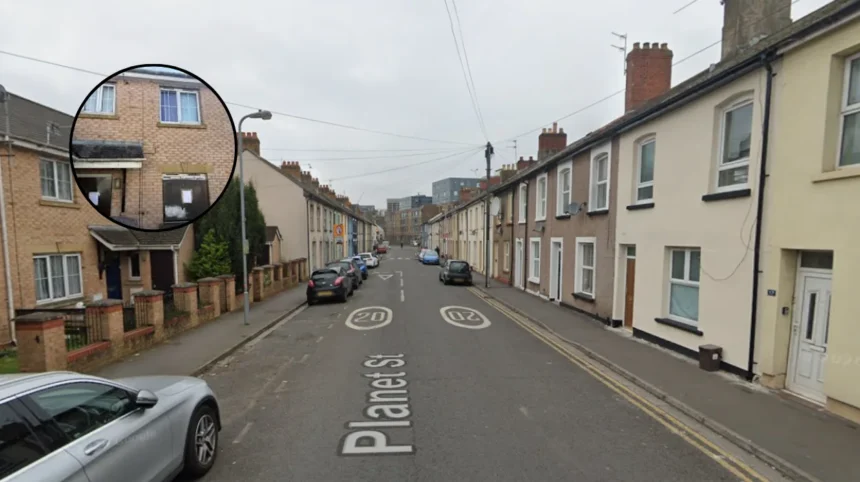
Adamsdown, Cardiff (Cardiff Daily) March 25, 2026 – A notorious nuisance property at 30 Planet Street in Adamsdown has been shuttered by court order after South Wales Police applied for its closure amid persistent drug dealing and anti-social behaviour that terrorised the local community.
- Key Points
- What Triggered the Police Application?
- How Did the Closure Order Come About?
- What Are Residents Saying About the Impact?
- Who Were the Key Players Involved?
- Why Was the Anti-Social Behaviour Act Used?
- What Happens Next for the Property?
- How Does This Fit Cardiff’s Broader Nuisance Crackdown?
- What Measures Prevent Future Issues?
- Community Reactions and Police Statements in Detail
- Housing Association’s Role Expanded
- Legal and Enforcement Specifics
- Wider Implications for Adamsdown
What Triggered the Police Application?
Residents endured months of disturbances at the Adamsdown address, with repeated calls to police reporting drug activity. As detailed in coverage by WalesOnline, individuals frequently visited the property at night to “ob” or consume substances, escalating to violence and fostering a climate of fear.
Neighbourhood Police Constable Rachael Shortis, as reported by WalesOnline, explained:
“The residence has effectively been taken over by non-residents who have established a hub for drug distribution, including crack cocaine and heroin. This situation has severely affected the lives of tenants and fostered an environment of intimidation and fear within the community.”
Various interventions were attempted prior to the closure, but the severity of the disorder necessitated stronger action under the Anti-Social Behaviour, Crime and Policing Act 2014, which empowers authorities to secure closure orders for ongoing public nuisances.
How Did the Closure Order Come About?
South Wales Police partnered with Cardiff Community Housing Association (CCHA) to build a case. According to South Wales Listens, on 4 March 2026, Cardiff Magistrates’ Court granted a full Closure Order following
“continued reports of anti-social behaviour (ASB) and its impact on the local community.”
The joint effort involved gathering evidence, partner engagement, and positive enforcement, as outlined in the South Wales Police update. The order remains in effect for three months, barring unauthorised entry, with the property now secured and the tenant evicted.
Carmarthenshire News Online initially broke the story, noting “repeated calls and concerns regarding” the property, aligning with the police application that led to its shutdown.
What Are Residents Saying About the Impact?
Local residents expressed relief, having lived under an “atmosphere of intimidation and fear,” a phrase echoed across reports. Constable Shortis, quoted in WalesOnline, added:
“I hope this closure will enhance residents’ sense of safety in their neighbourhood, elevate their quality of life, and finally provide them with some tranquillity.”
The closure addresses a hub that disrupted daily life, with non-residents dominating the space for illicit trade. Wales247 reported on social media and its site:
“A property at the centre of ongoing drug-related concerns in Cardiff has been shut down following joint action by police and a housing association.”
This mirrors historical patterns; in 2018, Cardiff Journalism (The Cardiffian) covered a Grangetown closure on Thomas Street, where residents welcomed the end to “intimidation, fear and despair” from drug-related anti-social behaviour and prostitution.
Who Were the Key Players Involved?
South Wales Police led the charge, with Constable Rachael Shortis providing frontline insights. Sergeant Bleddyn Jones’s Roath team received specific praise from CCHA.
Kirsty Ellis, Director of Housing and Communities at CCHA, as reported by WalesOnline, stated:
“This achievement stems from the strong collaboration our team at CCHA South Wales, especially Sergeant Bleddyn Jones’s proactive team in Roath. We are committed to continuing our partnership with local law enforcement throughout the city.”
Cardiff Magistrates’ Court issued the ruling on 4 March 2026, enforcing the three-month ban.
Why Was the Anti-Social Behaviour Act Used?
The Anti-Social Behaviour, Crime and Policing Act 2014 enables swift closures for properties causing significant harm. In this instance, it targeted a site with
“ongoing disturbances or illegal activities that pose a significant nuisance to the public,”
South Wales Listens confirmed the Act’s role, noting extensive prior work before court intervention. Past cases, like Caerphilly’s council property closure for “persistent incidents of nuisance,” highlight its regional application.
What Happens Next for the Property?
The site at 30 Planet Street is boarded up, with no re-entry allowed for three months. Authorities confirm the tenant’s permanent departure, aiming to prevent recurrence.
CCHA and police vow ongoing vigilance. Ellis emphasised sustained collaboration city-wide. Should issues persist post-order, further legal steps could follow, as seen in prior Cardiff enforcements.
How Does This Fit Cardiff’s Broader Nuisance Crackdown?
Cardiff has a history of such operations. The 2018 Grangetown case, reported by The Cardiffian (cardiffjournalism.co.uk), involved Cardiff Council and police closing a Thomas Street property after complaints of suspicious activities, drugs, and prostitution. A closure notice preceded the full court order.
More recently, this Adamsdown action builds on partnerships, contrasting with isolated council efforts elsewhere, like Caerphilly. Social media from Wales247 amplified the story, underscoring community-wide drug concerns.
What Measures Prevent Future Issues?
Police and CCHA’s model includes proactive policing and housing oversight. Constable Shortis noted prior strategies’ limits, justifying the closure.
Residents can report via services like Cardiff’s Night-time Noise line, though this case centred on drugs over mere noise. The three-month window allows reset, with eviction ensuring non-return.
Community Reactions and Police Statements in Detail
Beyond fear, residents faced direct impacts. WalesOnline detailed night-time gatherings leading to violence, prompting the “climate of intimidation.”
Constable Shortis elaborated on the hub’s takeover:
“Various other strategies were attempted, but given the extent of the disorder, a closure notice was considered the most effective solution.”
South Wales Listens provided the timeline:
“Today, 4th March 2026, a Full Closure Order was granted… Working in partnership with CCHA, South Wales Police have listened carefully to the concerns raised by residents.”
Carmarthenshire News Online’s snippet flagged “repeated calls and concerns regarding…” without further specifics, but corroborated the police-led shutdown.
Housing Association’s Role Expanded
CCHA’s involvement was pivotal. Ellis highlighted “our team CCHA South Wales,” crediting Sergeant Jones explicitly.
This partnership model, per South Wales Police, encompassed “gathering evidence, engaging with partners, and taking positive enforcement action.”
Legal and Enforcement Specifics
The Magistrates’ Court order on 4 March 2026 is unambiguous: no entry for three months. Securing followed immediately.
In the 2018 precedent, Cardiff Magistrates’ issued a similar order post-notice, showing procedural consistency.
Wider Implications for Adamsdown
Adamsdown benefits from restored peace, potentially boosting tenant confidence. Shortis’s hope for “tranquillity” resonates amid past despair.
Ongoing police-CCHA ties promise monitoring, deterring copycats. WalesOnline’s coverage, published 18 March 2026, captured the immediacy.