Key points
- Cardiff Council is scheduled to vote on Thursday 26 March 2026 on a motion to endorse the global Fossil Fuel Non‑Proliferation Treaty, an international initiative aimed at phasing out coal, oil and gas worldwide.
- If passed, Cardiff would formally join a growing network of cities, regional authorities, national governments and parliamentary bodies that back the treaty, including London, Edinburgh and Birmingham, the European Parliament, and 18 countries such as Colombia and Pakistan.
- The motion would commit Cardiff Council to endorse the treaty’s core objectives: a just global transition away from fossil fuels, no new coal, oil or gas developments, and a fair phase‑out of existing fossil‑fuel production so that no worker, community or country is left behind.
- The council would also be asked to write to the Welsh Government urging it to support the treaty as part of its international climate commitments and to align with broader UK‑wide calls for a global fossil‑fuel‑phase‑out framework.
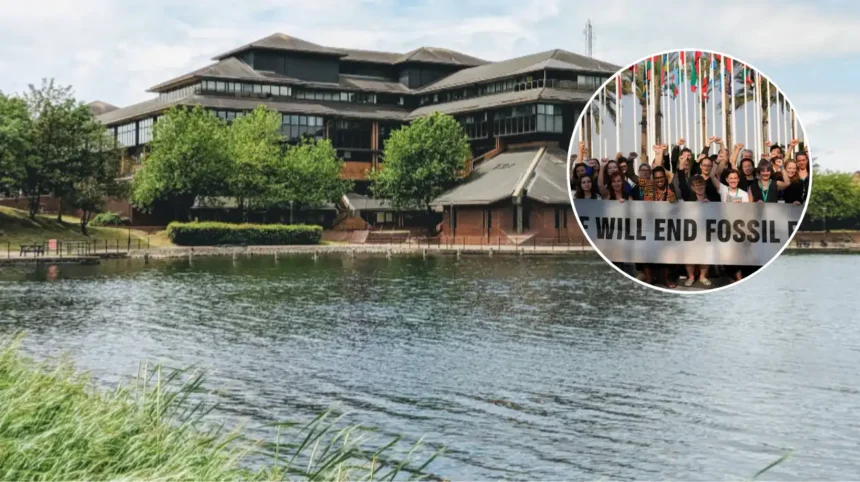
- The debate and vote will take place at County Hall (Atlantic Wharf) in Cardiff on Thursday 26 March 2026 at 4.30 pm as part of the Council meeting agenda.
- Campaigners and faith‑based groups, including members of Cardiff Eco Churches, have welcomed the proposal, arguing that the fossil‑fuel‑driven climate emergency is already affecting Wales through increased flooding, coastal change and extreme weather.
Cardiff (Cardiff Daily) March 26, 2026 – Cardiff Council will vote this afternoon on whether to back a global push to end the fossil fuel era, after councillors are asked to formally endorse the Fossil Fuel Non‑Proliferation Treaty at the Authority’s meeting at County Hall. The motion, if approved, would place Cardiff alongside cities such as London, Edinburgh and Birmingham, as well as the European Parliament and 18 national governments, in a broad international coalition calling for the managed phase‑out of coal, oil and gas.
What is the Fossil Fuel Non‑Proliferation Treaty?
As explained by Nation.Cymru in its coverage of the motion, the Fossil Fuel Non‑Proliferation Treaty is a global initiative modelled on nuclear‑weapons‑control agreements, designed to halt new coal, oil and gas developments and oversee a fair, time‑bound decline of existing fossil‑fuel production. The treaty’s backers argue that tackling fossil‑fuel production, rather than just emissions from end‑use, is essential to limit warming to 1.5°C and to protect vulnerable communities from climate‑driven disasters.
In its briefing notes, Cardiff Council’s agenda documents note that scientific consensus is clear that continued fossil‑fuel expansion is incompatible with maintaining a safe climate, and that the treaty offers a framework to align national and local climate policies with this evidence. The European Parliament has already endorsed the treaty concept, while cities such as London, Edinburgh, Birmingham and Manchester have also signalled support, reflecting a growing municipal‑level drive for stronger international fossil‑fuel‑phase‑out rules.
How would Cardiff’s endorsement work?
The motion before Cardiff Council, as set out in the moderngov agenda for the 26 March 2026 meeting, would see the Authority formally endorse the Fossil Fuel Non‑Proliferation Treaty’s core principles. These include stopping new coal, oil and gas projects, ensuring a fair and just phase‑out of existing production, and guaranteeing that no worker, community or country is left behind in the transition to renewable energy.
According to the council’s own agenda front‑sheet, the meeting is listed for Atlantic Wharf, Cardiff, CF10 4UW, beginning at 4.30 pm on Thursday 26 March 2026 under the business item relating to fossil‑fuel‑treaty endorsement. If passed, the motion would also instruct officers to write to the Welsh Government, urging it to back the treaty as part of Wales’s international climate stance and to align with other UK‑level authorities that have already endorsed similar measures.
Who is backing and criticising the move?
Local campaign groups and faith‑based networks have voiced strong support for the proposal. Eileen Newington, a member of Cardiff Eco Churches, told Nation.Cymru that the fossil‑fuel‑driven climate emergency is already visible in Wales through increased flooding, coastal change and extreme weather, putting Cardiff itself at growing risk from rising rainfall and river flows.
In broader UK‑wide commentary, Tessa Khan, founder and director of the campaign group Uplift, has previously described cities that back the Fossil Fuel Non‑Proliferation Treaty as demonstrating the kind of leadership needed from central government. Uplift’s work is cited as highlighting that fossil fuels are neither safe nor universally accessible, echoing the lived experience of many UK households struggling with high energy bills even as the state continues to subsidise oil and gas extraction.
At the same time, as reported by various UK policy‑watch outlets, some critics argue that any local‑authority endorsement of an international treaty is largely symbolic unless accompanied by concrete national‑level legislation and investment in renewables and energy‑efficiency schemes. They warn that while endorsements send a political signal, the real impact on global fossil‑fuel production will depend on how the UK Government and the Welsh Government respond to city‑ and region‑level pressure.
How does Cardiff fit into the wider movement?
Cardiff’s potential endorsement comes as part of a broader wave of municipal and regional support for the Fossil Fuel Non‑Proliferation Treaty across the UK and Europe. London became the largest city so far to back the treaty in 2022, joining other UK authorities such as Edinburgh, Birmingham, Brighton and Hove, Cambridge and Manchester, which have all added their voices to calls for an international framework to end new fossil‑fuel projects and phase out existing production.
As reported by Manchester City Council in its own coverage of fossil‑fuel‑treaty backing, leaders in major European capitals such as Paris, Rome, Dublin, Amsterdam and Copenhagen have also supported similar moves, helping to build cross‑border momentum for a global treaty model. Nation.Cymru’s Cardiff report notes that if Cardiff’s motion passes, the capital city of Wales would formally join this network and help reinforce pressure on the UK Government to align its climate and energy policies with international treaty‑style constraints on fossil‑fuel expansion.
What could the consequences be for Cardiff?
If Cardiff Council’s motion is adopted, the primary immediate effect would be political and symbolic rather than directly regulatory, since international treaties are negotiated at national level. However, the endorsement would place the city on record as backing a measurable, time‑bound pathway out of fossil fuels, and would require officers to lobby the Welsh Government to recognise the treaty as part of its climate diplomacy.
Campaigners argue that such endorsements can shift public‑policy debates by anchoring local decision‑making to a global standard. As Uplift’s Tessa Khan has stated in past commentary, when cities commit to a fossil‑fuel‑phase‑out treaty, they signal that climate leadership is not confined to national parliaments but is being driven from the ground up. Eileen Newington of Cardiff Eco Churches, in her remarks to Nation.Cymru, has similarly framed the treaty as a way of protecting vulnerable communities in Wales from the worsening impacts of climate change, including more frequent flooding and coastal erosion.
On the other hand, some policy analysts caution that the effectiveness of Cardiff’s vote will ultimately depend on follow‑up steps, such as embedding the treaty’s principles into local climate strategies, procurement rules and planning decisions. Without stronger integration into day‑to‑day governance, they argue, treaty endorsements risk becoming exercises in “green‑washing” rather than genuine levers for systemic change in how energy is produced and consumed.
What happens next after the vote?
The outcome of the 26 March debate will be closely watched by environmental groups, faith‑based networks and local government watchers across Wales and the wider UK. If the motion passes, Cardiff Council would be expected to send a formal letter to the Welsh Government urging it to endorse the treaty and to align its climate and energy policies with its core principles, much as other UK cities have already done.
In the longer term, supporters of the treaty hope that cumulative endorsements from cities, regions and national governments will build enough political pressure to trigger formal negotiations for a binding international Fossil Fuel Non‑Proliferation Treaty. For Cardiff, the debate represents a moment when local councillors must decide whether to throw the city’s weight behind a global framework to end fossil‑fuel expansion or to treat the treaty as a moral gesture without binding policy force.
As the Council meeting at County Hall convenes at 4.30 pm on Thursday 26 March 2026, the eyes of campaigners and policymakers will be on Cardiff’s chamber, where the arguments over climate leadership, energy justice and the future of fossil fuels will be tested in a single vote.