Key Points
- Butetown and Grangetown in south Cardiff are among Wales’s most economically disadvantaged communities, located near the Senedd and local authority headquarters, with diverse cultures and many multilingual children.
- Cardiff’s three existing Welsh-medium secondary schools perform well but are geographically inaccessible to south Cardiff communities.
- Council leader has admitted the current structure stems from historical decisions but persists due to current policies and lack of ambition.
- Key issues with distance: (1) Council uses home-school distance as a criterion for school place allocation; (2) Daily journeys across traffic-heavy Cardiff hinder extracurriculars, sports, and community life; (3) Families opt out, passing modern English-medium schools while no Welsh-medium secondary is in a new building.
- Cardiff Council launched an engagement exercise ending 26 March 2026, seeking views on expanding Welsh-medium education, including an all-age school (Ysgol De Caerdydd) in Grangetown or Butetown to provide a fourth secondary in the south, plus nursery and primary places.
- Council introduces unfounded funding tensions, suggesting a new south Cardiff school would halt investment in existing schools like Glantaf, Plasmawr, and Bro Edern—despite separate Welsh Government capital processes and recent new school builds.
- Controversial option: Relocating Ysgol Gyfun Gymraeg Bro Edern to south Cardiff, called a “Faustian bargain” that would create a “super-size education factory,” exclude east Cardiff children, and pit communities against each other.
- Parents across Cardiff have organised petitions and letters opposing relocation, showing united support for local Welsh-medium schools in all areas.
- Campaign for Ysgol De Caerdydd, co-organised by Carl Morris, follows successful three-year battle for Ysgol Gynradd Gymraeg Hamadryad, now thriving.
- Call for Welsh-medium schools at Cardiff’s “four compass points” in modern buildings, aligning with council’s duty to grow the Welsh language proactively.
- Campaign website: decaerdydd.cymru.
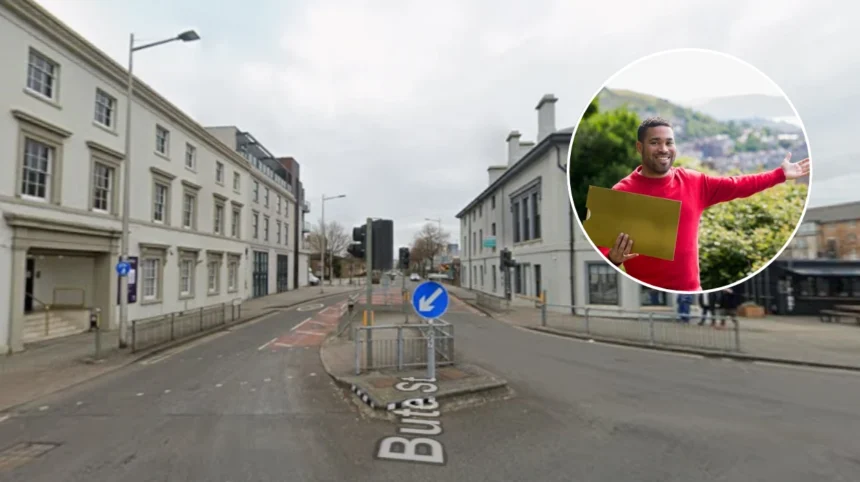
Cardiff (Cardiff Daily) March 26, 2026 – Communities in Butetown and Grangetown, south Cardiff’s most economically disadvantaged areas, are battling what campaigners call a “postcode lottery” in accessing Welsh-medium secondary education, as highlighted in an opinion piece by local advocate Carl Morris. These neighbourhoods, just a stone’s throw from the Senedd and Cardiff Council’s headquarters, house diverse, multilingual families yet remain underserved by the city’s three existing Welsh-medium schools, located far from the south. Morris argues this stems from historical decisions now perpetuated by council policies lacking ambition, urging action through a current public engagement exercise.
- Key Points
- Why is geographical access to Welsh-medium schools a barrier in south Cardiff?
- What is Cardiff Council’s engagement exercise on Welsh-medium education?
- Is relocating Ysgol Gyfun Gymraeg Bro Edern a viable option?
- What duty does Cardiff Council have to expand Welsh-medium education?
- How have communities responded to these challenges?
- What are the broader implications for Welsh language growth in Cardiff?
Why is geographical access to Welsh-medium schools a barrier in south Cardiff?
As detailed by Carl Morris in his Nation.Cymru opinion article published today, the distance poses three core problems. First, Cardiff Council factors home-to-school distance into place allocations, disadvantaging southern families. Second, successful applicants face arduous daily commutes across congested Cardiff, missing extracurriculars, sports, and school community life. Third, many families forgo Welsh-medium options, passing modern or new-build English-medium schools en route—while Cardiff has never housed a Welsh-medium secondary in a new building.
Morris, co-organiser of the Ysgol De Caerdydd campaign, emphasises these communities’ cultural richness: “Butetown and Grangetown… include several cultures and a significant number of children who are already multilingual.” He quotes the council leader’s admission in a meeting that the structure arises from “historical decisions,” yet it endures due to “policies of the authority today and its lack of ambition for these communities.”
No other media outlets have yet reported fresh angles on this specific piece as of 26 March 2026, but the campaign builds on prior successes, including the establishment of Ysgol Gynradd Gymraeg Hamadryad after a three-year community fight.
What is Cardiff Council’s engagement exercise on Welsh-medium education?
Cardiff Council has launched a public consultation, closing on 26 March 2026, inviting residents’ views on expanding Welsh-medium education. As reported by Carl Morris of Nation.Cymru, this includes discussion of an all-age Ysgol De Caerdydd in Grangetown or Butetown, creating a fourth Welsh-medium secondary in the south while addressing nursery and primary shortages.
Morris welcomes the exercise: “I welcome the fact that Cardiff Council has invited residents to express their views on growing Welsh-medium education in an engagement exercise which ends on 26 March.” However, he criticises the council’s framing of six options to “tease out the issues,” particularly unfounded funding concerns. The council suggests a new south Cardiff school would leave “building condition issues at existing schools… not… resolved.”
Morris counters: “The council knows as well as anyone that a capital application would have to be made to the Welsh Government for a new school. The clear duty to improve the standard of existing buildings is an entirely separate issue.” He notes Cardiff’s recent track record: “We have seen five brand new buildings for schools across Cardiff in the last fifteen years. Why would it be necessary to choose between establishing Ysgol De Caerdydd and essential work to improve secondary school buildings such as Glantaf, Plasmawr, and Bro Edern?”
Local media coverage remains centred on Morris’s piece, with the campaign website decaerdydd.cymru providing further details.
Is relocating Ysgol Gyfun Gymraeg Bro Edern a viable option?
One proposal draws sharp rebuke: moving Ysgol Gyfun Gymraeg Bro Edern to a new south Cardiff site. Carl Morris of Nation.Cymru labels it “astonishing” and a “Faustian bargain,” warning it would uproot the school from east Cardiff’s heart, creating a “super-size education factory on the outskirts, excluding a large percentage of east Cardiff children from community Welsh-medium education.”
Opposition is fierce, with “petitions and letters… organised by parents across the city” showing no grassroots support. Morris highlights a “completely united front of different areas backing each others’ calls for the council to develop Welsh-medium education in every local area.” He deems it “disgraceful” if the council’s Welsh language growth duty pits regions against one another in a “zero-sum game, cats in a sack.”
No alternative sources contradict or expand on this as of today, but the unity underscores broader demands.
What duty does Cardiff Council have to expand Welsh-medium education?
Morris insists council policies demand “local, sustainable Welsh-medium schools at the four compass points of the city… on the doorstep… in modern buildings.” He argues: “Not one of the principles has to be sacrificed. Cardiff Council has a duty to adhere to every one.”
This aligns with Wales’s “Cymraeg i bawb” vision—Welsh for everyone. The Ysgol De Caerdydd push is the second campaign in a decade, succeeding where Ysgol Gynradd Gymraeg Hamadryad thrived post-battle: “Despite all the excuses from the council, questions of viability, and all the political games, the three-year battle… was successful. That in itself is an important lesson for all families.”
Morris concludes defiantly: “The campaign for Ysgol De Caerdydd continues. Ymlaen â’r frwydr.” (Forward with the battle.)
How have communities responded to these challenges?
South Cardiff’s resilience shines through repeated advocacy. Economically challenged yet culturally vibrant, these areas near power centres demand equity. Parent-led petitions against relocation reveal citywide solidarity, rejecting divisive options.
As co-organiser, Morris positions the campaign as progress toward inclusive Welsh education, countering council hesitancy on viability and funding.
What are the broader implications for Welsh language growth in Cardiff?
This debate spotlights postcode disparities in language policy. With multilingual children abundant, inaccessibility risks Welsh-medium decline in diverse south Cardiff. Morris warns families often choose English-medium alternatives “with a heavy heart,” passing superior facilities.
Council’s options risk fracturing support, yet united parental voices and past wins like Hamadryad signal momentum. A new all-age school could fulfil statutory duties without sacrificing existing infrastructure, via Welsh Government funding.
As the 26 March deadline nears, responses will shape Cardiff’s educational landscape. Campaigners urge ambition: local schools for all compass points, ending the lottery.
Nation.Cymru’s piece by Carl Morris, shared via Facebook, X, and email, amplifies the call. For context, Cardiff’s Welsh-medium primaries and secondaries serve growing demand, but south-side gaps persist amid five recent English-medium new builds.