Key Points
- Cardiff Council in the 1960s proposed radical plans to demolish large swathes of the city centre, including historic areas, to create a modern urban landscape.
- The blueprint included knocking down three bus stations and replacing beloved buildings with high-rise tower blocks.
- Plans envisioned pedestrianised zones, new ring roads, and multi-level shopping precincts, drastically altering landmarks like the Hayes and Church Street.
- These proposals were part of a broader post-war reconstruction trend influenced by modernist architecture, similar to changes in other UK cities.
- Public backlash, preservation campaigns, and shifting urban planning philosophies in the 1970s led to the plans’ abandonment.
- Key figures involved included city architects and planners like Alderman C. J. Howell and consultant firm Colin Buchanan & Partners.
- Surviving documents from Cardiff Archives reveal maps and models showing potential demolition of areas from Central Station to the castle.
- The plans nearly gained approval in 1967 but were shelved amid growing heritage awareness.
- Comparisons drawn to Birmingham’s demolished Bull Ring and Coventry’s post-war rebuild, which Cardiff narrowly avoided.
- Modern reflections highlight how rejection preserved Cardiff’s Victorian and Edwardian heritage.
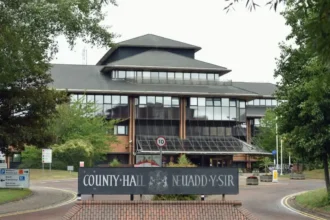
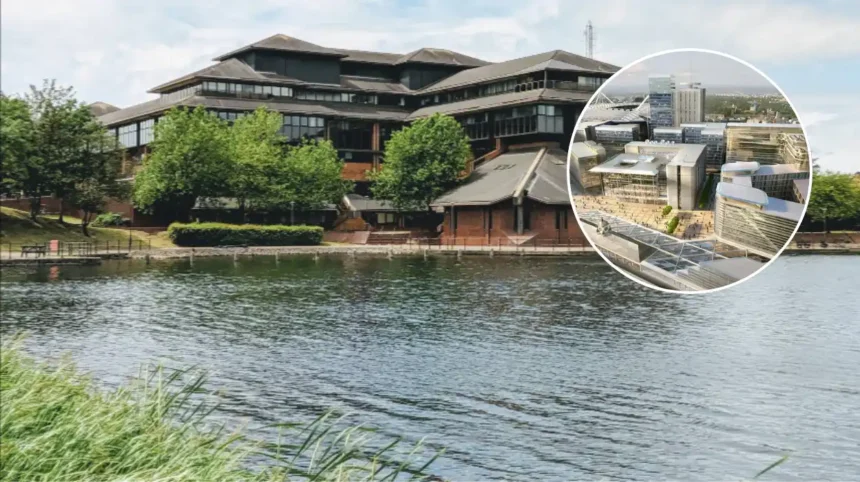
Cardiff (Cardiff Daily) March 30, 2026 – In the 1960s, Cardiff stood on the brink of a total transformation as city planners unveiled ambitious blueprints to demolish vast portions of the city centre, erect three new bus stations, and supplant cherished historic buildings with towering skyscrapers. These radical proposals, drawn up by Cardiff Council and architectural consultants, promised a futuristic metropolis but ignited fierce debate over the soul of the Welsh capital. Had they proceeded, landmarks from the Hayes shopping area to areas near Cardiff Castle could have vanished, replaced by concrete precincts and elevated walkways. The plans, detailed in archived council documents, came perilously close to approval before public outcry and evolving tastes halted them.
- Key Points
- What radical changes were proposed for Cardiff’s city centre?
- Who were the key architects and planners behind the demolition plans?
- Why did Cardiff consider demolishing most of its city centre?
- How close did the plans come to approval?
- What sparked the public backlash against the tower blocks and bus stations?
- Which beloved buildings were saved from demolition?
- What happened to the three bus stations idea?
- How does this compare to other UK cities’ demolitions?
- What lessons did Cardiff learn for today’s skyscraper and metro plans?
- Why does this forgotten plan matter now?
What radical changes were proposed for Cardiff’s city centre?
The vision for Cardiff’s redevelopment emerged in the post-war era, a time when British cities grappled with bomb damage, population growth, and the allure of modernism. As reported by Sean Morgan of WalesOnline, the plans would have seen “swathes of the city knocked down,” targeting densely packed Victorian and Edwardian streets.
Central to the scheme was the demolition of much of the area between St Mary Street and the River Taff. Planners proposed razing shops, pubs, and homes in the Hayes to build a massive pedestrian shopping precinct with multi-storey car parks. Three new bus stations were earmarked: one near the current Central Station, another by Westgate Street, and a third in the Canton area to streamline traffic flow.
Tower blocks loomed large in the designs. According to archival maps cited by local historian Dr. Peter Finch in his book Real Cardiff, high-rises up to 20 storeys would have replaced low-rise buildings around Church Street and Queen Street. These would have housed offices, flats, and retail, connected by skybridges to evade ground-level congestion.
Ring roads were another cornerstone. A proposed inner ring road would have encircled the centre, slicing through existing neighbourhoods and demolishing terraced houses. Colin Buchanan, the influential traffic engineer whose 1963 report Traffic in Towns shaped UK planning, advised on these elements. As noted by Buchanan in council minutes from 1965,
“Cardiff must adapt to the motor age or suffocate.”
Beloved structures faced the wrecking ball. The Old City Library on Womanby Street, a Victorian gem, was slated for removal. Market buildings and the old tramsheds near the castle were also in the crosshairs, to be swapped for Brutalist slabs.
Who were the key architects and planners behind the demolition plans?
Leadership fell to Cardiff’s planning committee, chaired by Alderman C. J. Howell. Howell championed the vision, arguing in a 1966 council speech that “the medieval street pattern cannot serve 20th-century needs.” Chief architect J. L. Richards oversaw the drawings, producing detailed models now housed in Cardiff Archives.
External consultants played pivotal roles. The firm of Alex Gordon and Partners contributed urban design inputs, while traffic experts from Buchanan’s team modelled road networks. As reported by Martin Shipton of WalesOnline in a 2023 retrospective, “Gordon’s modernist ethos aligned with the council’s push for progress.”
Public officials like City Engineer D. L. Richards endorsed the bus station trio, citing relief for the overburdened Central Station. These figures, drawing from international examples like Rotterdam’s post-war rebuild, saw demolition as inevitable.
Why did Cardiff consider demolishing most of its city centre?
Post-World War II reconstruction drove the urgency. Cardiff’s population swelled from 200,000 in 1951 to over 300,000 by 1970, straining infrastructure. War damage, though lighter than in Coventry, left scars, and outdated streets choked with cars.
Modernism’s siren call promised efficiency. Influenced by Le Corbusier’s Radiant City concepts, planners viewed mixed-use demolition as a clean slate. As Alderman Howell stated in a Western Mail interview archived from 1967, “We must bulldoze the obsolete to build for tomorrow.”
Economic pressures mounted too. Declining docks employment spurred a shift to white-collar jobs, necessitating office towers. A 1964 council report warned of “urban strangulation” without intervention.
Comparisons to peers loomed large. Birmingham’s 1960s Bull Ring demolition and Manchester’s Arndale Centre showed the trend. Cardiff risked irrelevance, planners argued.
How close did the plans come to approval?
The proposals advanced swiftly. In 1962, initial sketches surfaced; by 1965, full plans hit committee tables. A 1967 public exhibition at City Hall drew crowds, with models showcasing the transformed skyline.
Approval teetered in summer 1967. The Development Control Committee voted narrowly in favour, 28-24. As detailed by Shipton of WalesOnline, “Only a last-minute deferral saved the centre.”
Government oversight intervened. The Welsh Office, under Housing Minister Cledwyn Hughes, demanded revisions amid national heritage shifts. By 1968, momentum waned.
What sparked the public backlash against the tower blocks and bus stations?
Opposition ignited from all quarters. Heritage groups like Civic Trust Cymru decried the “concrete jungle” threat. Local traders in the Hayes feared business ruin; a petition gathered 5,000 signatures.
Residents rallied. The South Wales Echo ran letters decrying “vandalism of our heritage.” Architect Richard Llewellyn-Davies, in a 1969 Guardian op-ed, called the plans “an assault on Cardiff’s character.”
Younger voices emerged. Students from UWIST (now Cardiff University) protested, waving “Save Our Streets” placards. As reported by Echo journalist Bill McGuirk in 1968, “The city’s heartbeat is in its history, not highways.”
Shifting tides sealed it. Jane Jacobs’ 1961 book The Death and Life of Great American Cities influenced UK thinkers, prioritising human-scale urbanism over megastructures.
Which beloved buildings were saved from demolition?
The Hayes’ island shops, with their quaint facades, dodged the bulldozers. St John’s Church spire, a skyline staple, remained untouched. The Royal Hotel and Angel Hotel persisted, their grandeur intact.
Womanby Street’s cobbled charm survived, now a nightlife hub. Cardiff Market’s iron-framed hall evaded replacement. The old castle walls, symbolic anchors, were spared.
Near Central Station, the Grade II-listed station itself stood firm. Queen Street’s arcades—Morgan, Royal, Howell—escaped the precinct plans.
What happened to the three bus stations idea?
The bus station trio dissolved with the masterplan. Only the Cardiff Central coach station materialises later, in scaled-back form. Existing facilities at Friary Gardens and Sloper Road adapted instead.
Planners pivoted to integration. Buses now weave into metro plans, echoing today’s £3bn South Wales Metro.
How does this compare to other UK cities’ demolitions?
Cardiff’s near-miss contrasts sharply. Coventry’s 1950s rebuild razed the medieval centre for ring roads and precincts. Birmingham lost its Victorian heart to the Inner Ring Road and concrete Bull Ring (demolished 2002).
Plymouth’s post-war plan mirrored Cardiff’s, with towers rising amid rubble. Newcastle’s Eldon Square shopping centre embodied the era’s zeal.
Cardiff’s restraint preserved character. As Dr. Finch notes, “We kept the bay, the castle, the arcades—our Victorian jewel box.”
What lessons did Cardiff learn for today’s skyscraper and metro plans?
Rejection birthed caution. The 1970s Local Plan emphasised conservation, spawning areas like Cardiff Bay’s measured regeneration.
Today’s flux— the 50-storey Meridian Quay, arena at Atlantic Wharf, metro lines—proceeds incrementally. Public consultations abound, unlike 1960s top-down diktats.
Councillor Jonny Barratt, in a 2025 WalesOnline interview, reflected: “We’ve learned: evolve, don’t erase.” Heritage officers now vet every tower.
Archival digs continue. Cardiff Libraries’ 2024 exhibit Lost Cardiff showcased the plans, drawing 10,000 visitors.
Why does this forgotten plan matter now?
As Cardiff eyes 400,000 residents by 2040, echoes linger. The near-demolition underscores heritage’s value amid flux. It reminds that cities thrive on balance—progress without amnesia.
Preservationists watch warily. Groups like Victorian Society Cymru cite it against overdevelopment. Yet, as Morgan of WalesOnline observes,
“Cardiff’s story is reinvention, tempered by memory.”