Key Points
- Two 18‑year‑old men from Cardiff, Rhys Edwards of Heath and Talan Vincent of Whitchurch, have denied planning terrorist attacks against Muslim and Jewish targets in the Welsh capital.
- They are accused of preparing acts of terrorism between 1 October and 16 November 2025, with allegations that they researched and visited locations including the Madina Mosque in Cathays and Roath Park.
- Prosecutors allege they planned to attack Muslims celebrating Eid at the Madina Mosque and also discussed a possible attack on a synagogue in Cardiff.
- Edwards is alleged to have intended to carry out live‑streamed attacks while Vincent would provide practical assistance and advice on operations, including firearms and explosives.
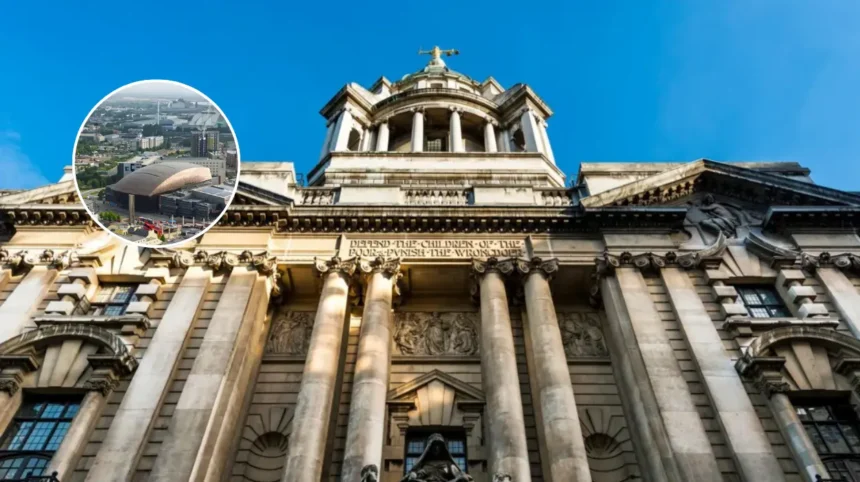
- The pair appeared at the Old Bailey, entered not guilty pleas, and are being held in custody ahead of a trial scheduled for 1 February 2027 at Bristol Crown Court.
- A bail application for Vincent was rejected by Mrs Justice Cheema‑Grubb.
Cardiff (Cardiff Daily) – March 30, 2026 – Two 18‑year‑old men from the Welsh capital have denied planning a series of extremist‑inspired attacks on Muslim and Jewish sites, including a mosque in Cathays and a synagogue in Cardiff, as they stood charged with preparing acts of terrorism at the Old Bailey. Rhys Edwards, from the Heath area of the city, and Talan Vincent, from Whitchurch, both entered not guilty pleas via video‑link from HMP Thameside and are being remanded in custody ahead of a trial set for 1 February 2027 at Bristol Crown Court, according to reports by BBC News and WalesOnline.
- Key Points
- What are the charges against the teenagers?
- Which locations were allegedly targeted?
- Was a synagogue also part of the alleged plot?
- What weapons and tactics were alleged?
- What role did online communication play?
- How did the defendants respond in court?
- What is the background of the accused?
- What has the community reaction been?
- What happens next in the legal process?
- What does this case mean for Cardiff and wider security debates?
What are the charges against the teenagers?
As reported by Sacha McNeil of BBC News, Rhys Edwards and Talan Vincent are charged with the preparation of terrorist acts between 1 October and 16 November 2025, under section 5 of the Terrorism Act 2006. The prosecution alleges that the pair, who are described as holding extreme right‑wing views, engaged in activity that went beyond mere discussion and entered into the operational stage of planning mass‑casualty violence against religious communities in Cardiff.
WalesOnline’s coverage notes that the indictment frames the behaviour as a structured preparation phase, including target‑site reconnaissance, research into weapons and explosives, and communication about methods of attack. The pair were first remanded in custody on earlier court appearances in December 2025 and have remained behind bars since, with the latest hearing at the Old Bailey confirming that they will not be released before trial.
Which locations were allegedly targeted?
According to the BBC’s reporting, the central alleged target is the Madina Mosque in Cathays, one of the main Muslim places of worship in Cardiff, with prosecutors claiming the defendants planned to attack worshippers during an Eid celebration. The court heard that Edwards and Vincent reportedly researched the layout of the mosque and its surrounding streets, allegedly considering how to maximise casualties during a crowded religious festival.
Nation.Cymru adds that the duo are also accused of planning to attack Muslims gathered in Roath Park in connection with Eid festivities, using the public space as a potential secondary or complementary site for violence. WalesOnline further notes that the prosecution alleges they visited and surveyed both the mosque and the park area in person, taking photographs and using online mapping tools to familiarise themselves with escape routes and security features.
Was a synagogue also part of the alleged plot?
Multiple outlets, including BBC News and the Jerusalem‑based Jewish News Syndicate (JNS), report that Cardiff’s Jewish community was also in the alleged crosshairs. As reported by Becky Morton of BBC News, the prosecution told the Old Bailey that the pair discussed attacking a synagogue in Cardiff, alongside their plans against the Madina Mosque and Eid‑related gatherings.
The Jerusalem Post’s Danielle Greyman‑Kennard further notes that documents before the court also mention a Jewish cemetery near Roath Park as a potential target, underscoring the dual‑faith nature of the alleged conspiracy. According to these reports, investigators allege that the defendants looked at ways to strike both Muslim and Jewish sites, possibly on the same day or in a closely linked sequence of attacks intended to generate maximum media impact and social disruption.
What weapons and tactics were alleged?
Press coverage from the BBC and HSToday highlights that the prosecution claims the pair researched acquiring firearms and large‑scale explosives as part of their preparations. As reported by BBC News, the court heard that Edwards and Vincent are alleged to have contemplated using a vehicle loaded with up to 1,000 kg of ammonium nitrate‑based explosives, similar in type to those used in past terrorist incidents, and discussed how they might obtain that quantity without attracting police attention.
Nation.Cymru’s analysis of the hearings notes that the pair also explored the use of firearms during any eventual attack, including how to source weapons and the logistics of carrying them into crowded areas. WalesOnline adds that prosecutors claim they examined the use of live‑streaming technology, with Edwards allegedly indicating a desire to broadcast his actions in real time, while Vincent is said to have offered advice on operational security and how to avoid detection by authorities.
What role did online communication play?
According to the BBC and HSToday, Edwards and Vincent allegedly used the messaging platform Discord to exchange extremist ideas and coordinate aspects of the alleged plot. As reported by BBC News, messages attributed to Edwards apparently included expressions of a desire to kill Jewish people and Muslims, alongside assertions of white‑supremacist or neo‑Nazi ideology.
HSToday’s coverage notes that Vincent is accused of investigating software‑related security measures, such as how to mask digital activity or avoid surveillance tools, as part of the planning. Nation.Cymru adds that the prosecution alleges the pair shared aerial images of potential targets, including the Madina Mosque, the Jewish cemetery and a synagogue, using freely available mapping and satellite services to build what the Crown describes as a “virtual reconnaissance” of each site.
How did the defendants respond in court?
Press coverage from BBC News, WalesOnline and Nation.Cymru stresses that both men denied the charges when they appeared at the Old Bailey. As reported by BBC News, the hearing on 26 March 2026 saw Edwards and Vincent speak only to confirm their names and enter not guilty pleas; they did not address the substance of the allegations in open court.
WalesOnline notes that the defendants were remanded in custody, with no application for bail made on behalf of Edwards. By contrast, as reported by BBC News and Nation.Cymru, Vincent’s legal team did seek bail, but Mrs Justice Cheema‑Grubb rejected the application, determining that the risk of interference with evidence, contact with potential witnesses, or continuation of preparations was too high.
What is the background of the accused?
Nation.Cymru and the BBC sketch the biographical outlines of the two men, who are described as being from different parts of the city but of the same age. Rhys Edwards is said to be from the Heath area of Cardiff, a largely residential neighbourhood to the north‑west of the city centre, while Talan Vincent is from Whitchurch, an area to the north‑east that includes a mix of suburban housing and parkland.
Both outlets report that the men were aged 18 at the time of their arrest and charge, and that they are now in their early adult years as they face the upcoming trial. The BBC additionally notes that the case has drawn attention because of the alleged age of the defendants and the sophisticated nature of the preparations attributed to them, raising questions about how young people become radicalised into planning serious acts of violence.
What has the community reaction been?
Local coverage in WalesOnline and Nation.Cymru highlights concern among Cardiff’s Muslim and Jewish communities about the potential impact of the alleged plot, even though no attack materialised. Community leaders quoted by Nation.Cymru express a mix of anger and relief, noting that the charges underline the reality of far‑right extremism in the city while also welcoming the intervention of the police and security services before any violence occurred.
The Jerusalem Post’s reporting notes that Cardiff’s small but long‑standing Jewish community has experienced a rise in antisemitic incidents in recent years, and that the case has prompted renewed calls for greater protection around religious sites and more robust monitoring of online extremist networks. Anti‑hate and interfaith groups in the Welsh capital have also used the case to urge local authorities and civic bodies to strengthen safeguarding measures and youth‑outreach programmes aimed at countering extremist ideologies.
What happens next in the legal process?
The BBC and WalesOnline both report that the trial is scheduled to begin on 1 February 2027 at Bristol Crown Court, rather than in Cardiff. As reported by BBC News, the case falls under the jurisdiction of the Central Criminal Court and related Crown Court arrangements, with the prosecution indicating that it will rely on digital evidence, witness statements, and forensic material gathered during the investigation.
Nation.Cymru notes that the Crown’s case is expected to include messages from the accused’s online accounts, records of their movements around the alleged target sites, and material related to their research into firearms and explosives. The next major steps before February 2027 will likely involve pre‑trial hearings to agree on legal issues, manage disclosure of evidence, and determine whether any restrictions will be placed on reporting certain aspects of the case to ensure a fair trial.
What does this case mean for Cardiff and wider security debates?
Commentary pieces cited by the BBC and Nation.Cymru frame the case as a worrying example of how young people can become radicalised into planning violence against religious minorities, even in a city like Cardiff where such plots have previously been rare. Experts quoted by the BBC emphasise that the case reflects a broader trend of online‑driven right‑wing extremism, in which chatrooms, gaming platforms and social‑media spaces provide venues for ideological indoctrination and tactical planning.