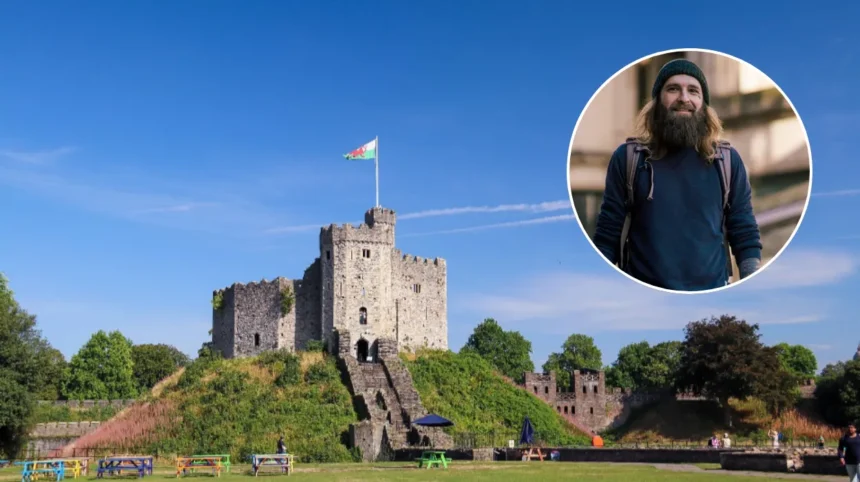
Key Points
- Tom Wilkins, a 36‑year‑old Cardiff resident, credits street‑portrait photography with helping him manage long‑standing social anxiety and panic attacks.
- He began taking photos of strangers in Cardiff about 10 months ago after a chance encounter with a stranger inspired him to use his wife’s old camera.
- Wilkins now approaches people in public, gives them a compliment, asks to take their portrait, and then shares the images on Instagram and other platforms.
- His project has grown into a large online following, with more than 70,000 Instagram followers, as reported by BBC News.
- Wilkins stresses that his main aim is to uplift others and “give people a voice,” even though he has also found personal healing through the process.
- He admits he still feels nervous when approaching people and has days of heightened anxiety, but says he always feels better afterward.
- Before starting the project, he struggled in crowded environments and often had to leave events early because of panic attacks.
- The experience has given him a deeper understanding of his anxiety and new tools to manage it, rather than “curing” it outright.
Cardiff (Cardiff Daily) April 4, 2026 – A Cardiff man has said that photographing strangers on the capital’s streets has helped him confront years of social anxiety and panic attacks, transforming not only his confidence but also the way he experiences the city itself. Tom Wilkins, 36, told BBC News that what began as a tentative experiment with his wife’s old camera has grown into a public project that has won him over 70,000 followers on Instagram and a growing reputation across Wales.
- Key Points
- How did a Cardiff man start photographing strangers?
- What effect did this project have on his mental health?
- Why did he start this project in Cardiff?
- What has been the public and online response?
- How does this project fit into wider ideas about mental‑health recovery?
- What does this mean for people with social anxiety in Cardiff?
- How have different media outlets covered Tom Wilkins’ story?
- What key messages has Tom Wilkins given to the public?
- How might this story influence conversations about mental health in Wales?
How did a Cardiff man start photographing strangers?
Cardiff‑based photographer Tom Wilkins explained that he discovered photography only about 10 months ago. According to BBC News’ profiling of him, a “serendipitous meeting with a stranger” prompted Wilkins to start taking portraits of people he encountered in the city. He picked up his wife’s camera and began approaching members of the public, asking if he could take a photo, often pairing the request with a sincere compliment.
As reported by BBC News, observers might mistake Wilkins’ current ease for long‑standing confidence, but he has actually battled social anxiety for most of his life. He said that before taking up street photography he had found crowded environments overwhelming and often left busy places early to avoid panic attacks.
What effect did this project have on his mental health?
Wilkins told BBC News that receiving and seeing people’s reactions to compliments has become a powerful counter‑weight to his anxiety. He explained,
“The positive sensation that arises from offering someone a compliment and their response to it far surpasses any anxiety,”
adding that it creates an
“exhilarating feeling”
that he now actively seeks out.
In his conversation with BBC News, he clarified that he has not stopped feeling anxious altogether.
“I still get nervous when I approach people, and there are days when I’m more anxious than others,”
he said,
“but I always feel uplifted afterwards.”
This gradual shift has allowed him to stay in crowded settings for longer and to tolerate situations he once avoided.
Student‑facing outlet Cardiff Student Media also profiled Wilkins, quoting him as saying that this project has helped him “develop those skills” to talk to strangers, something he “absolutely never” would have done before. He added that he now feels able to approach people in “any scenario,” a change he “hadn’t foreseen” when he first picked up the camera.
Why did he start this project in Cardiff?
According to BBC News, Wilkins’ street‑portrait work is firmly rooted in Cardiff, where he moves through the city centre, markets and busy streets capturing people’s stories. The outlet described him as someone who now radiates apparent confidence despite having previously felt “overwhelmed” by crowds.
Wilkins said that his main intention was not self‑promotion, but rather to uplift others. Speaking to BBC News, he described the project as an effort to “empower others” and “provide a voice,” noting that he wants people to feel seen and appreciated. He also told Cardiff Student Media that he is on a
“mission to make the people of the Welsh capital feel that little bit more loved.”
In an interview featured on YouTube, Wilkins elaborated that his ethos is to
“give out compliments and make people feel good about themselves,”
adding that he seeks to boost the confidence of those who may rarely receive such recognition. He described the response from many of the people he photographs as overwhelmingly positive, saying that their smiles and gratitude reinforce the value of what he is doing.
What has been the public and online response?
BBC News reported that Wilkins’ work has attracted a substantial online following, with more than 70,000 followers on Instagram alone. His photographs and short stories of interaction are shared through social media, where viewers often respond with comments about how the images brighten their day or encourage them to be kinder in public.
Independent filmmaker and interviewer Abdullah Chakmakchi, who spent time filming Wilkins in Exeter, noted in a video interview that Wilkins’ platform has grown to over 30,000 followers and millions of monthly views in less than a year. Chakmakchi described Wilkins as someone who never imagined he would be photographing strangers full‑time, yet has embraced the role as both a creative outlet and a form of emotional support for others.
Commenting on the wider conversation around mental health, Chakmakchi highlighted that Wilkins’ story fits into a broader trend of people using creative activities—such as art and photography—as part of their recovery journeys. This echoes work by organisations such as Canopi, which promotes arts‑based approaches to mental‑health recovery in Wales.
How does this project fit into wider ideas about mental‑health recovery?
Mental‑health experts and arts organisations in Wales have pointed to the therapeutic potential of creative projects like photography, while stressing that they complement, rather than replace, clinical treatment. In a piece for Canopi, another individual described how art and photography provided a “grounding practice” during difficult periods, helping to rebuild confidence and create safe spaces for self‑expression.
In line with such experiences, Wilkins’ approach can be seen as a form of exposure‑style practice, where gradually increasing contact with feared situations—in his case, approaching strangers—helps reduce avoidance behaviours. However, he has not claimed that street‑portrait photography is a cure; instead, he frames it as a personal tool that has deepened his understanding of anxiety and given him new ways to manage it.
BBC News made clear that Wilkins still experiences anxiety and does not present his project as a universal solution. He stressed that he approaches each interaction as a small act of kindness, not a performative gesture, and that the photography is “just one part of how he deals with his mental health.”
What does this mean for people with social anxiety in Cardiff?
For residents and visitors in Cardiff, Wilkins’ project offers a visible example of how small, everyday interactions can shift someone’s relationship with anxiety. He has encouraged others to consider whether they, too, might use a creative outlet—such as photography, writing or drawing—to manage their own mental‑health challenges.
In the YouTube interview, Wilkins advised that anyone wanting to try something similar should avoid taking rejection personally, noting that most people are happy to be photographed if approached respectfully. He also warned against being “greedy” with the practice, emphasising that the goal should be to give back to the world with positivity rather than simply to generate content.
Cardiff Student Media similarly quoted Wilkins as saying that he now “feeds off the adrenaline” of approaching strangers, but that this is a far healthier relationship with anxiety than the one he had before. He described the process as having helped him move from feeling “paralysed” in town on busy days to feeling equipped to engage with the city and its people.
How have different media outlets covered Tom Wilkins’ story?
BBC News has covered Wilkins’ journey in both written and video formats, highlighting his transformation from someone who “suffered panic attacks before a chance encounter led him to photograph strangers” into a recognised figure in Cardiff’s creative community. The BBC’s video report, published on BBC News Online, shows Wilkins approaching people in Cardiff, asking for portraits, and reflecting on how each interaction affects his mood.
Cardiff Student Media’s piece, written by a student journalist, focuses on the emotional and social side of Wilkins’ work, describing him as “the Cardiff photographer making strangers smile one photo at a time.” The article underscores that his past as a person with severe social anxiety makes his current ease in public all the more striking.
In addition, an independent filmmaker and interviewer, Abdullah Chakmakchi, has produced a longer‑form interview video in which Wilkins discusses his early experiences with anxiety, the moment he photographed a “punk girl” whose day was brightened by the encounter, and how that prompted him to continue. Chakmakchi’s coverage frames Wilkins’ story as part of a wider wave of creators using photography and social media to foster connection and well‑being.
What key messages has Tom Wilkins given to the public?
Wilkins has repeatedly returned to the idea that small acts of kindness can have a compound effect on both giver and receiver. Speaking to BBC News, he said that the “uplifting sensation” of giving a compliment and seeing someone’s face light up has become a kind of “high” that he now actively seeks, helping him override the pull of anxiety.
In his conversation with Cardiff Student Media, he recalled that a year ago he “couldn’t go into town if it was a busy day,” and that stepping into such environments would trigger panic attacks. He contrasted this with his current ability to approach anyone in any scenario, describing it as an unexpected outcome of his photography experiment.
Wilkins has also been careful to say that he still experiences anxiety and still has “bad days.” Nevertheless, he told BBC News that through this project he has learned more about his anxiety and how to manage it, which he regards as a significant step forward.
How might this story influence conversations about mental health in Wales?
In Wales, where mental‑health services and community‑based projects are increasingly intertwined, Wilkins’ experience reinforces the idea that recovery can come through everyday, creative activities as much as through formal therapy. Organisations such as Canopi, which promote arts‑based recovery, have cited similar stories of people using photography, painting and other forms of art to process trauma and build confidence.
BBC News has treated Wilkins’ case as a human‑interest example of how mental‑health recovery can be non‑linear and deeply personal. At the same time, it has avoided framing his project as a medical intervention, instead presenting it as a self‑help strategy that has helped him cope with symptoms and regain a sense of agency in public spaces.
For people in Cardiff and beyond, the story offers a template: a 36‑year‑old man with a long history of social anxiety has turned a simple practice—asking permission to take a stranger’s photo and offering a compliment—into a sustained project that benefits both himself and the wider community. As Wilkins continues to walk the streets of Cardiff with his camera, his experience stands as a reminder that, in the right circumstances, even the most anxious person can find a way to connect.