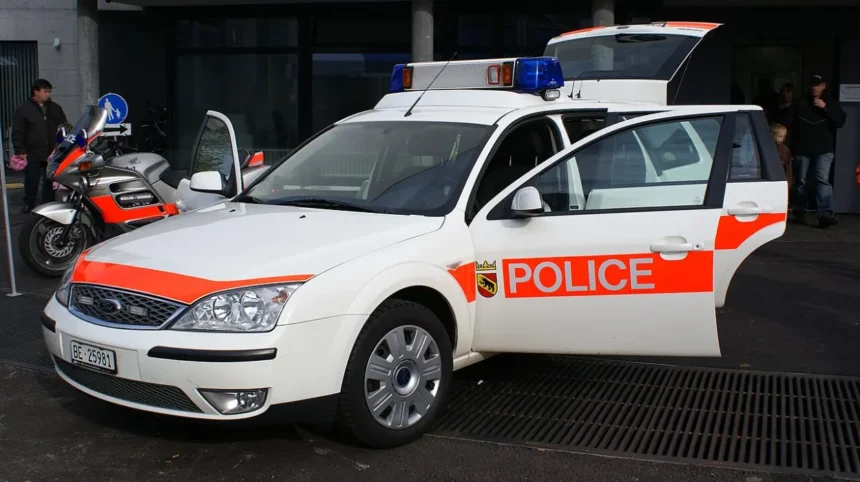
The Canton Police Department is the primary law enforcement agency responsible for public safety in Canton, Ohio, a city located in Stark County with a population of approximately 70,000 residents. Police response in Canton refers to the organized system through which officers are dispatched, deployed, and engaged in response to emergency and non-emergency calls from the public. The department operates under a structured command hierarchy that includes patrol divisions, specialized units, and a central communications center that processes incoming calls 24 hours a day, seven days a week.
- How Does Canton Police Dispatch and Call Handling Work?
- What Are the Average Police Response Times in Canton?
- What Patrol Zones and Divisions Operate Within Canton’s Police Force?
- How Does Canton Police Handle High-Profile and Critical Incidents?
- What Community Policing Strategies Does Canton Police Use?
- How Does Canton Police Address Crime Prevention and Public Safety Challenges?
- What Oversight and Accountability Mechanisms Govern Canton Police?
- How Is Canton Police Funded and What Resources Does the Department Have?
- What Is the Future Direction of Police Response in Canton?
Canton has historically faced urban challenges common to post-industrial Midwestern cities, including property crime, violent incidents, and community-police relations issues, all of which directly shape how the response system is designed and executed. The Ohio Revised Code governs the legal authority and obligations of municipal police departments in the state, providing the framework within which Canton officers operate. Understanding police response in Canton requires examining dispatch infrastructure, patrol coverage, officer deployment strategies, and departmental policies that govern how and when officers engage with community members.
How Does Canton Police Dispatch and Call Handling Work?
Canton Police Department processes emergency calls through a centralized dispatch center that categorizes incidents by priority level before assigning officers. Dispatchers use a tiered classification system where Priority 1 calls involve immediate threats to life, Priority 2 calls involve active crimes in progress, and Priority 3 calls cover non-urgent matters. This prioritization system ensures that the most serious incidents receive the fastest response.
The Stark County Regional Emergency Dispatch Center, which services Canton and surrounding municipalities, handles a significant volume of calls annually. Dispatchers are trained in emergency medical pre-arrival instructions, crisis de-escalation guidance, and multi-agency coordination. When a call is received, the dispatcher gathers essential information including location, nature of the incident, and any identifying details about individuals involved before broadcasting the assignment to available patrol units.
Officers on patrol carry mobile data terminals in their vehicles, allowing them to receive call details, access records, and update their status in real time. The average call volume for Canton police runs into the tens of thousands of incidents annually, with a notable proportion classified as violent crime-related given the city’s crime statistics. Ohio’s 911 infrastructure, funded through state and county levies, supports the technology backbone that makes this dispatch operation possible.
What Are the Average Police Response Times in Canton?
Average police response times in Canton vary by call priority, with Priority 1 emergency calls targeting a response window under 5 minutes and lower-priority calls handled within 20 to 60 minutes depending on officer availability. Response time is measured from the moment a call is dispatched to the moment an officer arrives on scene.
Factors that affect Canton police response times include the geographic layout of the city, shift staffing levels, and the simultaneous demand on patrol units. Canton covers approximately 25 square miles, which means patrol zones must be carefully managed to avoid coverage gaps. Staffing shortages, which have affected many mid-sized American police departments following national recruitment challenges in the early 2020s, directly impact response capacity. When fewer officers are available per shift, response times for non-emergency calls increase substantially.
Internal performance reviews conducted by the Canton Police Department assess response time benchmarks as part of operational accountability. Ohio police departments are also subject to oversight from the Ohio Collaborative Community-Police Advisory Board, which sets standards for departmental performance including response efficiency. These benchmarks encourage departments to maintain transparency in how quickly officers reach citizens in need.
What Patrol Zones and Divisions Operate Within Canton’s Police Force?

The Canton Police Department divides the city into designated patrol districts, each assigned a set of patrol officers responsible for proactive policing, emergency response, and community engagement within defined geographic boundaries. These districts allow supervisors to monitor call volume, crime patterns, and officer deployment with geographic precision.
The department operates multiple specialized units beyond standard patrol, including a detective bureau responsible for criminal investigations, a narcotics unit addressing drug-related offenses, a community policing unit focused on building relationships in high-need neighborhoods, and a traffic enforcement division. The Special Response Team, Canton’s tactical unit, is deployed for high-risk incidents such as barricaded subjects, armed standoffs, and warrant service on dangerous suspects.
Each unit operates under the command of a lieutenant or captain who reports through the chain of command to the Chief of Police. The current structure reflects reforms and reorganizations the department has undertaken over the past decade in response to both budget pressures and calls for more targeted policing strategies. Ohio law mandates minimum staffing and training requirements for municipal departments, and Canton’s organizational chart reflects compliance with those statutes while adapting to local needs.
How Does Canton Police Handle High-Profile and Critical Incidents?
Canton Police Department activates specific protocols for critical incidents including active shooter events, hostage situations, major accidents, and large-scale civil disturbances, which involve immediate coordination between patrol, specialized units, and external agencies. The Incident Command System, a nationally standardized emergency management structure, guides multi-agency responses.
One of the most documented critical incident responses involving Canton occurred in July 2010, when a traffic stop conducted by a Canton officer was recorded on dashboard camera and drew national attention due to the officer’s conduct toward a civilian.
The incident resulted in significant public and departmental scrutiny, led to the officer’s termination after an internal investigation, and became a widely cited example in law enforcement training curricula across the United States regarding de-escalation, professionalism, and the importance of body-worn cameras. The case accelerated discussions in Ohio and nationally about police accountability mechanisms. Following this incident, Canton invested in policy review processes and updated use-of-force guidelines. The department also implemented enhanced training requirements for patrol officers, with emphasis on situational judgment and communication standards during traffic and pedestrian stops.
What Community Policing Strategies Does Canton Police Use?
Canton Police Department employs community policing strategies that include neighborhood liaison programs, school resource officer assignments, business district patrols, and resident engagement initiatives designed to reduce crime through trust-based relationships. These strategies are embedded in the department’s operational philosophy.
Community policing in Canton is supported by federally funded programs including grants administered through the Department of Justice’s Office of Community Oriented Policing Services, known as COPS. These grants have historically supported officer hiring and technology upgrades tied to community engagement goals. The department assigns officers to specific neighborhoods on a consistent basis so that residents recognize and interact with the same personnel over time, building familiarity and communication.
Canton’s community policing unit works alongside city social services, housing agencies, and nonprofit organizations to address the root causes of crime including unemployment, housing instability, and substance use disorders. The Stark County Mental Health and Addiction Recovery board collaborates with Canton police on co-responder programs where mental health professionals accompany officers on calls involving individuals in behavioral health crises. This model reduces unnecessary arrests and improves outcomes for vulnerable populations.
How Does Canton Police Address Crime Prevention and Public Safety Challenges?
Canton faces documented public safety challenges including elevated rates of violent crime and property crime compared to national averages, which have driven targeted enforcement and prevention strategies. The FBI’s Uniform Crime Report and Ohio Bureau of Criminal Investigation data track Canton’s crime metrics annually.
The Canton Police Department participates in regional crime task forces coordinated through Stark County that target repeat offenders, drug trafficking networks, and gang activity. Operation data shared between Canton police, the Ohio State Highway Patrol, and federal agencies including the Drug Enforcement Administration and the Bureau of Alcohol, Tobacco, Firearms and Explosives strengthens investigative capacity for complex criminal cases. Shot detection technology, license plate readers, and strategic surveillance camera placements represent infrastructure investments Canton has made to enhance real-time crime awareness.
The department’s crime analysis unit reviews data patterns to identify hotspots and shift patrol resources accordingly, a practice aligned with evidence-based policing models supported by research from institutions including the Police Executive Research Forum and the National Institute of Justice. Crime prevention programs targeting youth, including summer engagement initiatives and partnerships with Canton City School District, address long-term risk factors for criminal involvement.
What Oversight and Accountability Mechanisms Govern Canton Police?
Canton Police Department operates under oversight from the Canton City Council, the Mayor’s Office, internal affairs investigations, the Ohio Attorney General’s office, and federal civil rights statutes enforced by the Department of Justice. These mechanisms create a layered accountability structure.
The Ohio Collaborative Community-Police Advisory Board certifies compliant departments that meet statewide standards on use-of-force policies, bias-free policing, and community engagement. Canton has participated in this certification process, which requires departments to submit policy documentation and compliance evidence. Internal Affairs within the Canton Police Department investigates complaints filed by citizens or department members against officers, with findings subject to administrative review and potential disciplinary action up to and including termination.
Ohio’s Law Enforcement Training Commission establishes mandatory continuing education requirements for all certified officers, including regular updates on constitutional law, use-of-force standards, and mental health crisis response. Body-worn camera policies, which Canton has adopted in alignment with Ohio legislative recommendations, create an evidentiary record of officer interactions that supports both accountability investigations and officer protection against false claims. Citizens can submit complaints directly to the department or through the city’s administrative channels, with formal investigation timelines governed by Ohio Public Employees Collective Bargaining agreements and departmental policy.
How Is Canton Police Funded and What Resources Does the Department Have?
Canton Police Department receives funding through the city’s general fund, state allocations, federal grants, and specialized levy revenues, with annual budgets reflecting the operational demands of a mid-sized urban police force in Ohio. Budget decisions are made through the Canton City Council appropriations process.
The department’s budget covers personnel costs including salaries and benefits for sworn officers and civilian staff, equipment procurement such as vehicles and body cameras, technology infrastructure including computer-aided dispatch systems, and training programs. Patrol vehicles are replaced on a scheduled cycle to maintain operational reliability. Federal grant funding through programs like COPS and the Edward Byrne Memorial Justice Assistance Grant supplements local revenue and allows the department to fund positions and initiatives that would otherwise exceed municipal budget capacity.
Canton, like many Ohio cities, has faced fiscal constraints tied to the broader economic challenges of post-industrial urban centers, which creates ongoing pressure to maximize the effectiveness of available resources. The city’s police department employed approximately 170 sworn officers in recent operational years, with civilian support staff augmenting that number across administrative, dispatch, and technical roles.
What Is the Future Direction of Police Response in Canton?
Canton Police Department is actively adopting technology, training reforms, and collaborative models to improve response effectiveness, accountability, and community trust in line with national law enforcement trends and Ohio state directives. These changes reflect both internal priorities and external pressures from policy reform movements.
The integration of data analytics into patrol planning, expanded use of body-worn cameras, and growth of co-responder mental health programs represent the near-term trajectory for Canton’s police response system. Ohio’s state legislature has introduced and passed measures in recent years requiring greater transparency in use-of-force reporting, expanding the decertification authority of the Ohio Peace Officer Training Commission to remove officers with sustained misconduct findings, and strengthening standards for mental health crisis response.
Canton’s police leadership has publicly committed to aligning departmental practice with these evolving standards. Nationally, research from the Police Executive Research Forum and the National Academy of Sciences supports the effectiveness of evidence-based deployment, de-escalation training, and community co-production of public safety outcomes. These evidence streams are increasingly influencing how Canton structures its training curricula, community programs, and performance evaluation systems for officers at all ranks.
Police response in Canton, Ohio represents a complex, multi-layered system shaped by legal frameworks, departmental structure, resource availability, community needs, and accountability obligations. From dispatch infrastructure to community policing programs, each element of the response system directly affects how residents experience public safety in the city. Ongoing reforms, technology investments, and collaborative initiatives continue to shape the direction of law enforcement in Canton, making it a relevant subject for citizens, policymakers, and researchers tracking urban policing trends across Ohio and the United States.
How bad is crime in Canton, Ohio?
Canton, Ohio has a crime rate significantly higher than the national average, with violent crime rates nearly three times the U.S. median according to FBI Uniform Crime Report data. Property crime and drug-related offenses remain persistent challenges in the city.
How much does law enforcement make in Ohio?
According to the U.S. Bureau of Labor Statistics, the average annual salary for police officers and detectives in Ohio is approximately $61,000 to $75,000, varying by department size, rank, and years of service. Canton officers receive compensation aligned with municipal collective bargaining agreements.
Who is the chief of police in Canton Ohio?
The Canton Police Department is led by a Chief of Police appointed through the city’s administrative structure and accountable to the Mayor’s Office and Canton City Council. For the most current chief, the official Canton city government website provides verified and up-to-date leadership information.
Who is the top position in police?
The Canton Police Department is led by a Chief of Police appointed through the city’s administrative structure and accountable to the Mayor’s Office and Canton City Council. For the most current chief, the official Canton city government website provides verified and up-to-date leadership information.
Which age is best for police?
Most police departments, including those in Ohio, require applicants to be at least 21 years old, with research and hiring data suggesting that recruits entering between ages 21 and 30 demonstrate strong physical fitness and long-term career retention. Ohio Peace Officer Training Commission standards govern minimum age and qualification requirements statewide.