Key Points
- Three people arrested following the League One fixture between Reading FC and Cardiff City FC on Saturday, April 18, 2026, at the Select Car Leasing Stadium in Reading.
- Gareth Whitehouse, aged 41, of Lee, Cardiff, charged with one count of public order offence on Sunday, April 19, after police intervention on Greyfriars Road.
- Lewis Campbell-Williams, aged 20, of Lenham Road, Headcorn, Kent, charged on the same day with possession of a bladed article and theft from a shop, following arrest at the stadium.
- One additional arrest reported, involving a Reading teenager, though specific details on the third individual’s identity and charges remain unconfirmed in initial reports.
- Incidents occurred amid a robust Thames Valley Police operation, including Section 35 dispersal orders in place from 8am to 8pm on April 18 across parts of Reading.
Reading (Cardiff Daily) April 20, 2026 – Three individuals, including a teenager from Reading, have been arrested, with two charged in connection with disorder and related offences surrounding the Reading FC versus Cardiff City FC League One match on April 18.
- Key Points
- What Led to the Arrests at the Reading FC vs Cardiff City Match?
- Why Did Thames Valley Police Implement Dispersal Orders Before the Match?
- How Did the Match Context Contribute to Police Presence?
- What Charges Were Filed and What Happens Next?
- Background of the Development
- Prediction: Impact on Football Supporters and Local Communities
What Led to the Arrests at the Reading FC vs Cardiff City Match?
The arrests stemmed from separate incidents during and around the match at the Select Car Leasing Stadium. As per the initial police statement covered widely, officers intervened on Greyfriars Road when Gareth Whitehouse attempted to engage in disorder, leading to his charge for a public order offence.
Gareth Whitehouse, 41, from Lee in Cardiff, faced formal charges on Sunday, April 19. Thames Valley Police confirmed that Whitehouse was dealt with promptly after the incident, which occurred post-match as crowds dispersed.
In a parallel development at the stadium itself, Lewis Campbell-Williams, 20, from Lenham Road, Headcorn in Kent, was arrested and subsequently charged with possession of a bladed article alongside theft from a shop. Police reports indicate the arrest happened directly at the venue, highlighting concerns over security during the fixture.
The third arrest involved a teenager from Reading, though further specifics such as age, exact charges, or circumstances were not detailed in the primary release from Thames Valley Police. This brings the total to three arrests, with two resulting in charges as of April 19.
Why Did Thames Valley Police Implement Dispersal Orders Before the Match?
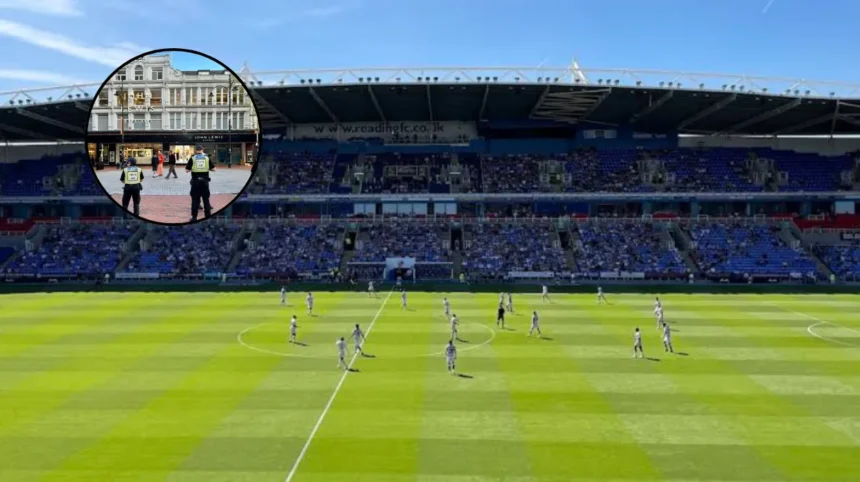
Prior to kick-off, Thames Valley Police activated a Section 35 dispersal order across key areas of Reading, including streets around the Select Car Leasing Stadium, the town centre, and the railway station. The order ran from 8am to 8pm on April 18, aimed at preventing antisocial behaviour.
Chief Inspector Dave Washington, the tactical commander for the match, described the operation as “highly visible and robust.” He stated, as reported in local coverage, that the measures were preventative to ensure public safety and reduce the risk of harassment, alarm, or distress.
The dispersal powers allowed officers to remove individuals from designated zones for up to 12 hours if necessary. This was complemented by widened patrols, drones, mounted officers, and bicycle units, underscoring the scale of the policing effort.
As noted by BBC News in their April 17 preview, the Section 35 order covered thoroughfares surrounding the stadium and central Reading, activated from 0800 BST to 2000 BST ahead of the 1500 kick-off.
Washington urged fans to “enjoy the game, back their team and return home safely,” adding that “antisocial behaviour and disorder will not be tolerated,” with firm action including arrests and potential football banning orders.
How Did the Match Context Contribute to Police Presence?
The fixture pitted Reading FC against Cardiff City FC in League One, drawing significant crowds to Berkshire. Pre-match planning by Thames Valley Police framed the operation as precautionary, not in response to a specific prior incident.
Coverage from Wokingham Today highlighted the deployment as part of a broader strategy to manage crowd movement and maintain calm in public spaces during the busy afternoon.
No reports indicated widespread violence or major pitch invasions, with incidents limited to the noted arrests. The focus remained on isolated disorderly behaviour and security breaches at the stadium and nearby roads.
Police presence was designed to provide reassurance as supporters travelled to and from the venue, particularly around the railway station and town centre.
What Charges Were Filed and What Happens Next?
Gareth Whitehouse’s charge relates directly to his actions on Greyfriars Road, where officers stepped in to prevent escalation. Lewis Campbell-Williams faces dual charges, with the bladed article possession raising particular concerns under UK weapons laws.
Both individuals were charged on April 19, following their arrests the previous day. Court appearances have not been specified in available reports, but standard procedure would see them at local magistrates’ courts.
The Reading teenager’s case remains under investigation, with no charges announced as of the latest updates. Thames Valley Police continue to review footage and witness statements from the event.
Supporters are encouraged to report concerns to officers, stewards, or stadium staff, as per Washington’s guidance.
Background of the Development
Thames Valley Police’s operation for the Reading FC vs Cardiff City match built on established protocols for League One fixtures involving away support from Wales. Section 35 orders, under the Anti-Social Behaviour, Crime and Policing Act 2014, grant authorised officers powers to disperse groups causing or likely to cause antisocial behaviour in public places.
Reading’s Select Car Leasing Stadium has seen similar measures for high-profile games, reflecting ongoing efforts to balance fan enjoyment with safety amid rising concerns over football-related disorder nationally. The April 18 deployment followed intelligence-led planning, with no direct link to prior Cardiff or Reading fan violence cited.
This incident occurs against a backdrop of intensified policing at EFL matches, where dispersal zones and enhanced patrols have become routine to preempt issues seen in higher divisions.
Prediction: Impact on Football Supporters and Local Communities
This development can affect football supporters by increasing scrutiny on match-day behaviour, potentially leading to more frequent use of dispersal orders and swift arrests at future League One fixtures. Fans attending Reading FC or Cardiff City games may encounter heightened police presence, including drones and mounted units, which could alter travel plans around stadiums and town centres.
Local communities in Reading and similar host towns might experience temporary restrictions on public spaces during matches, aimed at reducing disruption but possibly impacting residents’ routines on event days. Repeat offenders could face football banning orders, limiting attendance and affecting club memberships.
For the particular audience of EFL followers, particularly those from Kent, Cardiff, and Berkshire, this underscores the consequences of isolated incidents, with charges for public order, weapons, and theft serving as deterrents while reinforcing safe passage expectations.