Key Points
- Planning permission granted to J. B. S. L. Holdings Ltd for remodelling and change of use of part of the existing building at 125-139 Queen Street in Cardiff.
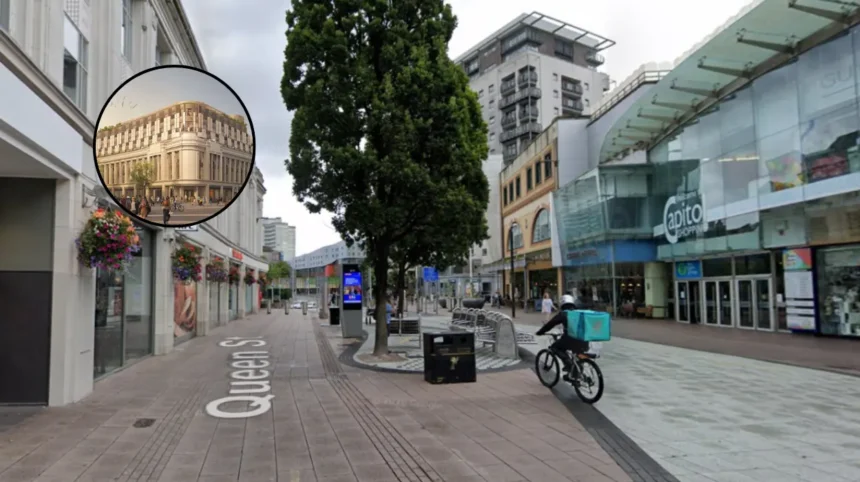
- Location opposite the Capitol Centre at the end of Queen Street where Newport Road becomes Dumfries Place.
- New three-storey extension plus a rooftop pavilion with fine dining restaurant and sky-bar.
- 158 high-quality four-star rooms aimed at visitors to Cardiff.
- Design enhances streetscape and contributes positively to the local economy.
- Internal design maximises views of urban context with carefully positioned seating areas offering panoramic perspectives.
- Inspiration from historic architecture of Cardiff and existing building’s art deco style, with modern and contemporary twist.
- Facilities include lobby, reception area, access to sky bar and restaurant, and fitness centre.
- Architects: Paul Treacy Architects, with prior projects in Chelsea, Fitzrovia, Bristol, Battersea, and Chester.
- Sustainability features: green roofs, solar panels, energy-efficient building systems, innovative waste management, and water usage approaches.
Cardiff (Cardiff Daily) April 23, 2026 – Planning permission has been granted for a new four-star hotel in Cardiff city centre, featuring a rooftop pavilion with a fine dining restaurant and sky-bar. The council approved the project for the remodelling and change of use of part of the existing building at 125-139 Queen Street.
Why Has Cardiff Council Approved This Hotel Project?
The development centres on a large building opposite the Capitol Centre, at the point where Newport Road meets Dumfries Place at the end of Queen Street. As detailed in the planning application, the project includes a new three-storey extension alongside the rooftop pavilion.
This aims to deliver 158 high-quality four-star rooms for visitors to Cardiff, while enhancing the streetscape and contributing positively to the local economy.
According to the application documents, the internal design maximises views of the urban context through carefully positioned seating areas that offer panoramic perspectives of the surrounding cityscape.
This setup ensures that every guest experience is enhanced by the exceptional visual connectivity and spatial quality of the top floor.
The hotel’s design draws inspiration from the historic architecture of Cardiff and the existing building’s art deco influences, blended with a modern and contemporary twist.
Facilities will encompass a lobby, reception area, access to the sky bar and restaurant, and a fitness centre, ensuring guests have access to everything needed for a pleasant stay.
Who Are the Architects Behind the Design?
Paul Treacy Architects have been appointed to design the hotel. As reported by WalesOnline, this firm has previously designed luxury hotels in Chelsea, Fitzrovia, Bristol, Battersea, and Chester.
Their expertise in high-end hospitality projects positions them well for this Cardiff development.
What Sustainability Measures Are Included?
Sustainability forms a core aspect of the project. Features incorporate green roofs, solar panels, and energy-efficient building systems to minimise environmental impact and promote energy efficiency.
Innovative approaches to waste management and water usage will further strengthen the project’s green credentials.
These elements align with broader trends in hospitality, where such systems reduce operational costs and appeal to environmentally conscious travellers.
The green roofs and solar integration, for instance, support lower carbon emissions and better energy performance in urban settings.
How Will This Impact Cardiff’s City Centre?
The hotel’s position in the heart of Cardiff city centre promises to boost tourism and local business. By providing 158 four-star rooms, it addresses demand from visitors exploring the Welsh capital.
The rooftop pavilion, with its fine dining and sky-bar, adds a premium leisure option overlooking key landmarks.
The enhancement to the streetscape at Queen Street respects the area’s character while introducing modern facilities. This balances preservation with progress, maintaining Cardiff’s appeal as a vibrant destination.
Background of the Development
The site at 125-139 Queen Street has long been part of Cardiff’s commercial landscape, with the existing building reflecting art deco influences typical of early 20th-century architecture in the area. Planning permission follows a detailed application process by J. B. S. L. Holdings Ltd, addressing urban regeneration needs in the city centre.
The project builds on Cardiff Council’s efforts to revitalise key streets like Queen Street, which links major shopping and cultural hubs including the Capitol Centre. Previous developments in the vicinity have similarly focused on mixed-use enhancements, but this stands out for its hospitality emphasis and sustainability integration. Paul Treacy Architects’ involvement stems from their track record in transforming period properties into luxury hotels elsewhere in the UK, ensuring continuity with local heritage.
Prediction: How This Development Can Affect Cardiff Visitors and Local Businesses
This hotel can provide Cardiff visitors with increased four-star accommodation options, easing pressure on existing capacity during peak seasons and events. The 158 rooms, rooftop dining, sky-bar, and fitness centre offer convenience in the city centre, potentially shortening travel times to attractions and improving stay experiences through panoramic views and modern amenities.
Local businesses may see boosted footfall from hotel guests frequenting nearby shops, restaurants, and venues on Queen Street and Dumfries Place, supporting economic activity without introducing excessive competition in lower-tier hospitality. Sustainability features like solar panels and green roofs could set a model for future projects, indirectly benefiting visitors via a greener urban environment and possibly lower long-term operational costs passed on as competitive pricing. For businesses, the streetscape improvements may enhance the area’s attractiveness, drawing more trade while the project’s economic contributions—through jobs and tourism spend—sustain community stability.