Key Points
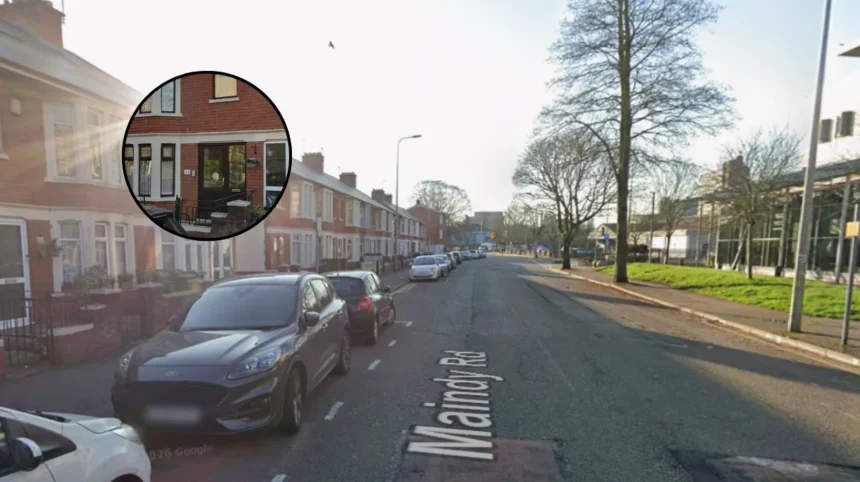
- Cardiff Council has officially granted planning permission for an eight-bedroom House in Multiple Occupation (HMO) at 34 Maindy Road in Cathays.
- The decision was reached despite formal objections submitted by local ward councillors and a significant petition from residents.
- Concerns raised by opponents centered on the existing over-concentration of HMOs in the area, increased waste generation, parking congestion, and the loss of traditional family housing.
- The applicant argued that the development meets all current Cardiff Council planning policies, providing high-quality, managed accommodation that includes dedicated cycle storage and refuse facilities.
- Official planning officers recommended the scheme for approval, noting that the property layout, space standards, and amenity provisions aligned with established supplementary planning guidance.
Cardiff Council (Cardiff Daily) May 13, 2026 – Cardiff Council has formally approved a planning application to convert an existing residential dwelling into an eight-bedroom House in Multiple Occupation (HMO) at 34 Maindy Road, Cathays. The decision, finalized during the council’s latest planning regulatory committee session, overrules a sustained campaign of opposition mounted by local residents and elected ward representatives. Objectors argued that the high density of shared student accommodation is actively detrimental to the community’s socio-economic balance, whereas planning officers concluded the application fully satisfied the local authority’s legal framework and housing criteria.
- Key Points
- Why Has the 34 Maindy Road HMO Application Sparked Fierce Local Opposition?
- What Stance Did Ward Councillors Take on the Cathays HMO Conversion?
- How Did the Applicant and Planning Officers Justify the Eight-Bedroom HMO Approval?
- Background of the House in Multiple Occupation (HMO) Policy in Cardiff
- Prediction:
Why Has the 34 Maindy Road HMO Application Sparked Fierce Local Opposition?
The controversy surrounding 34 Maindy Road highlights a long-standing tension between the demand for student accommodation in Cathays and the desires of permanent residents to retain community cohesion. During the formal consultation phase, a coordinated effort by local community groups and neighbours resulted in formal letters of objection and a petition lodged with the planning department.
As reported by Alex Seabrook of the Cardiff Local Democracy Reporting Service, local residents voiced significant anxieties regarding the cumulative impact of another high-occupancy property on a street already heavily populated by transient tenants.
The primary objections detailed by the community focused heavily on the strain on local infrastructure, specifically regarding waste management, litter, anti-social behavior, and the absolute lack of available on-street parking.
Furthermore, objectors maintained that converting yet another traditional family home into a high-density rental unit systematically erodes the availability of housing stock for young families wishing to remain in the urban area of Cardiff.
What Stance Did Ward Councillors Take on the Cathays HMO Conversion?
Local political representatives for the Cathays ward firmly aligned themselves with the protesting residents, submitting formal, written objections directly to the council’s planning committee to halt the project.
As reported by independent journalist Rhiannon James, Cardiff Council Ward Councillors Norma Mackie, Sarah Merry, and Chris Weaver co-signed a comprehensive objection letter to the planners detailing their opposition. In the correspondence, the councillors stated:
“The over-concentration of HMOs in Cathays has reached a threshold where it is actively harming the social fabric of the neighborhood. Allowing a property to expand to an eight-bedroom HMO at this location further exacerbates the existing issues of noise disruption, poorly managed refuse, and parking displacement that our constituents battle on a daily basis.”
The councillors also argued that an eight-bedroom configuration constitutes an over-development of the site, presenting a density of occupation that exceeds what the original Victorian terraced structure was designed to sustainably accommodate.
How Did the Applicant and Planning Officers Justify the Eight-Bedroom HMO Approval?
In contrast to the community pushback, the developer and Cardiff Council’s independent planning officers looked strictly at the statutory compliance of the proposal against the city’s current Local Development Plan (LDP).
According to reports published by WalesOnline editorial staff, the applicant’s planning agent argued that the conversion represents a highly efficient use of an existing urban building, aligning perfectly with sustainable housing strategies by placing dense accommodation near major employment and education hubs, such as Cardiff University.
The developer’s submission emphasized that the internal layout would undergo a high-specification refurbishment to ensure adequate living space, natural light, and soundproofing for all eight prospective occupants.
When the matter came before the planning committee, the officer’s report recommended approval. The report concluded that the application met all relevant supplementary planning guidance criteria, notably regarding room sizes, shared amenity space, and kitchen provisions.
To mitigate the concerns raised by the public, the planning officers attached specific conditions to the approval, requiring the developer to install a secure, covered cycle store capable of holding eight bicycles and to establish a strictly managed, enclosed refuse storage area at the rear of the property to prevent street littering.
Explore More Cathays News
Cathays Church Hall Wins HMO Approval Amid Objections, Cardiff 2026
Free Cathays Cemetery Tours Explore Cardiff History 2026
Background of the House in Multiple Occupation (HMO) Policy in Cardiff
The dispute over 34 Maindy Road is situated within a broader, multi-year policy debate regarding housing density in the capital of Wales. Cathays has historically served as the primary residential hub for Cardiff’s large student population due to its immediate proximity to university campuses. Over the past two decades, this demand drove the widespread conversion of traditional family terraced homes into HMOs.
In response to growing community pressure regarding “studentification,” Cardiff Council introduced a Supplementary Planning Guidance (SPG) framework specifically targeting HMOs in 2016. Under these guidelines, the council established a threshold policy designed to prevent any further over-concentration of shared houses.
In the Cathays ward, the policy dictates that planning permission for new HMOs should generally be refused if the percentage of HMOs within a 50-meter radius of the application site already exceeds 20%.
However, applying this threshold has frequently been a point of legal and administrative contention. In many parts of Cathays, the concentration of HMOs had already surpassed 70% or 80% before the SPG framework was enacted.
Developers regularly challenge refusals by arguing that in an area already overwhelmingly dominated by HMOs, converting one additional property does not fundamentally alter the character of the neighborhood, or that the specific property calculation falls within an exception clause of the policy. The approval of 34 Maindy Road reflects the ongoing friction between the strict mathematical application of planning law and the qualitative concerns of the remaining permanent community.
Prediction:
The approval of the eight-bedroom HMO at 34 Maindy Road is highly likely to accelerate specific, predictable shifts within the Cathays neighborhood, directly impacting permanent residents, the student population, and the local property market.