Key Points
- Temporary Closure Enforced: Roath Park Conservatory has been closed to members of the public following exceptionally high temperatures sweeping across South Wales.
- Public Safety Prioritised: Cardiff Council implemented the closure as a precautionary measure to guarantee the safety and operational well-being of both visitors and site personnel.
- Welfare Checks Ongoing: Municipal authorities have confirmed that scheduled welfare inspections will continue regularly to protect the exotic animals resident inside the glass structure.
- Species Monitored: The ongoing conservation and welfare checks specifically cover the building’s resident community of fish, terrapins, and whistling ducks.
- Anticipated Reopening: The facility is projected to remain closed until Friday, with the resumption of public entry dependent on local weather updates and changing regional conditions.
Cardiff (Cardiff Daily) June 24, 2026 — Roath Park Conservatory has been forced into an immediate temporary closure as Cardiff and the wider South Wales region continue to contend with an intense period of extreme temperatures.
As reported by Rhys Gregory of Wales 247, the local local authority confirmed that the popular botanical attraction will remain closed to the public until Friday.
The decision was implemented to safeguard visitors and municipal workers from the soaring internal heat generated within the glasshouse structure during the ongoing heatwave.
The suspension of operations aligns with a series of wider public safety alerts and service disruptions across the city, as regional infrastructure faces significant thermal stress.
What steps are being taken to protect the conservatory’s resident wildlife?
As documented in official statements released by Cardiff Council, local managers have provided firm reassurances that the welfare of the conservatory’s permanent animal residents remains a top operational priority.
According to the reporting from Wales 247, despite the complete withdrawal of public access, regular welfare checks will continue to be meticulously carried out by specialist park teams throughout the duration of the closure.
These emergency measures are designed to monitor and support the health of the specific species housed within the facility’s aquatic features.
Municipal keepers are closely supervising the well-being of the conservatory’s resident fish, terrapins, and distinctive whistling ducks, ensuring that internal water filtration, oxygenation levels, and feeding routines remain completely uncompromised by the external weather emergency.
How severe is the current heatwave affecting South Wales?
The closure of the historic glasshouse comes as South Wales faces a period of exceptionally high summer temperatures, triggering formal weather warnings across multiple council boroughs.
In concurrent coverage from Wales Online, sports facilities and recreational areas across the region have similarly suspended operations after a red weather alert was implemented.
Organisers and sporting bodies, including Tennis Wales in the Park, closed local outdoor courts on health and safety grounds, noting that sustained high temperatures not only present severe heat exhaustion risks to the public but can actively soften and damage modern court surface materials.
Met Office guidance issued during this period highlights that such extreme conditions present a genuine threat to health, prompting public entities to curtail non-essential indoor and outdoor gatherings in unconditioned spaces.
When will the botanical facility reopen to the public?
Cardiff Council has stated that the temporary closure of the conservatory is an entirely precautionary measure intended to mitigate any predictable health risks associated with the high ambient temperatures.
The current schedule outlines that the doors will remain locked to visitors until Friday morning. However, local authority spokespeople have emphasised that the actual reopening remains strictly subject to changing environmental conditions.
The site will only welcome visitors back once internal temperatures return to manageable levels and subsequent weather-related safety advice indicates that it is entirely safe for staff to resume standard indoor operations.
Background
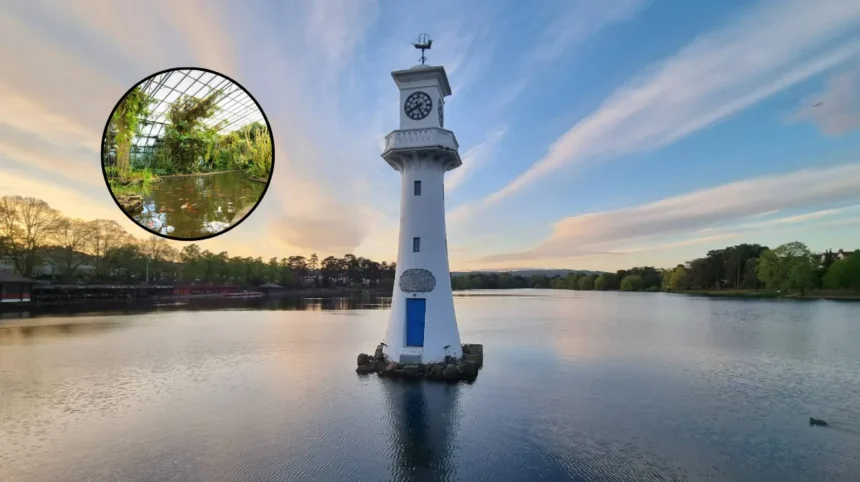
Roath Park Conservatory, colloquially known to generations of Cardiff residents as the ‘Tropical House’, serves as a primary horticultural focal point within the Grade I listed Roath Park Botanic Gardens, which originally opened to the public in the late Victorian era. The present conservatory structure was erected in 1974, replacing two historic early-20th-century glasshouses known as the Chrysanthemum House and the Cactus House.
Architecturally engineered as a temperate and sub-tropical ecosystem, the building houses an extensive collection of exotic flora, including banana trees, orchids, and palms. In 1988, Cardiff Council undertook a significant modernised refurbishment, replacing much of the original glass paneling with triple polycarbonate sheets at a cost of £53,000 to improve thermal insulation and reduce seasonal heating expenditure.
While this structural modification successfully retained heat during cold winter months, the modern polycarbonate material significantly intensifies the ‘greenhouse effect’ during high-amplitude summer heatwaves, leading to the extreme internal conditions that prompted the current operational suspension.
Prediction
The closure of Roath Park Conservatory serves as an indicator of how increasingly frequent urban heat island effects and extreme weather anomalies will impact local communities, families, and regional tourism.
For local residents and visitors, particularly families with young children and elderly citizens who rely on Cardiff’s municipal parks for accessible recreation, these recurring climate-induced closures will increasingly restrict access to public green spaces and educational facilities during peak summer weeks.
Furthermore, the operational adjustments seen across Cardiff—ranging from early-morning refuse collections to the closure of community sports grounds—suggest that local populations will face broader behavioral shifts.
Residents will likely have to adapt to modified public service timetables, higher risks of heat-related recreational cancellations, and an increasing reliance on indoor, climate-controlled public environments as traditional heritage structures struggle to cope with rising baseline temperatures.