Key Points
- More than 300 council-owned buildings in Cardiff contain asbestos-containing materials (ACMs).
- The figure—307 buildings—was disclosed following a Freedom of Information (FOI) request by the Local Democracy Reporting Service (LDRS).
- Cardiff Council is the “duty holder” responsible for maintenance in these buildings.
- The discovery includes public sector properties such as schools, offices, leisure centres, and council housing.
- No immediate health risk has been reported, but the council stresses that asbestos must be properly managed.
- Asbestos was widely used in UK construction before being banned in 1999.
- Similar issues have been found across many UK local authorities, with tens of thousands of public buildings still containing asbestos.
- Cardiff Council offers an “asbestos checker” tool for tenants to see if asbestos may be present in their homes.
- The council has an asbestos helpline (029 2087 2087) for tenants planning work that could disturb asbestos.
- City Hall, one of Cardiff’s landmark buildings, has previously been closed for asbestos removal as part of maintenance work.
Cardiff (Cardiff Daily) July 2, 2026, has become the focus of a renewed public safety debate after it was revealed that more than 300 council-owned buildings in the city contain asbestos.
- Key Points
- What Does the Asbestos Data Say About Cardiff Council’s Buildings?
- What Types of Buildings Are Included?
- Why Is Asbestos Still Present in So Many Public Buildings?
- National Context: Asbestos Across UK Councils
- How Is Cardiff Council Managing the Asbestos Risk?
- As Checker Tool and Helpline
- Guidance for Residents and Workers
- What Have Local Reports Said About Specific Buildings?
- Schools and Education Settings
- Has Any Asbestos Incident Occurred in Cardiff Recently?
- Demolition Projects
- Background: The Development of Asbestos Management in Cardiff and the UK
- Prediction: How This Development Can Affect Cardiff Residents, Workers, and Students
- For Workers in Council Buildings
- For Pupils, Teachers, and School Staff
- Overall Outlook
According to data obtained by the Local Democracy Reporting Service (LDRS) through a Freedom of Information (FOI) request, 307 buildings which Cardiff Council is the duty holder for, or responsible for maintaining, contain asbestos-containing materials (ACMs).
The disclosure raises immediate questions for residents, workers, and visitors who use these facilities daily. Schools, leisure centres, council offices, and housing blocks are among the properties identified, meaning the impact spans education, public services, and residential life across the city.
What Does the Asbestos Data Say About Cardiff Council’s Buildings?
The FOI response confirms that 307 buildings under Cardiff Council’s responsibility contain ACMs. This figure does not mean that asbestos is freely spreading; rather, it indicates that asbestos-containing materials are present in the building fabric and are being managed under the council’s asbestos policy.
As reported by Kieran Molloy, Local Democracy Reporter for Nation Cymru, the data shows that Cardiff Council is the duty holder or responsible for maintenance for all 307 identified buildings.
What Types of Buildings Are Included?
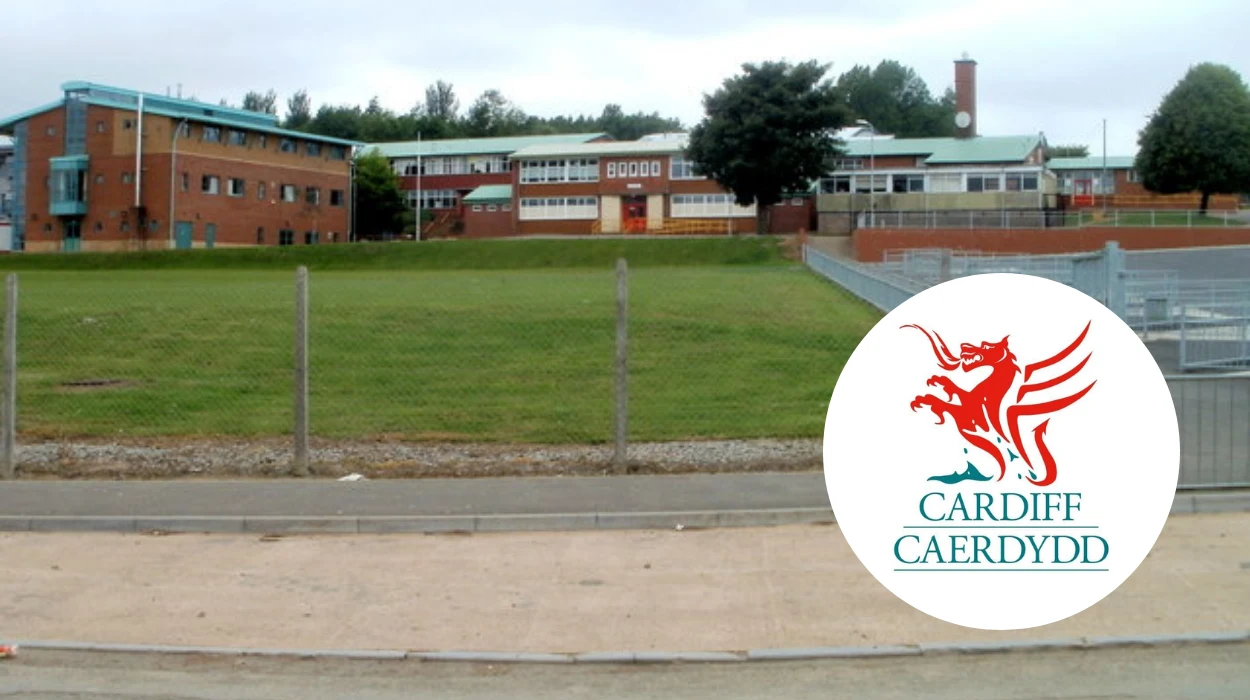
While the exact list of all 307 buildings has not been published in full detail, related reports indicate that schools and public buildings are among those affected. Wales Online previously reported that hundreds of public buildings in Cardiff still contain asbestos, including 115 schools.
This suggests that education settings are a significant part of the overall figure, raising concerns for pupils, teachers, and support staff.
Why Is Asbestos Still Present in So Many Public Buildings?
Asbestos was widely used in UK construction for its fire-resistant and insulating properties. It appeared in roofing, wall panels, floor tiles, ceiling tiles, pipe insulation, and fire doors. Its use was only fully banned in the UK in 1999.
As noted on an asbestos survey service website, any non-domestic property in Cardiff built before 2000 is likely to contain asbestos-containing materials, making a professional survey a legal and safety necessity for duty holders.
National Context: Asbestos Across UK Councils
The situation in Cardiff is not unique. A 2023 report by law firm Irwin Mitchell revealed that more than 4,500 public buildings across 20 of the largest UK local authorities still contain asbestos.
A later update in 2024 showed that asbestos was removed from more than 250 public buildings across those same councils in the previous financial year.
In England alone, Freedom of Information requests by Stephensons Solicitors in 2017 found that more than 30,000 council-owned or managed buildings contained asbestos, with every responding council confirming at least one such building.
This national picture underscores that Cardiff’s 307 buildings are part of a much wider legacy issue affecting public sector infrastructure across the UK.
How Is Cardiff Council Managing the Asbestos Risk?
Under UK law, the “duty holder” for a non-domestic building must manage asbestos risks. This includes identifying asbestos, assessing its condition, and ensuring it is properly monitored and, where necessary, removed or enclosed.
Cardiff Council states on its website that it manages asbestos safely and that survey findings have shown that none of the asbestos identified was classed as high risk.
As Checker Tool and Helpline
For council tenants, the council offers an online “asbestos checker” where residents can search by postcode or street name to see whether asbestos may be present in their home. The tool does not provide a definitive guarantee but indicates potential presence based on survey data.
Cardiff Housing also provides an asbestos helpline on 029 2087 2087 for tenants who plan to carry out work that may disturb asbestos-containing materials or who have further questions about asbestos in their homes.
Guidance for Residents and Workers
Cardiff Community Housing Association (CCHA) emphasises that asbestos is not dangerous if managed effectively, but warns:
- Never attempt to remove asbestos yourself.
- Report any deterioration or damage to asbestos-containing materials as soon as possible.
- If damage is suspected, keep everyone away from the area and do not attempt to clean it up.
The association advises that moving, brushing, or vacuuming asbestos debris can spread fibres into the air, increasing exposure risk.
Explore More Cardiff Council News
Welsh Speakers Rise in Cardiff as Council Hails Progress 2026
Cardiff Council Activates Emergency Heatwave Measures: Cardiff 2026
What Have Local Reports Said About Specific Buildings?
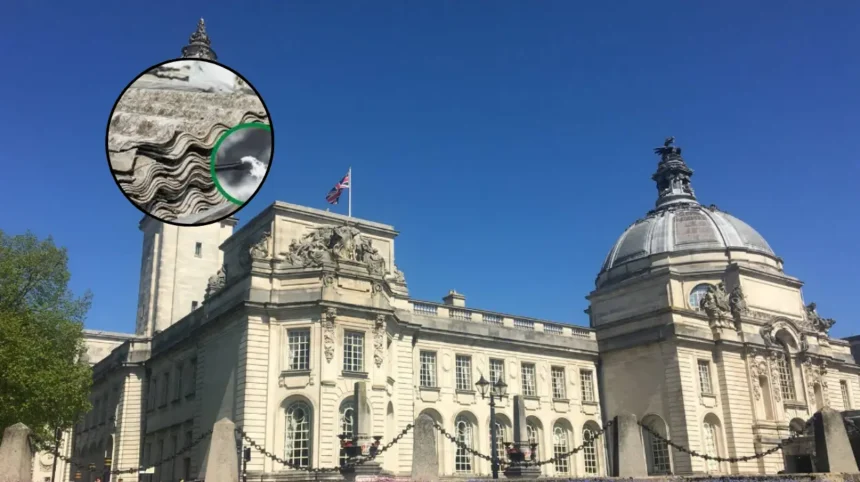
Cardiff’s City Hall, a prominent civic building, has previously been closed for years for maintenance work that included asbestos removal. Wales247 reported that Council published updates on the extensive maintenance being carried out on City Hall, including asbestos removal.
Later reports confirmed that City Hall would remain closed for longer than expected to allow for further works, including additional asbestos removal.
Schools and Education Settings
As noted earlier, Wales Online reported that 115 schools in Cardiff contain asbestos. While the material is managed, the presence of asbestos in school buildings has been a long-standing concern across Wales.
BBC Wales previously revealed, through an FOI request, that more than 900 schools in Wales are known to contain asbestos, with 60% of Welsh schools affected. Most of these schools are regularly inspected, according to the report.
Has Any Asbestos Incident Occurred in Cardiff Recently?
While no widespread health incidents have been linked to the 307 buildings, asbestos has caused operational disruptions in specific cases.
Wales Online reported that a road remained closed for two days after a fire in a former business unit, with the discovery of asbestos hampering recovery operations.
This illustrates how asbestos can complicate emergency responses and post-fire cleanup, even when it is not itself the cause of the incident.
Demolition Projects
Asbestos has also influenced demolition plans. In nearby Barrow, a former market hall and theatre were to be demolished due to dangerous asbestos issues, with no replacement plans revealed at the time of the report. While not in Cardiff, this reflects a pattern seen across the UK where asbestos can determine whether buildings are refurbished or removed.
Background: The Development of Asbestos Management in Cardiff and the UK
Asbestos was a standard building material in the UK from the early 20th century until its full ban in 1999. Its fire-resistant and insulating qualities made it popular in schools, hospitals, council housing, and public buildings.
Over time, however, it became clear that inhaling asbestos fibres could cause serious diseases, including asbestosis, lung cancer, and mesothelioma.
In response, the UK introduced the Control of Asbestos Regulations, which place legal duties on duty holders to manage asbestos in non-domestic buildings. These require:
- Identification of asbestos or presumption that it is present.
- Assessment of its condition and risk.
- A written asbestos management plan.
- Regular monitoring and, where necessary, removal or encapsulation.
Cardiff Council, like many other UK local authorities, has developed an asbestos management framework to comply with these regulations.
The council’s public statements indicate that most identified asbestos is not classified as high risk, but ongoing monitoring and targeted removal are carried out as part of building maintenance programmes.
The recent FOI disclosure of 307 buildings with ACMs is consistent with broader national trends. Across England and Wales, tens of thousands of public buildings still contain asbestos, and local authorities continue to invest in inspection, management, and removal as part of long-term infrastructure strategies.
Prediction: How This Development Can Affect Cardiff Residents, Workers, and Students
Residents living in Cardiff Council properties may feel increased concern after learning that hundreds of council buildings contain asbestos.
However, according to the council’s own guidance, the identified asbestos is not currently classed as high risk.
In practical terms, this development is likely to:
- Increase awareness among tenants about asbestos and safe practices.
- Lead more residents to use the asbestos checker tool and contact the helpline before undertaking home improvements.
- Stress the importance of reporting damage or deterioration quickly, as advised by CCHA.
Unless there is physical damage or disturbance, the presence of asbestos in building materials does not automatically mean an immediate health threat.
For Workers in Council Buildings
Employees working in council offices, leisure centres, and other public facilities may seek clarification on how asbestos is managed in their workplaces.
Under current regulations, duty holders must inform workers about the location and condition of asbestos and ensure that any work that could disturb it is properly planned.
This development may lead to:
- Greater questioning of asbestos management plans by staff and unions.
- Increased demand for training on asbestos awareness, particularly for maintenance and construction teams.
- Potential inspections or reviews of specific buildings if concerns arise about_condition_ rather than just presence.
For Pupils, Teachers, and School Staff
The inclusion of 115 schools in the broader Cardiff asbestos picture is likely to be the most sensitive part of the disclosure.
Parents may worry about their children’s exposure, while teachers and support staff may question how risks are managed in classrooms, corridors, and older buildings.
Possible effects include:
- More inquiries from parents about asbestos in school buildings.
- Requests for clearer communication from schools and the council about inspection schedules and management plans.
- Pressure on the council and local education authorities to prioritise asbestos removal or encapsulation in older school buildings, especially where materials are showing signs of wear.
Given that BBC Wales previously reported that 60% of Welsh schools contain asbestos, with most being regularly inspected, the Cardiff figures reinforce an existing national concern rather than revealing a new, isolated crisis.
Overall Outlook
In the short term, the main impact of this development is likely to be heightened awareness and public scrutiny rather than immediate health emergencies.
Cardiff Council’s existing asbestos management framework, helpline, and online checker suggest that the authority is already prepared to handle queries and manage risks.
Over the longer term, this disclosure could:
- Add pressure on the council to accelerate asbestos removal programmes, particularly in high-occupancy buildings such as schools and leisure centres.
- Influence funding decisions, as asbestos management and removal are costly and must be balanced against other maintenance priorities.
- Encourage other UK councils to review and, where necessary, update their own asbestos transparency and communication strategies.
For Cardiff residents, workers, and students, the key message remains consistent with official guidance: asbestos is dangerous if disturbed, but when properly managed, it does not necessarily pose an immediate health risk.
The challenge lies in maintaining that management rigorously, communicating clearly with the public, and ensuring that inspection and removal programmes are kept up to date across all 307 identified buildings.