Key Points
- Five Cardiff schools – Ysgol Mynydd Bychan, Gabalfa Primary School, St Cadoc’s Catholic Primary School, Glyncoed Primary School and St Illtyd’s High School – are the first to be selected for a climate-adaptive playground transformation programme.
- The project is a partnership between environmental charity Trees for Cities and Cardiff Council, delivered under the council’s One Planet Cardiff climate response strategy.
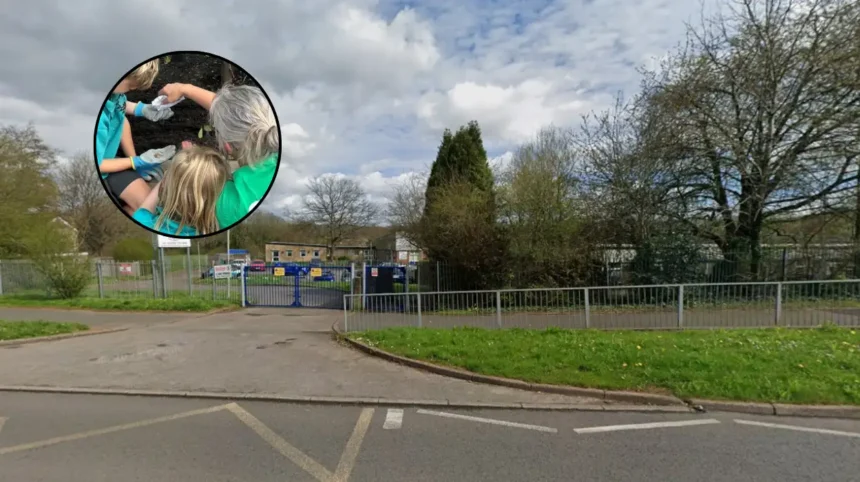
- The first transformation has been completed at Ysgol Mynydd Bychan in Cathays, where hard-surfaced areas have been replaced with trees, mediterranean planting, raised beds, wildlife habitats, a wormery and a rainwater harvesting system.
- At other selected schools prone to flooding, designs include “rain gardens” to provide sustainable drainage solutions as part of a wider sustainable drainage systems (SuDS) approach.
- Local charity Grow Cardiff is using the new space at Ysgol Mynydd Bychan to deliver regular hands-on sessions on food growing, biodiversity and climate action, alongside teacher training and curriculum-linked learning resources.
- The “Healthy Playground” programme builds on a five-year partnership between Cardiff Council and Trees for Cities that has already introduced green spaces to 40 school playgrounds across the city.
- Funding for the project comes from Cardiff Council’s One Planet Cardiff Capital Fund, which supports innovative climate-related projects across council services.
Cardiff (Cardiff Daily) July 30, 2026 – School playgrounds across Cardiff are set to become greener, cooler and more resilient to climate change as part of an ambitious programme to create climate-adaptive learning spaces for pupils. The project aims to transform school grounds in areas most vulnerable to climate impacts such as overheating, flooding and biodiversity loss, with five schools initially earmarked for the work.
- Key Points
- Which schools are included in the first phase of the playground transformation?
- What changes have already been made at Ysgol Mynydd Bychan?
- How will the new playgrounds support outdoor learning and the Welsh curriculum?
- What is the wider context of Cardiff’s school greening work?
- Background of the particular development
- Prediction: How this development can affect pupils, staff and the local community
The initiative is a partnership between environmental charity Trees for Cities and Cardiff Council, delivered as part of the local authority’s One Planet Cardiff response to climate change. The climate-adaptive “Healthy Playground” programme builds on a successful five-year partnership between Cardiff Council and Trees for Cities that has already seen transformative green spaces introduced to 40 school playgrounds.
Which schools are included in the first phase of the playground transformation?
The first phase of the project includes five schools: Ysgol Mynydd Bychan, Gabalfa Primary School, St Cadoc’s Catholic Primary School, Glyncoed Primary School and St Illtyd’s High School. These sites were selected because their grounds are in areas most vulnerable to climate impacts such as overheating, flooding and biodiversity loss.
At other selected schools where playgrounds are prone to flooding, designs have been created that include “rain gardens” to provide sustainable drainage solutions. This approach aligns with a separate SuDS in Cardiff Schools Feasibility Study produced by Trees for Cities in partnership with schools, technical consultants and Cardiff Council, and funded by Natural Resources Wales, which assessed opportunities for small-scale sustainable drainage systems at five Cardiff schools.
What changes have already been made at Ysgol Mynydd Bychan?
The first transformation has already been completed at Ysgol Mynydd Bychan in Cathays, where sections of traditional hard-surfaced playground have been replaced with a nature-rich, climate change-resilient environment with improved opportunities for outdoor learning, play and wellbeing.
Features of the space at Ysgol Mynydd Bychan include trees to provide shade, a mediterranean garden planted with species that will continue to thrive as the climate gets increasingly hotter, raised planting areas for growing herbs and vegetables, wildlife-friendly habitats, as well as a wormery and a rainwater harvesting system.
Head Teacher at Ysgol Mynydd Bychan, Glesni Lloyd, said:
“It’s a fantastic addition to the school that benefits the children in so many different ways. At break times when it’s hot, you might find them simply enjoying the shade from the trees, but it’s also a great teaching aid. The children love learning outdoors and it’s also helping our staff deliver science lessons in new and exciting ways that get them really enthused and engaged. Plus, they love helping to plant and grow all the different vegetables and herbs – that’s a life skill that will stay with them forever.”
How will the new playgrounds support outdoor learning and the Welsh curriculum?
Following the transformation, local charity Grow Cardiff are using the space at Ysgol Mynydd Bychan to deliver regular hands-on sessions that help pupils learn about food growing, biodiversity and climate action. These sessions form part of a wider engagement programme that combines the physical improvements with workshops, teacher training and learning resources linked to the Welsh curriculum.
Trees for Cities’ Edible Playgrounds programme, which Grow Cardiff helps deliver in Cardiff primary schools, offers a “lively, engaging, multi-sensory way to teach children about growing and eating healthy food”, using a whole-school approach over 12 months that includes hands-on training for teachers and children. In other Cardiff schools, such as Greenway Primary, the Edible Playground Scheme – a partnership between Cardiff Council, Grow Cardiff and Trees for Cities – has already been used to link gardening activities to curriculum objectives, with learning experiences tracked against the Curriculum for Wales’ Areas of Learning and Experience.
What is the wider context of Cardiff’s school greening work?
The Healthy Playground programme extends earlier work in the city, including an Edible Playgrounds scheme that had delivered 15 edible playgrounds by 2022, with plans at that time to expand to up to 40 schools over three years. That earlier phase typically included raised beds, a greenhouse, compost, a wormery, a tool shed and an outdoor teaching space for an entire class.
Trees for Cities describes its school work as transforming “urban school grounds into leafy green oases”, redesigning tarmac playgrounds with trees, forest gardens, food-growing areas, outside classrooms, woodland play areas, mini-forests and wildlife habitats to support health, wellbeing and environmental outcomes. The charity notes that adapting playgrounds to the changing climate is “essential for children that live in cities as they are hit hardest by the warming planet”, using trees and shade to reduce heat stress and sustainable drainage features to manage flooding.
Funding for the current project comes from Cardiff Council’s One Planet Cardiff Capital Fund, which supports innovative climate-related projects across all areas of the council’s work. The council’s One Planet Strategy promotes “a range of air quality, tree planting and holistic greening schemes to address climate change”, according to earlier statements on the edible playgrounds work.
Background of the particular development
The greener playgrounds drive sits within a longer-term collaboration between Cardiff Council and Trees for Cities focused on school grounds. Over five years, the partnership has already introduced green spaces to 40 school playgrounds, including earlier edible playgrounds and nature-based improvements.
Trees for Cities has also worked with Cardiff schools on water-related education, running workshops to equip pupils and teachers with knowledge about water conservation and the role of trees in mitigating surface water flooding.
In parallel, a SuDS in Cardiff Schools Feasibility Study assessed opportunities for natural, small-scale sustainable drainage systems at five Cardiff schools, with the aim of identifying common surface water flood risk solutions that could be replicated across Wales. That study concluded that SuDS measures could enable schools to manage local flood risk, improve water quality of storm runoff, increase biodiversity, and create educational and playful interactive spaces. The current Healthy Playground designs, including rain gardens at flood-prone sites, reflect these findings.
Explore More Local Cardiff News
Cadw Unveils Five Sculptures of Iconic Welsh Women in Cardiff Central Square 2026
Llys Cyncoed Care Home Hosts Community Food Festival Cardiff 2026
Prediction: How this development can affect pupils, staff and the local community
If the programme is rolled out as planned, pupils at the five initial schools – and potentially many more across Cardiff – are likely to experience cooler, more usable outdoor spaces during hot weather, with shade from trees and climate-resilient planting reducing overheating on playgrounds. The inclusion of edible gardens, wildlife habitats and rainwater harvesting systems should give students regular, practical opportunities to learn about food production, biodiversity and climate adaptation, reinforcing classroom teaching in science and other subjects through hands-on activity.
For staff, the new environments are expected to expand teaching options, particularly for outdoor learning and curriculum-linked projects on sustainability, as described by Ysgol Mynydd Bychan’s head teacher. The structured engagement programme with Grow Cardiff, including workshops and teacher training, should help embed these themes in lesson planning and assessment under the Welsh curriculum.
For the wider community, the changes may contribute to broader One Planet Cardiff goals on tree planting, air quality and climate resilience, while demonstrating how school sites can double as local green infrastructure that manages rainwater and supports wildlife. If the feasibility study’s recommendations are adopted more widely, similar SuDS-based playground adaptations could become a model for other schools in Cardiff and across Wales, potentially reducing surface water flood risk and improving neighbourhood amenity around school sites.