Key Points
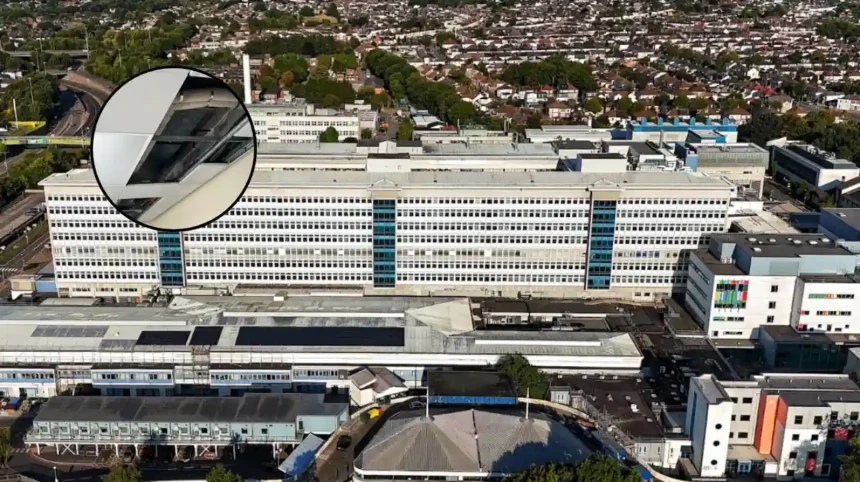
- Severe Structural Deterioration: Reform UK Member of the Senedd (MS) Joe Martin has described Wales’ largest hospital as “quite literally falling apart” following a recent site visit.
- Physical Damage Detailed: Inspection findings highlighted exposed electrical wiring, missing ceiling tiles, crumbling plaster and flooring, unhinged doors, and lift components secured with gaffer tape.
- Controversy Over Spending Priorities: Reform UK argues that the physical state of the University Hospital of Wales demonstrates misplaced Welsh Government funding priorities.
- Call to Redirect Overseas Spending: The party has demanded that the £9 million spent annually on the Welsh Government’s Wales and Africa international aid programme be redirected into domestic NHS infrastructure.
- Wider NHS Wales Pressure: Health authorities face an estimated national estate repair backlog exceeding £1 billion, prompting intense debate over capital investment and long-term facility renewal across Cardiff and the broader health service.
Cardiff (Cardiff Daily) August 10, 2026 – Parts of Wales’ largest healthcare facility are “quite literally falling apart”, according to a report published following an inspection by a Member of the Senedd.The University Hospital of Wales (UHW), widely known as Heath Hospital, has come under intense public scrutiny after Reform UK MS for Caerdydd Penarth, Joe Martin, conducted a site visit and described widespread structural decay, makeshift repairs, and exposed electrical hazards across the facility. Following the inspection, Mr Martin claimed that the physical state of the Cardiff hospital is direct evidence of misplaced Welsh Government spending priorities, sparking renewed political debate over health sector funding and capital investment across Wales.
- Key Points
- What Conditions Were Uncovered During the Site Visit to Heath Hospital?
- Why Is Reform UK Linking Domestic Hospital Infrastructure to Overseas Aid?
- How Have Political Opponents and Health Authorities Responded to the Funding Debate?
- What Is the Background to the Health Facility Infrastructure Crisis in Wales?
- What Are the Predictions for How This Infrastructure Crisis Will Affect Welsh Patients and Public Services?
What Conditions Were Uncovered During the Site Visit to Heath Hospital?
During his walkthrough of the University Hospital of Wales, Mr Martin reported observing severe structural damage across multiple patient-facing and operational areas.
Speaking after his inspection, the Reform UK politician stated that he was deeply shocked by the internal state of the building, which serves as a tertiary referral centre for specialist care across South Wales.
Describing the scene inside the hospital, Mr Martin stated:
“During my recent visit, I was astounded at the state of Heath Hospital. The place is quite literally falling apart. The floor is crumbling, plaster had fallen from the walls, and missing ceiling tiles had exposed electrical wiring. Parts of the lift were held together with gaffer tape and an unhinged door was leant against the wall.”
The descriptions of deteriorating infrastructure at Heath Hospital have raised fresh concerns regarding safety standards, maintenance schedules, and the general environment provided for both patients and healthcare staff within the major teaching facility.
Why Is Reform UK Linking Domestic Hospital Infrastructure to Overseas Aid?
Following his assessment of the hospital, Mr Martin linked the condition of the healthcare estate to broader governmental budget allocations, explicitly targeting the Welsh Government’s international development initiatives.
Central to Reform UK’s political challenge is the Welsh Government’s Wales and Africa programme, an overseas aid scheme that allocates approximately £9 million annually to support community partnerships in sub-Saharan Africa.
The programme funds international initiatives covering health, education, sustainable livelihoods, and climate action, including tree-planting projects in Uganda.
The Welsh Government maintains that the project aligns with its statutory commitment under the Well-being of Future Generations Act to be a “globally responsible nation.”
However, Mr Martin strongly criticized the expenditure, arguing that domestic public services should take precedent over foreign initiatives. Speaking on the political contrast, Mr Martin remarked:
“What is truly unhinged is, meanwhile, the Welsh Government sends £9 million of our money abroad each year in foreign aid. Heath Hospital is a stark example of the deterioration of our public services. I will not stop reminding ministers of the uncomfortable truth that Wales should not bankroll foreign vanity projects while the NHS slips into further decay and decline.”
Reform UK maintains that diverting money from international development directly into the NHS capital budget would provide immediate relief to crumbling hospital estates.
How Have Political Opponents and Health Authorities Responded to the Funding Debate?
The criticism from Reform UK has highlighted fundamental differences among political parties in Cardiff Bay regarding how health service delivery and structural improvements should be funded and executed.
Opposition parties and health advocates acknowledge the severe pressure facing NHS Wales infrastructure, but offer differing perspectives on how to resolve the crisis:
- Plaid Cymru Position: Plaid Cymru has argued that addressing NHS performance requires comprehensive structural reform within the health service itself rather than political disputes over international aid. The party advocates for closer integration between regional health boards, expanding treatment capacity in primary care settings, and streamlining clinical pathways to cut waiting times.
- Welsh Conservative Position: The Conservatives have consistently called on the Welsh Government to declare a formal health emergency, emphasizing the urgent need to address an estimated £1 billion maintenance backlog across Welsh health estates, recruit and retain clinical staff, and eliminate corridor care.
- Welsh Liberal Democrat Position: The Liberal Democrats have launched petitions calling on ministers and the Cardiff and Vale University Health Board to urgently publish transparent, long-term capital plans detailing how the deterioration at Heath Hospital will be remediated.
Currently, health and social care account for more than 50 per cent of the Welsh Government’s overall revenue budget. Ministers have noted that funding increases are built into future expenditure frameworks, but emphasize that capital budgets for major hospital rebuilds remain constrained by macroeconomic pressures and federal treasury allocations.
Explore More UK News
UK National Debt Could Reach £12 Trillion UK 2026
Met Office Issues Yellow Alerts as Fifth Heatwave Hits England 2026
What Is the Background to the Health Facility Infrastructure Crisis in Wales?
The controversy surrounding Heath Hospital reflects decades of building wear and mounting capital maintenance backlogs across the National Health Service in Wales.
Opened in the early 1970s, the University Hospital of Wales was designed to function as a modern major teaching facility and acute regional center.
However, after more than 50 years of continuous 24-hour operation, vast portions of the building’s core physical plant—including plumbing, electrical distribution, ventilation, and structural concrete—have reached or exceeded their intended operational lifespan.
Over the past decade, health administrators and ministers have debated whether to embark on a multi-billion-pound complete reconstruction of the Heath Hospital campus or to perform incremental, phased refurbishments.
Building an entirely new flagship hospital is estimated to cost several billion pounds—a capital requirement that currently exceeds the available discretionary capital budget of the Welsh Government.
In recent years, health boards have faced difficult choices regarding whether to spend limited capital funds on urgent clinical equipment or on underlying building maintenance.
This structural deficit has resulted in widespread reliance on temporary fixes, patch repairs, and deferred maintenance across healthcare facilities in Wales.
What Are the Predictions for How This Infrastructure Crisis Will Affect Welsh Patients and Public Services?
The ongoing infrastructure deterioration at University Hospital of Wales is expected to have far-reaching operational, financial, and political consequences across the region:
- Impact on Patient Experience and Clinical Safety: As physical structures continue to age, maintenance disruptions may increasingly impact day-to-day healthcare delivery. Exposed wiring, leaking pipework, or unreliable elevators present operational risks that could force temporary ward closures, lengthen patient transfer times within the hospital, and compromise infection control standards.
- Increased Emergency Maintenance Costs: Relying on reactive, makeshift repairs—such as temporary fixes on critical infrastructure—is substantially more expensive over time than planned capital renewals. Continued reliance on emergency repairs risks diverting vital revenue funds away from front-line clinical staffing and routine patient treatments.
- Ecalating Political Pressure in Senedd Cymru: The physical condition of public assets is poised to become a central battleground in upcoming electoral campaigns. Opposition parties will likely intensify scrutiny of capital spending decisions, keeping pressure on ministers to demonstrate visible progress in public service infrastructure.
- Potential Service Decant and Reorganisation: If structural decay in older hospital wings becomes unmanageable before full capital funding for a new facility is secured, health authorities may be forced to decentralise services. This could involve shifting non-emergency outpatient care into community settings or secondary care facilities across Cardiff and the Vale of Glamorgan to alleviate spatial demands on the main Heath site.