Key Points
- Promoter Eddie Hearn is anticipating that the “Battle of Britain” between the heavyweights Anthony Joshua and Tyson Fury will be held on December 11, 2026, in the Principality Stadium in Cardiff, Wales.
- Dan Rafael, a veteran boxing journalist, is the first one who broke the news about the date of December 11 being considered, though there are still bureaucratic and local permits that need to be sorted out.
- Madison Square Garden, located in New York, was the initial choice for holding this fight on November 20, the venue preferred by financiers like Turki Alalshikh, Sela, Netflix, and Dana White.
- However, Anthony Joshua and his promoter Eddie Hearn strictly followed all the clauses in their contract which stipulated that the fight should be conducted in the UK despite higher money offers from other countries.
- Negotiators are seeking to satisfy American prime-time viewers through Netflix, thus discussing late-night bell time, although Eddie Hearn, the Matchroom boss, is rejecting an idea of 3 a.m. start in the UK.
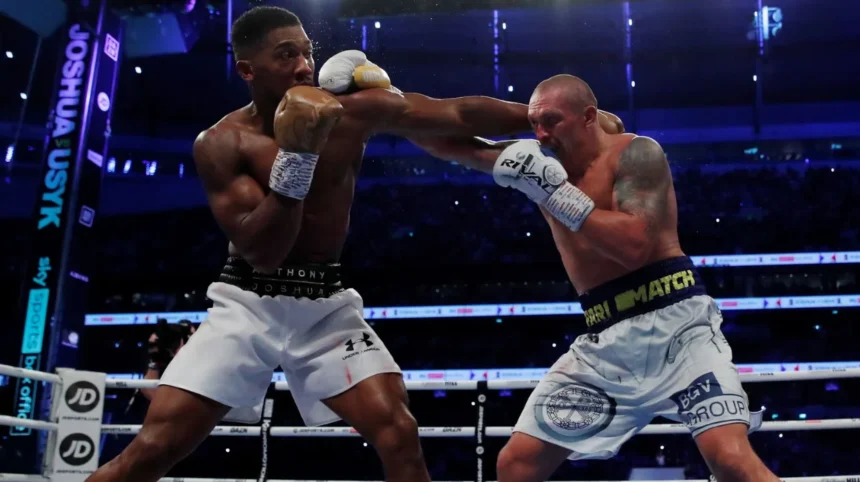
Cardiff (Cardiff Daily) September 23, 2026 – Promoter Eddie Hearn anticipates that the long-awaited heavyweight showdown between British boxing rivals Anthony Joshua and Tyson Fury will be staged on December 11 at the Principality Stadium in Cardiff, Wales. While initial plans pointed toward a November 20 date at Madison Square Garden in New York, fierce contractual resistance from Anthony Joshua and his promotional team successfully shifted the massive event back onto British soil. Backed by financial stakeholders including Turki Alalshikh, Sela, Netflix, and TKO, overseas proposals were ultimately rejected as Anthony Joshua maintained his stance on honoring the UK-bound venue clause.
When Will the Official Announcement Take Place?
As reported by BoxingScene, Matchroom boss Eddie Hearn stated that an official announcement regarding the exact date and venue details will emerge very soon. Veteran sports journalist Dan Rafael initially broke the news on X regarding the targeted December 11 date at the Principality Stadium, though he emphasized that finalizing the arrangement requires clearing several bureaucratic hurdles.
As detailed by regional outlets like LoveBelfast and Leadership, alternative dates such as November 28 and December 4 were thoroughly reviewed before December 11 surfaced as the preferred target for the staging of the bout. Both fighters signed contracts earlier in April to lock in the matchup, yet administrative procedures, permit approvals from the Cardiff City Council, and venue licensing agreements continue to move through formal channels.
Why Was the Venue Shifted from New York to the UK?
The debate over the geographic location proved to be one of the most challenging hurdles in bringing the two former world heavyweight champions together. As noted by BoxingScene and summarized across multiple sports platforms, key financial partners—including Saudi powerbroker Turki Alalshikh, Netflix, and Dana White—strongly favored hosting the event at Madison Square Garden in New York to maximize international broadcast revenues.
However, Anthony Joshua’s legal contract explicitly dictated that the contest must be contested within the United Kingdom. Explaining the rationale behind keeping the match domestic, Eddie Hearn told iFL TV (as cited by Leadership):
“That is why, unfortunately for these people, the fight will not be taking place in America, because Anthony Joshua is not a sell-out.”
Hearn emphasized that despite larger overseas financial incentives being tabled, Anthony Joshua refused to alter the contractual terms because of his commitment to British boxing fans.
Frank Warren, representing Tyson Fury, also shed light on the negotiations. As reported by Yahoo Sport and iFL TV, Frank Warren stated:
“Tyson’s contract was for it to go on elsewhere. Tyson has made this fight happen by coming to the UK. He could have said: ‘Contractually, I don’t have to do this.’ Tyson wants to fight because he firmly believes he is going to knock him out.”
What Time Will the Fight Ring Walk Begin?
A critical operational challenge centers around scheduling the event to satisfy international television audiences, particularly broadcasters in the United States. The event is expected to be carried by Netflix. Because prime-time viewing windows in America differ significantly from British time zones, discussions have explored potential adjustments to traditional arena schedules.
Initial speculation suggested a potential ring walk as late as 3 a.m. local time inside the 74,000-capacity Cardiff stadium. Addressing these rumors, Eddie Hearn dismissed the likelihood of a 3 a.m. main event walk. Instead, negotiations with stadium operators, the local city council, and licensing sub-committees are ongoing to establish a slightly more manageable late-night schedule—provisional estimates lean toward a main event ring walk around 1 a.m. to 2 a.m. UK time on December 12.
Hearn affirmed that nothing fundamental stands in the way of the December 11 date, provided local formalities and municipal coordination are completed successfully. Meanwhile, local infrastructure around Cardiff, including area hotels, has already registered surging demand and limited availability ahead of any formal confirmation.
Explore more Cardiff Sports News
Cardiff City Midfielder Alex Robertson Withdraws From Australia Squad In Cardiff 2026
Tyson Fury Reacts To Cardiff Hosting Joshua Heavyweight Clash Cardiff 2026
Background of the Particular Development
The collision between Tyson Fury and Anthony Joshua represents the culmination of nearly a decade of anticipation, promotional friction, and shifting landscape dynamics within the heavyweight division. Both fighters established themselves as dominant forces in global boxing, holding various world championship straps across multiple organizations. Discussions for an undisputed or mega-fight between the two Britons first reached advanced stages years ago, only to collapse repeatedly due to promotional rivalries, mandatory challenger obligations, and contractual disputes.
The timeline accelerated following recent career rebuilding phases for both competitors. Tyson Fury navigated consecutive high-profile defeats against Oleksandr Usyk before securing victories in interim bouts. Similarly, Anthony Joshua worked his way back through successive stoppage victories following setbacks in previous championship campaigns. When formal bout agreements were signed in April, the primary point of contention immediately shifted from sporting terms to commercial logistics—specifically whether the bout would chase maximum global television revenue in the United States or honor domestic roots. Anthony Joshua’s insistence on a UK-based venue, backed by his promotional team at Matchroom, ultimately forced a redesign of the financial model, bringing the historic encounter to Cardiff’s Principality Stadium, a venue with a proven history of hosting major late-night indoor boxing spectacles.
How This Development Can Affect Boxing Fans and Stakeholders
The finalization of the Fury versus Joshua bout at the Principality Stadium carries profound operational, economic, and cultural impacts for its primary audience: British and international boxing enthusiasts, local businesses in Wales, and the streaming ecosystem led by Netflix. For local fans, securing a domestic stadium fight avoids the prohibitive travel and ticketing costs associated with heading to North American venues like Madison Square Garden, ensuring that the historic matchup remains accessible within home territory. However, the compromise to accommodate American television windows through a late-night ring walk creates logistical hurdles for match-going spectators navigating public transport and curfew constraints in Cardiff.
From an economic perspective, the influx of tens of thousands of travelling fans provides an immediate multi-million-pound boost to Cardiff’s hospitality, hotel, and tourism sectors during a traditionally quieter winter month. For the broader sports broadcasting industry, the success of this event on Netflix will serve as a definitive benchmark for how live combat sports integrate with global subscription video-on-demand platforms, potentially reshaping future pay-per-view distribution models for elite-tier boxing matches worldwide.