Key Points
- Medical Emergency: Long-time football commentator of BBC Wales, Rob Phillips, experienced a heart attack after Cardiff City lost 1-0 to Bolton Wanderers at Toughsheet Community Stadium, this month.
- Life-saving Action: Ex-Cardiff City and Wales forward Nathan Blake stopped Phillips from driving himself back to south Wales when he saw that Phillips had lost his color and was experiencing intense pain in the chest area.
- Help from within the Grounds: Blake informed ex-Bolton forward John McGinlay and this helped Phillips get checked by doctor David Humphreys from Bolton.
- Immediate Treatment: Dr. Humphreys informed Phillips that he could be having a heart attack and was rushed in an ambulance to Wythenshawe Hospital where he had surgery for an unblocked artery performed within an hour.
- Acknowledgements from Public: Phillips thanked Nathan Blake, club officials, paramedics, and doctors on BBC Radio Wales and their joint podcast Rob and Blakey’s Commentary Box.
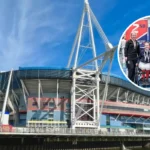
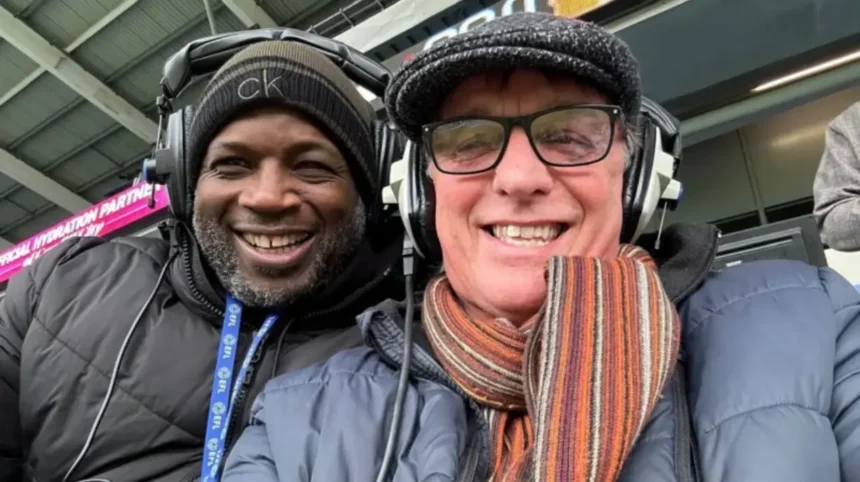
Cardiff (Cardiff Daily) September 30, 2026 — Long-standing BBC Wales football commentator Rob Phillips has revealed how a prompt and decisive intervention by Cardiff City club legend Nathan Blake saved his life after he suffered a heart attack in the press box.
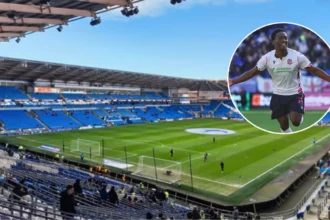
As reported by journalists Glen Williams and Annette Belcher of Examiner Live and detailed via WalesOnline, the frightening health emergency unfolded earlier this month at the Toughsheet Community Stadium following Cardiff City’s dramatic 1-0 Championship defeat against Bolton Wanderers, courtesy of a 90th-minute header scored by Thierry Gale.
Having completed his post-match pitchside broadcasting duties and interviews, Phillips returned to the press desk to file his reports for the BBC sports desk. It was during this administrative window that the veteran broadcaster began experiencing severe physical distress.
Recounting the incident on BBC Radio Wales, Phillips stated:
“When I got back to the press box to send the interview over, I had severe chest pains. I said to Nath, ‘Oh, look, I’ll be fine, we’ll drive back and get home’.”
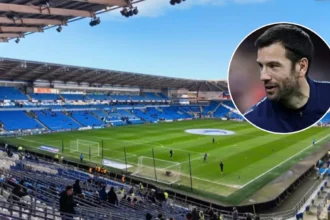
However, co-commentator and former Wales international Nathan Blake immediately recognised that something was gravely wrong. Blake, who made 131 appearances for Cardiff City and won 29 caps for Wales during his professional playing career, firmly rejected Phillips’ proposal to drive back to south Wales.
Quoted by Examiner Live and WalesOnline, Blake told him:
“Look, Rob, you’ve lost all your colour. You’re not going anywhere. I’m not going in a car with you on the M6 in that state!”
What Happened When Medical Help Was Summoned at the Stadium?
Refusing to let his colleague leave the stadium grounds, Blake took control of the situation. Drawing on advice instilled by his mother—who had undergone nurse training and always instructed him that sudden, severe loss of facial colour warrants calling an emergency ambulance—Blake sought urgent assistance.
As noted in reports by Examiner Live, Blake contacted former Bolton Wanderers player and club ambassador John McGinlay, who helped coordinate immediate medical attention. Phillips was subsequently taken to be evaluated by Bolton club doctor David Humphreys.
Despite the gravity of the medical event, Phillips admitted he remained light-hearted initially. Speaking about being escorted to the club doctor, Phillips recalled:
“I was still laughing and joking around when I was taken to see the Bolton club doctor. He casually said to me ‘Rob, I can’t be sure, but I think you’re having a heart attack’.”
Following the doctor’s assessment, emergency protocols were rapidly deployed. Paramedics arrived swiftly at the stadium, transporting the broadcaster under blue lights and sirens to Wythenshawe Hospital in Manchester.
Phillips detailed the speed of his medical care on their joint podcast, Rob and Blakey’s Commentary Box:
“Within about an hour, I was on an operating table… doctors ran a pipe up my arm and unblocked the artery with a balloon.”
How Has the Football Community Responded to the Incident?
Following his successful treatment and recovery, Phillips took the opportunity to express profound public gratitude to all involved in his rescue.
As highlighted by regional publications including Examiner Live, Phillips stated on his podcast: “I want to say thank you publicly to Bolton Wanderers Football Club, club ambassador John McGinlay, doctor David Humphreys, the paramedics, who got me to the hospital with the blue light and sirens, and everyone at Wythenshawe Hospital who were magnificent. And most of all, I want to thank you, Nath.”
Reflecting further on his relationship with his broadcast partner, whom he affectionately refers to as “my bro”, Phillips emphasised:
“Without him I might not even be here.”
Blake characteristically downplayed his heroism, responding simply:
“That’s what friends are for.”
Maintaining his characteristic sense of humour throughout the ordeal, Phillips joked about the location of his medical emergency:
“The moral of the tale is if you’re going to have a heart problem like I had, have it in a football club, because they’ve got people on hand who know what to do.”
The announcement triggered an immense wave of support across social media platforms, with football supporters, listeners, and sports personalities flooding Phillips with well-wishes and commending Nathan Blake for his vigilance. Prior to the health scare, Phillips and his partner had planned to attend the upcoming Wales UEFA Nations League fixture against Portugal—an event that would have marked his first match viewing purely as a fan in over forty years.
Explore more City FC News
Wes Burns Backs Fortress Cardiff To Spark Wales Nations League Campaign 2026
Cardiff Defender Perry Ng Granted Citizenship in Singapore 2026
Background of the Particular Development
The incident highlights the critical intersection of professional sports infrastructure, on-site medical preparedness, and human vigilance. Football stadiums across the English Football League (EFL) and Premier League are mandated to maintain robust emergency medical frameworks, including qualified doctors, paramedics, and immediate resuscitation equipment pitchside for players and staff. However, medical emergencies affecting broadcasting personnel, media members, or fans in press areas often rely heavily on peer awareness and swift communication. In this instance, the proximity of qualified club medical staff—bolstered by expert trauma response protocols at professional sporting venues—prevented what could have easily been a fatal cardiac event during transit.
This development serves as a stark reminder of the unpredictable nature of cardiovascular health among middle-aged adults in high-stress professional environments like sports journalism. For the particular audience—comprising football fans, media professionals, and sports broadcasting circles—this story underscores the vital importance of cardiovascular health awareness, recognizing silent symptoms of heart attacks, and the life-saving value of bystander intervention. In the short and medium term, public transparency from prominent figures like Rob Phillips typically drives a measurable increase in health check-ups and first-aid literacy among sports fans. Furthermore, it may prompt sporting organizations and broadcasting networks to review emergency response training and first-aid provisions specifically designated for press box areas, ensuring that media personnel enjoy the same immediate standard of emergency protection as athletes on the pitch.