Key Points
- In Wales, fines for engine idling of stationary vehicles on public roads have been significantly increased from the old maximum fine of £20 to £75 to £150.
- The local authorities have the liberty to select a particular fine amount within the new range of £75 to £150.
- It is stated in a report based on a survey conducted by the Welsh Government that only one-third of the populace knew that idling of the engine was a criminal act.
- It is stated in the protocol of enforcing the fines that the designated officers have to warn the motorists to switch off their engine and only when the motorists fail to do so, is a fine imposed.
- These provisions apply to gasoline, diesel, and hybrid vehicles and also to commercial taxis but do not apply to electric vehicles, which do not release any tailpipe emission when stationary.
- The public reaction according to the reactions of Wales Online readers included heavy criticism and raised questions over the enforcement rates, council-created traffic jams, and environmental hypocrisy.
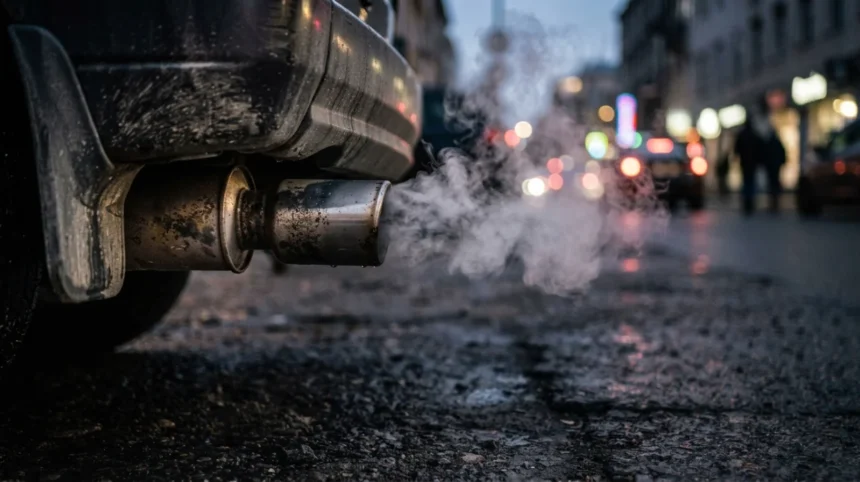
Cardiff (Cardiff Daily) October 3, 2026 – Motorists across Wales are facing heavy criticism and widespread public backlash following the implementation of steep new regulations that escalate fines for unnecessary stationary engine idling to as much as £150. Under the updated framework, local councils have been granted the authority to set penalty charges between £75 and £150, marking a sharp increase from the historical £20 fine. While authorities position the measure as a critical push to clean up urban air quality and lower toxic emissions, drivers and local commentators have fiercely questioned the practicality, fairness, and true motivations behind the winter enforcement drive.
How Do the New Engine Idling Regulations Work Across Wales?
The legal framework surrounding stationary vehicle emissions has undergone a major overhaul, shifting enforcement capabilities directly to local municipal authorities. As reported by Claire Elliott and readers of Wales Online, the financial penalty for leaving a vehicle’s engine running unnecessarily on public highways has jumped dramatically from the previous £20 ceiling to a tiered system ranging from £75 to £150, with individual local councils deciding the exact fine structure within their respective jurisdictions.
Despite the rollout of these heightened financial penalties, official data highlights a significant information gap among the driving public. As detailed through a Welsh Government survey cited by Claire Elliott of Wales Online, only roughly a third of surveyed individuals were aware that stationary engine idling could legally be classified as a punishable motoring offence.
To prevent immediate punitive overreach, procedural guidelines dictate a strict step-by-step enforcement protocol for authorized officers. As outlined by Wales Online, enforcement personnel must first approach motorists and formally request that they switch off their vehicle engines. A financial penalty can only be legally issued if the driver outright refuses to comply or move along; if the motorist cooperates immediately or drives away, no fine will be levied.
The scope of the updated policy covers a broad spectrum of combustion-engine automobiles. According to the report by Claire Elliott of Wales Online, the rules apply to standard petrol, diesel, and hybrid passenger vehicles, as well as commercial operators such as taxis. Conversely, electric vehicles are entirely excluded from the regulatory scope because they produce no tailpipe or exhaust emissions while stationary.
What Are Drivers and Local Readers Saying About the £150 Fines?
The announcement of the ramped-up winter penalties has unleashed a torrent of criticism from motorists and community members who feel unfairly targeted by local and national authorities. Commenting on the practical enforcement of the law, a Wales Online reader identified as Phil H raised a cynical question regarding historical oversight:
“Serious question: how many people were actually fined under the previous system? It’s all very well introducing new rules and bigger fines, but if they’re rarely enforced, what difference will they actually make? It’s the same with dog mess.”
Other contributors to the public discourse pointed to wider systemic environmental issues, suggesting that individual motorists are bearing the brunt of policies while major industrial contributors escape scrutiny. As stated by Hazel S via Wales Online:
“I’m all for improving air quality and reducing emissions, but surely the same scrutiny needs to be applied to major developments like data centres? Why not tackle that first before hitting motorists?”
Echoing similar sentiments of institutional hypocrisy, reader Peter A expressed frustration via Wales Online:
“The hypocrisy! How about being transparent and honest with people? If you’re serious about protecting the environment, start by looking at those spraying chemicals across the UK all summer. The potential harm to our health, wildlife and farmland is enormous.”
Financial pressures bearing down on everyday road users were also brought to the forefront of the debate. As noted by Gary R in comments published by Wales Online:
“With petrol and diesel at today’s prices, I’m amazed anyone is driving anywhere!”
Meanwhile, looking at infrastructural alternatives to reduce vehicle congestion around sensitive zones, Vicky J suggested via Wales Online:
“Well, why not bring back school buses? It would mean far fewer cars needing to go to the school in the first place.”
Local governance and municipal road management also came under heavy fire for contributing to stationary traffic emissions through urban planning decisions. Highlighting the irony of local authority policy, Harry B questioned via Wales Online:
“If idling carries a £150 fine, what about Cardiff Council and its roadworks that leave the city gridlocked every day? Surely traffic jams also create unnecessary emissions. Maybe the council should be fined too?”
Background of the Particular Development
The escalation of engine idling fines in Wales represents the culmination of long-standing local authority powers under UK road traffic regulations, which historically permitted councils to issue fixed penalty notices for stationary running engines, though implementation and fine caps remained low and unevenly applied. Over recent years, Welsh local governments, pressured by national decarbonisation targets and legally binding air quality objectives, have sought more aggressive levers to tackle localized nitrogen dioxide and particulate pollution hotspots, particularly around schools, hospitals, and congested urban corridors. By lifting the statutory ceiling to £150 and empowering local councils to set independent rates, policymakers have sought to transform a largely toothless administrative deterrent into a high-impact financial warning. However, the move also reflects ongoing tensions between central environmental mandates and motorists contending with high living costs, congested infrastructure, and skepticism regarding municipal consistency.
This regulatory development is expected to yield immediate behavioural changes among cautious motorists in high-surveillance urban zones, yet it risks deepening resentment toward local councils. In the short term, the threat of a £150 fine will likely compel drivers—particularly taxi operators and school-run parents—to switch off ignitions rather than risk confrontation with enforcement officers. However, because enforcement heavily relies on the discretionary presence and proactive engagement of council officers, actual ticket issuance may remain sporadic, feeding public perceptions that the policy functions more as a symbolic revenue-raising exercise than a systematic environmental fix. For everyday motorists already strained by high fuel prices and traffic gridlocks caused by ongoing roadworks, the policy risks widening the divide between local authorities and road users, fueling broader debates over fairness in green taxation and urban management.