Key Points
- The Cardiff Council and Wates Residential have jointly achieved the topping out of a seven-floor construction development that is based in the west of Cardiff.
- The construction project involves 44 newly built council houses with a transport exchange facility.
- This is a major milestone for the multi-floor construction development project since it brings the project closer to being completed.
- This construction project fits within the current collaboration projects between local governing agencies and resident developers on increasing housing facilities.
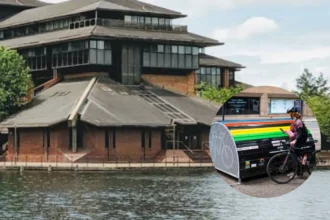
Cardiff (Cardiff Daily) October 8, 2026 – Cardiff Council and Wates Residential have officially marked a major construction milestone by topping out a new seven-storey development in the west of the city. As reported by HDigital_Admin of Housing Digital, the project comprises 44 council homes integrated alongside a modern transport interchange. The structural completion of the building’s highest point brings the multi-storey initiative closer to final delivery, addressing regional housing demands through urban regeneration.
What Are the Key Details of the Cardiff Council and Wates Residential Scheme?
The new development scheme, spearheaded through a partnership between Cardiff Council and Wates Residential, introduces vital municipal infrastructure to the western area of the city. According to details highlighted by HDigital_Admin of Housing Digital, the project successfully reached its highest structural point during a recent topping out ceremony.
The complex features a substantial seven-storey architectural design. Within this multi-level structure, the scheme accommodates a total of 44 new council homes, engineered to bolster local public housing availability. Furthermore, the development integrates a transport interchange directly into its framework, aiming to streamline local transit connections and promote accessible multi-modal travel for future residents and the wider community.
Explore more Cardiff Council News
Cardiff Council Consults on Workplace Parking Levy to Fund Transport Cardiff 2026
Cardiff Debenhams Redevelopment Stalled as Massive Void Remains Empty Cardiff 2026
How Does This Topping Out Milestone Advance Local Housing Initiatives?
Reaching the highest point of construction represents a critical turning point for municipal building projects. As noted in the coverage by HDigital_Admin of Housing Digital, reaching this milestone means that the primary structural framework for all seven storeys—including the residential spaces and the transport facilities—has been safely erected.
The collaboration between Cardiff Council and Wates Residential highlights an ongoing strategy to combine high-density residential architecture with public transport accessibility. By merging council housing provisions with a dedicated transport interchange, the development addresses two critical urban needs simultaneously: alleviating local housing waiting lists and enhancing neighborhood connectivity through organized transport pathways.
Background of the Particular Development
The topping out of the seven-storey scheme in western Cardiff arrives against the backdrop of sustained efforts by local authorities across the United Kingdom to tackle chronic shortages in public and social housing stock. Municipal bodies, including Cardiff Council, have increasingly looked toward strategic partnerships with private sector developers like Wates Residential to accelerate the delivery of modern, high-density residential properties. Over recent years, local housing strategies in Wales have emphasized sustainable urban development, combining energy-efficient building methods with integrated community infrastructure. Transport-oriented developments—such as incorporating transport interchanges directly beneath or adjacent to residential blocks—have become a cornerstone of modern town planning, designed to reduce carbon footprints, minimize car dependency, and streamline urban mobility for social housing tenants.
This development is anticipated to exert a positive and stabilizing effect on local housing applicants and public transport users in western Cardiff. For individuals and families on council housing waiting lists, the introduction of 44 modern homes provides much-needed relief in a tight property market characterized by high demand and limited affordable options. Furthermore, the integration of the transport interchange will likely improve commuting efficiency for the new residents, ensuring seamless access to employment, education, and commercial hubs across the city without placing an undue financial burden on lower-income households. From a broader community perspective, the successful delivery of this multi-storey scheme could serve as a blueprint for future collaborative projects between Cardiff Council and private developers, setting a precedent for how urban regeneration can successfully merge housing supply with transit infrastructure.