Key Points
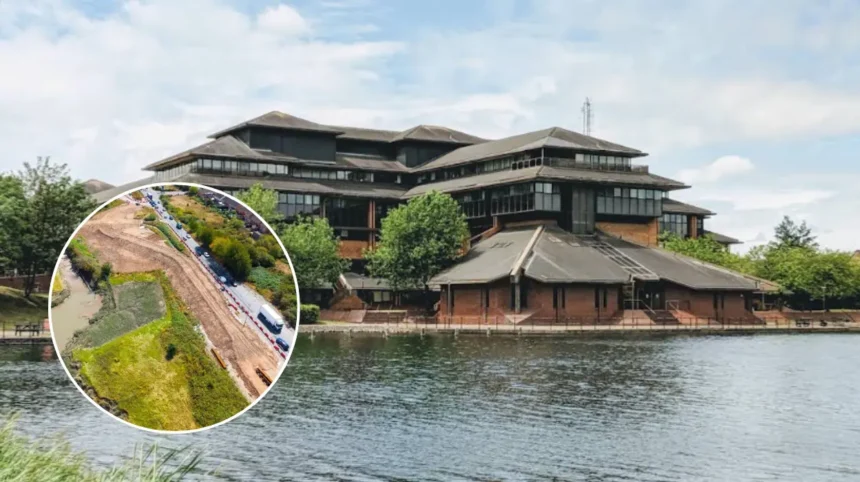
- Public Frustration: Motorists have used social media sites to voice their frustration about the long queues and congestion that is being created on Lamby Way due to the ongoing roadworks.
- Climate Change Adaptation Project: According to an article by Rhys Gregory from Wales 247, Cardiff City Council has made it clear that this is not just an ordinary road improvement project but a crucial element of the Cardiff Coastal Protection Project which will be used to ensure protection against climate change and rising sea levels and coast erosion around the River Rhymney and the coastline of Cardiff for the next 100 years.
- Extent of Protection: The project is meant to provide protection for 1,116 houses, 72 businesses, Rover Way Travellers Site, utilities, and infrastructures.
- Progress in Construction: Around 80% of the total construction work in the coast protection project has been completed while the last major part is on Lamby Way Road.
- Decision to Keep Road Open: While the initial engineering plan was that the road should be totally closed, after consultation with business and freight owners, it was decided that both sides of the road would remain open through the process of vibration free piling and traffic signals.
- Environmental Constraints: The proposals for doing the work directly from water were rejected on the basis of tight environmental laws, protected areas, and nature reserves of Natural Resources Wales.
- Construction Timeline: Works started on September 30, 2026, and will be completed till December 11, 2026. Finishing works and piling caps will be done during January and February 2027, while the traffic management will end on February 26, 2027, and the entire project will be completed by August 2027.
Cardiff (Cardiff Daily) October 9, 2026 – Cardiff Council has formally addressed mounting public frustration over prolonged traffic congestion and severe commuter delays along Lamby Way, explaining that the disruptive roadworks form an essential part of a multi-million-pound coastal defence and climate adaptation project intended to safeguard more than 1,100 homes, local businesses, and critical regional infrastructure against severe flooding over the coming century.
- Key Points
- Why are the Lamby Way roadworks taking so long and causing traffic delays?
- Why hasn’t Lamby Way been closed completely during construction?
- Why can’t the construction work be carried out from the water?
- What is the current progress and when will the roadworks finish?
- Background of the Particular Development
Why are the Lamby Way roadworks taking so long and causing traffic delays?
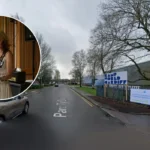
As reported by Rhys Gregory of Wales 247, Cardiff Council has issued a detailed explanation regarding the ongoing construction disruptions along Lamby Way after frustrated motorists took to social media to voice concerns over heavy traffic building up along the busy commuter route. The ongoing disruptions have affected drivers travelling through the area, including those heading towards local docks and Cardiff Bay.
Addressing the public outcry, the local authority emphasised that the project is far more than a standard highway maintenance or road improvement undertaking. Instead, it constitutes a vital segment of the broader Cardiff Coastal Protection Scheme. According to data highlighted by Rhys Gregory of Wales 247, the initiative is engineered to protect 1,116 homes and 72 businesses, alongside essential transport links, utilities, and strategically important infrastructure such as the Rover Way Travellers Site, from the intensifying threats of coastal flooding and erosion over the next 100 years.
Why hasn’t Lamby Way been closed completely during construction?
One of the central questions raised by disgruntled motorists and commuters is why construction is being executed while traffic continues to use the thoroughfare. As reported by Rhys Gregory of Wales 247, the initial engineering proposals recommended closing Lamby Way entirely during the construction phase to accelerate progress.
However, following extensive consultations with local business owners, freight operators, and key stakeholders, the local authority explored alternative methodologies to avert a complete road closure. Consequently, the council adopted a revised construction approach enabling vehicles to travel in both directions simultaneously. To facilitate this, a specialised vibration-free piling machine was deployed. Temporary traffic signals are currently managed by a dedicated contractor monitoring real-time conditions to regulate vehicle flow. While keeping the road open is acknowledged as a more complex and expensive engineering option, the council noted that it successfully prevents the severe, widespread economic disruption that a total road shutdown would trigger.
Why can’t the construction work be carried out from the water?
In response to public suggestions that construction equipment could operate from the water rather than interfering with land traffic, the local authority clarified that this alternative was thoroughly investigated but ultimately rejected. As reported by Rhys Gregory of Wales 247, environmental restrictions—including strict mandates enforced by Natural Resources Wales, the preservation of protected local habitats, and the immediate proximity of sensitive nature reserves—prevented marine-based construction. The council stated that the current land-based methodology strikes the most practical balance between executing necessary flood defence work, complying with environmental laws, and maintaining public access for road users.
Explore more Cardiff Live Traffic & Travel News
Swansea Council Approves New Motorhome Pitches at Fabian Way Park 2026
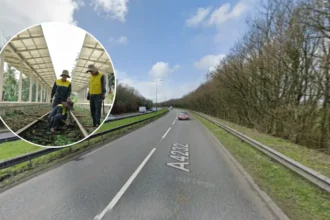
A4232 Northbound Closure Brings Urgent Maintenance Disruptions to Cardiff 2026
What is the current progress and when will the roadworks finish?
Regarding project milestones, Cardiff Council has confirmed that approximately 80% of the overarching coastal protection construction work has already been accomplished. Significant engineering achievements completed thus far include the placement of heavy rock armour defences along the River Rhymney, extensive sheet piling, coastal embankment stabilization, and sea defence enhancements.
The current operations on Lamby Way represent the final major construction phase anticipated to cause significant delays on the local road network. As detailed in the schedule reported by Wales 247, piling works commenced on September 30, 2026, and are scheduled to wrap up on December 11, 2026. Subsequent finishing operations and pile cap installations are planned throughout January and February 2027. Traffic management infrastructure is slated for complete removal on February 26, 2027, whilst the wider Cardiff Coastal Protection Scheme is scheduled for final completion by August 2027.
Background of the Particular Development
The current disruptions along Lamby Way are rooted in decades of mounting environmental pressures associated with global climate change and accelerating sea-level rise along the Severn Estuary and the South Wales coastline. Local authorities have faced escalating risks of tidal inundation and accelerated coastal erosion along the River Rhymney banks, which threaten low-lying residential sectors, industrial zones, and major transport corridors in Cardiff. Without proactive engineering interventions, natural erosion processes risk destabilising the foundations supporting key routes like Lamby Way. The Cardiff Coastal Protection Scheme was consequently conceived as a multi-phase, long-term regional resilience strategy. Over recent years, planning, environmental assessments, and funding allocations have culminated in the active construction phase currently underway, representing one of the largest municipal climate adaptation initiatives undertaken in the Welsh capital to secure infrastructure safety for the next century.
The completion of the Cardiff Coastal Protection Scheme and the resolution of the Lamby Way roadworks will have a profound positive impact on daily commuters, local residents, and regional commercial enterprises. For motorists and freight operators, the removal of temporary traffic management systems by late February 2027 will restore normal traffic flow, eliminate daily congestion bottlenecks, and significantly reduce commute times across the eastern approaches to Cardiff. Over the long term, the structural reinforcement of the coastline will provide secure peace of mind for the 1,116 households and 72 local businesses residing within the flood risk zones, safeguarding property values and preventing catastrophic economic losses from extreme weather events. Furthermore, by securing vital infrastructure such as the Rover Way Travellers Site and essential utilities against century-long erosion patterns, the development ensures enduring regional stability, sustained employment opportunities, and uninterrupted commercial connectivity across Cardiff’s vital transport networks.