Key Points
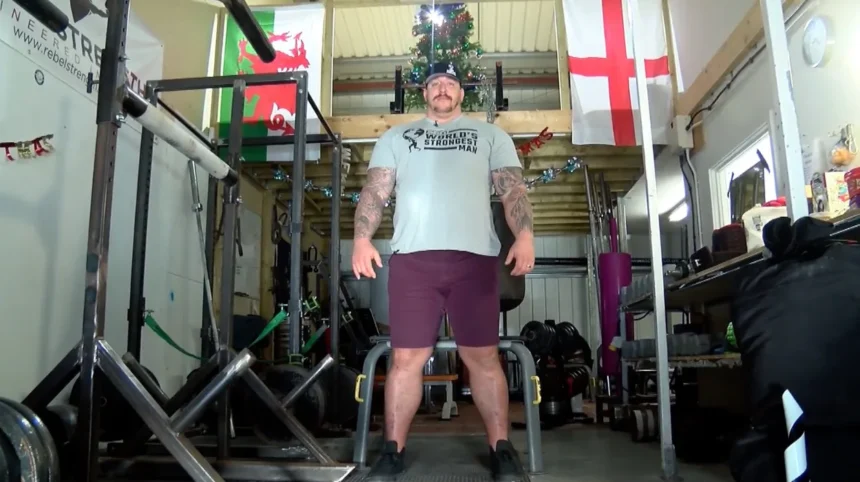
- Former heavyweight athlete Gavin Bilton, a 27-stone competitor with a career as a professional rugby player and a bouncer in one of the leading establishments in Cardiff, has established himself as the strongest man in Wales.
- Bilton shifted from rugby and security to strength athletics due to the strenuous nature of these two careers.
- With his exceptional combination of size, strength and toughness, Bilton has managed to excel in the world of national strongman competition while striving for international recognition.
Cardiff (Cardiff Daily) October 10, 2026 — Gavin Bilton, a towering 27-stone athlete known for his dual background as a rugby player and a security bouncer at a famous Cardiff establishment, has captured widespread attention by asserting his dominance as Wales’ strongest man. Navigating a demanding physical career that spans contact sports and nightlife security, Bilton’s rise through the ranks of strength athletics showcases a remarkable physical transformation and an unyielding commitment to elite competition.
- Key Points
- How Did Gavin Bilton Transition From Rugby and Nightlife Security to Becoming Wales’ Strongest Man?
- What Are the Key Challenges Faced by Heavyweight Competitors in Strength Sports?
- Background of the Particular Development
- How This Development Can Affect the Local Athletic Community and Aspiring Heavyweight Competitors
How Did Gavin Bilton Transition From Rugby and Nightlife Security to Becoming Wales’ Strongest Man?
The journey of a 27-stone athlete from the rugby fields and club doors of the Welsh capital to the apex of strength sports is a testament to unique physical conditioning. As reported by journalists covering Welsh sports, athletes who carry exceptional mass often find natural transitions into power-based sports once their primary contact careers evolve.
Gavin Bilton built his formidable frame through years of rigorous sporting activity and high-pressure environments. Working as a bouncer at a prominent Cardiff venue required immense physical resilience, presence, and stamina, traits that naturally complement the brutal demands of strongman competitions. According to local sports reports, Bilton balanced these heavy-duty security shifts alongside his rugby commitments before channeling his entire physical capacity into competitive strongman events.
Sporting commentators and fitness analysts note that the transition from field-based collision sports to static and dynamic heavy lifting requires a meticulous shift in training methodology. For Bilton, maintaining a 27-stone frame was not merely a result of size, but a carefully managed combination of functional mass and explosive power. As highlighted in regional features from WalesOnline, his background on the rugby pitch instilled a high threshold for physical pain and teamwork, which later translated into the solitary, grinding nature of heavy deadlifts, log presses, and stone loadings.
What Are the Key Challenges Faced by Heavyweight Competitors in Strength Sports?
Competing at the absolute upper echelon of strength sports demands extraordinary physiological adaptations. Carrying a body weight scaling around 27 stone places immense strain on cardiovascular and joint health, requiring athletes like Bilton to balance sheer force generation with longevity management.
Industry experts emphasize that strength athletes of Bilton’s stature must adhere to rigorous nutritional and recovery protocols. Unlike traditional team sports where tactical plays dictate the pace, strongman competitions test absolute human limits across multiple continuous events—ranging from vehicle pulls to overhead log lifts. Bilton’s foundational years working security doors in Cardiff’s bustling nightlife district provided an initial conditioning crucible, hardening him against fatigue and high-stress physical confrontations.
Furthermore, sports scientists observing the Welsh strongman scene have frequently pointed out that psychological fortitude is just as critical as raw tonnage. The pressure to perform on national and international stages means athletes must endure grueling training cycles without succumbing to injury. Bilton’s ability to navigate these hurdles has kept him at the forefront of Welsh athletics, driving his ambition to secure further international titles.
Explore more Cardiff Sports News
Tyson Fury Versus Anthony Joshua Tickets Sell Out Fast Cardiff 2026
Josh Waddell Competes at European Wheelchair Fencing in Cardiff 2026
Background of the Particular Development
The evolution of strongman athletics in Wales has historically drawn talent from unconventional backgrounds, including rugby union, rugby league, and heavy industry sectors. Over the past decade, the crossover between high-contact sports and strength disciplines has become increasingly pronounced. Athletes who spent their formative years absorbing heavy impacts on rugby pitches or managing high-intensity environments as venue security professionals often possess the bone density, baseline mass, and mental tenacity required for heavy athletics. Gavin Bilton’s emergence as Wales’ strongest man represents a continuation of this tradition, shifting local focus towards how regional grassroots sports talent can be repurposed into elite global strength platforms.
How This Development Can Affect the Local Athletic Community and Aspiring Heavyweight Competitors
The continued prominence of figures like Gavin Bilton is expected to significantly inspire the next generation of heavyweight athletes, rugby players, and fitness enthusiasts across Wales. For aspiring athletes who possess larger frames or struggle to fit standard weight-class limitations in traditional sports, the success of a local bouncer-turned-strongman opens up alternative, highly competitive pathways in strength sports.
Locally, this visibility can lead to increased participation in regional powerlifting and strongman gyms throughout Cardiff and wider South Wales. It encourages younger athletes to view physical bulk not as a limitation, but as a competitive asset if properly channeled through structured training. However, it also serves as a cautionary blueprint: the rigorous physical toll demanded by a 27-stone frame requires meticulous coaching, injury prevention, and nutritional discipline to ensure long-term health and athletic sustainability.