Key Points
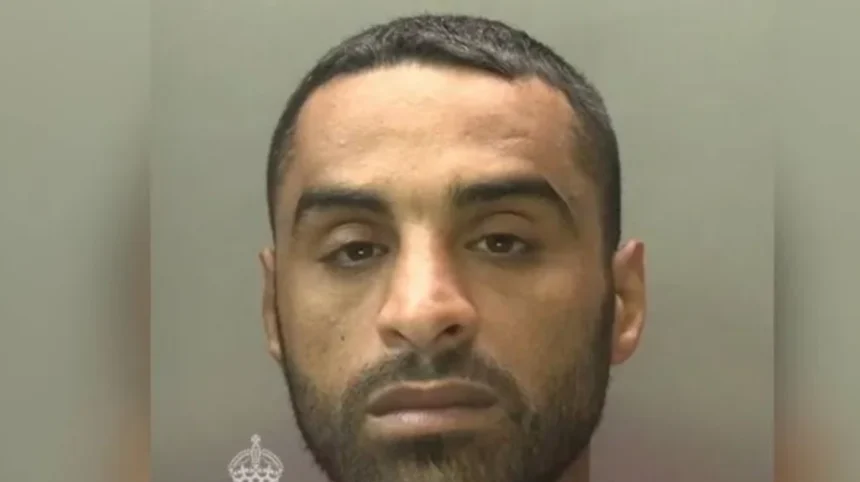
- Mohammed Abbas, 29, has been sentenced to six years in prison with an extended three-year licence period at Cardiff Crown Court.
- Abbas arrived in the United Kingdom in March and broke into a family home in Cardiff on 30 July 2025 while drunk.
- He entered a bedroom shared by three sisters, exposed himself, masturbated in front of them, and repeatedly asked if they wanted to have sex with him.
- During the burglary, Abbas stole Apple AirPods belonging to one of the girls and a jacket belonging to their father.
- Forensic DNA evidence on the bedroom door handle, CCTV footage, and the stolen items found at his Home Office-provided accommodation linked him to the crime.
- The offending occurred just 16 days after Abbas received a 12-month community order for assaulting a constable and battery at a hotel in Warwick.
Cardiff (Cardiff Daily) November 12, 2026 – An asylum seeker who arrived in the United Kingdom in March has been sentenced to six years in prison after breaking into a family home in Cardiff and exposing himself to two children and their older sister. Mohammed Abbas, 29, entered the property in the early hours of 30 July 2025, stealing personal items and subjecting the three girls to a terrifying ordeal before fleeing when other household members awoke.
What happened during the break-in at the Cardiff family home?
As reported by BBC News, Cardiff Crown Court heard on Tuesday that Mohammed Abbas was intoxicated and walking along a street in Cardiff on 30 July 2025 when he began attempting to open the windows of residential properties. Once he gained entry into the family home, he walked upstairs and entered a bedroom shared by three sisters.
Warning: This story contains details some readers may find distressing.
Addressing the defendant during sentencing, Judge Lucy Crowther detailed the sequence of events inside the room. According to BBC News, Judge Lucy Crowther stated:
“Once inside, you went upstairs and whilst there you went into a bedroom. There were three young women asleep in that room, three sisters who shared that room. At or around two o’clock in the morning, [one of the sisters] was woken from her sleep. She looked around and saw you. You were crouched down in the corner of the room.”
The court heard that the girl initially mistook the intruder for her brother and called out to him, to which Abbas replied, “Sorry”. When the girl realised it was a stranger and began screaming, her sisters woke up, and one of them observed Abbas briefly leave the bedroom. However, he returned almost immediately.
Judge Lucy Crowther noted that Abbas re-entered the room, exposed himself, and “must have realised then that these were all young women”. As reported by BBC News, Judge Lucy Crowther said:
“You repeatedly asked the girls whether they wanted to have sex with you; you asked that three times.”
Despite the sisters screaming in distress, Abbas remained in the room. Judge Lucy Crowther told the court:
“While the girls were screaming in obvious fear of you, you masturbated in their bedroom right in front of them as they lay in their beds. Their screams did not put you off; on the contrary, you moved further into their bedroom.”
The ordeal only ended after one of the victims fought back and the noise alerted the rest of the family. Judge Lucy Crowther stated:
“You got so close to [one of the girls] she ended up hitting you with a pillow, for she didn’t know what else to do. She struck you repeatedly.”
The commotion woke other members of the household, who switched on the lights, prompting Abbas to flee the premises and leaving the sisters “crying hysterically”.
It was subsequently discovered that Abbas had also stolen a pair of Apple AirPods belonging to one of the girls and a jacket belonging to their father during the intrusion. Judge Lucy Crowther remarked that the entire episode lasted approximately a minute and a half,
“That to those young women must’ve felt like a lifetime of terror”.
How did South Wales Police track down and arrest Mohammed Abbas?
Following the break-in, detectives from South Wales Police reviewed CCTV footage from neighbouring properties, which led officers directly to Abbas. He was arrested at his single-occupancy accommodation in Cardiff.
Upon his arrest, Abbas initially denied any involvement in the offences, claiming he had only left his residence that night to purchase food. However, a search of his home uncovered both the stolen Apple AirPods and the father’s jacket. Furthermore, forensic investigators matched Abbas’s DNA to samples recovered from the door handle of the sisters’ bedroom.
During the court proceedings, it emerged that Abbas had arrived in the UK in March and was residing in accommodation provided by the Home Office at the time of the attack. He was receiving a £30 weekly allowance, which the court heard he spent on food, alcohol, tobacco, and cannabis.
Prosecutor Rebecca Griffiths informed the court that Abbas had a prior criminal record. As reported by BBC News, Rebecca Griffiths stated that Abbas had one previous conviction for assault of a constable and battery, committed at a hotel in Warwick where he had previously been housed. He had been sentenced for those offences on 14 July and given a 12-month community order—meaning the Cardiff burglary and sexual offences occurred just 16 days after that court order was imposed. Additionally, the court heard that Abbas had previously expressed misogynistic views and had exposed himself to prison staff while remanded in custody.
What did the victims’ mother, defence, and police say in court?
The emotional toll on the three sisters and their family was highlighted through a victim personal statement read to the court by their mother. As reported by BBC News, the victims’ mother stated:
“It has affected my daughters’ emotional wellbeing, their education and the ability to feel safe in their home. Every child deserves to feel safe in their own home.”
In her full statement to the court, the mother elaborated on the lasting psychological impact of the intrusion. She said:
“The hardest part is knowing that I can’t simply take these memories away from them. I can comfort them and support them, but I can’t undo what happened. My daughters should not have been deprived of that basic sense of security, and that is something no parent should ever have to witness.”
Representing the defendant, barrister David Pinnell told the court that Abbas, who stated he was Palestinian, was under the influence of alcohol at the time of the offences in Cardiff. According to BBC News, David Pinnell stated that Abbas has since “accepted full responsibility” for his behaviour, having previously pleaded guilty to burglary, trespass on a premises with intent to commit a sexual offence, and two counts of engaging in sexual activity in the presence of a child.
Judge Lucy Crowther condemned the defendant’s actions in strong terms before passing sentence. As reported by BBC News, Judge Lucy Crowther stated:
“You had no regard for that family or for those three young women as they slept. This offending was entirely about you and your sexual gratification, at any cost. This type of offending strikes unimaginable terror and fear into the hearts of right-minded people. I’m satisfied you intended to rape at least one of these girls.”
Citing the “real and imminent” danger Abbas posed to women and girls, Judge Lucy Crowther imposed a custodial sentence of six years, alongside an extended licence period of three years. She also noted that the earliest point at which Abbas could be deported from the UK would be following the completion of his prison term.
Following the sentencing, South Wales Police praised the courage of the young victims. As reported by BBC News, Detective Chief Inspector Catherine Loosemore stated:
“Stranger incidents such as these are extremely unusual in Cardiff, but in Abbas we had a dangerous individual. We hope today’s sentencing provides some reassurance to the victims and allows them to regain their confidence. It must have been absolutely terrifying for them, and they have been extremely brave throughout this ordeal.”
Background
Under the United Kingdom’s asylum system, individuals awaiting a decision on their asylum claim are routinely housed in temporary accommodation—such as hotels or dispersed single-occupancy properties—funded and managed by the Home Office, while receiving a modest weekly cash allowance to cover basic living expenses.
When a foreign national without settled status is convicted of a serious criminal offence in the UK and receives a custodial sentence of 12 months or more, they typically become subject to automatic deportation proceedings under the UK Borders Act 2007 once their prison term is served, subject to any legal or human rights appeals.
Extended sentences, such as the three-year extended licence imposed in this case, are utilised by judges in England and Wales when an offender is deemed to pose a significant risk of serious harm to the public, ensuring strict supervision by the Probation Service upon release.
Prediction
For residents and families living in Cardiff and surrounding communities, the conclusion of this case provides immediate reassurance that a high-risk offender has been removed from the streets for a substantial period, though it may heighten local vigilance regarding household security at night. For the victims and their family, the lengthy custodial sentence and extended licence period offer a measure of judicial closure as they continue to recover from the trauma of the intrusion.
On a broader policy and administrative level, cases involving offences committed by individuals housed in Home Office accommodation—particularly shortly after receiving non-custodial sentences for prior offences—frequently prompt heightened scrutiny from local authorities, police forces, and the public regarding the vetting, supervision, and housing placement of asylum seekers with existing criminal convictions.