Key Points:
- An underground poker den that was being secretly and illegally operated by two individuals, Noor Rassam and Panayiotis Karayiannis, has been shut down following coordinated raids at a Splott industrial unit in Cardiff. This was being done since the start of August 2022 up until February 2024.
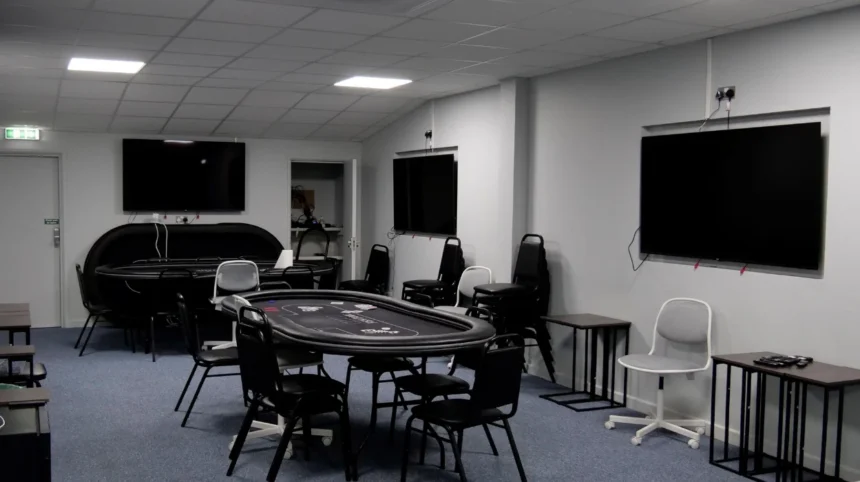
- This underground poker den was equipped with six poker tables, spinning prize wheel, seats, refreshment and entrance control through fire exit and closed circuit television (CCTV).
- This operation was doing promotion of online and live poker games through WhatsApp groups, initially under the brand name of ‘Ding Ding Poker’ and then later renamed to ‘Fish Tank Poker Cardiff’. The online poker games were being organized under the name of ‘Fish Tank Online’.
- Both operators were earning money from commissions called “the rake” which they took from every poker hand played, where Noor Rassam was receiving about £260,000 and Panayiotis Karayiannis was receiving about £124,000 from third parties, earning about £380,000 in all.
- The two masters of crime both pleaded guilty on the first day of their trial in Cardiff Crown Court for the possession and transfer of criminal property.
- On October 2, 2026, the two were both sentenced to three years in jail, suspended for three years by Cardiff Crown Court.
- An asset recovery hearing under the Proceeds of Crime Act (POCA) is to be held on April 9, 2027.
Cardiff (Cardiff Daily) October 7, 2026 – Two men who masterminded and operated a clandestine underground gambling den from an industrial estate in Wales have been handed suspended prison sentences following a comprehensive multi-agency law enforcement investigation. Noor Rassam and Panayiotis Karayiannis faced prosecution at Cardiff Crown Court after running an unlicensed poker operation out of an industrial unit in the Splott area of Cardiff. Operating between August 2022 and February 2024, the pair raked in hundreds of thousands of pounds through illegal gaming before authorities dismantled the facility. Both defendants pleaded guilty to possessing and transferring criminal property and received three-year prison sentences, suspended for three years.
- Key Points:
- What Were the Details of the Illegal Cardiff Poker Operation Run by Noor Rassam and Panayiotis Karayiannis?
- How Much Money Did the Unlicensed Gambling Den Generate for the Operators?
- Which Law Enforcement Agencies Collaborated to Crack Down on the Cardiff Gambling Den?
- What Sentences Did Cardiff Crown Court Hand Down to the Defendants?
- Background
What Were the Details of the Illegal Cardiff Poker Operation Run by Noor Rassam and Panayiotis Karayiannis?
According to court details and reports covered by journalists such as Fiona Simmons of Gambling News, the underground gambling den was discreetly set up in an upstairs room at an industrial unit located in the Splott district of Cardiff.
As documented in court records, the facility was heavily outfitted to mimic a commercial venue. It featured six dedicated poker tables, a spinning prize wheel, custom seating areas, and refreshments for participants. To maintain secrecy and avoid unwanted attention from local authorities, access to the premises was strictly controlled via a fire exit outfitted with closed-circuit television (CCTV) systems managed directly by the organisers.
The operators actively promoted their services through messaging applications. As reported in regional findings, the live and online poker events were coordinated via WhatsApp groups. Initially, the in-person gatherings were branded under the name ‘Ding Ding Poker’, before later rebranding to ‘Fish Tank Poker Cardiff’. Meanwhile, companion online games were operated under the banner of ‘Fish Tank Online’.
How Much Money Did the Unlicensed Gambling Den Generate for the Operators?
The illicit operation proved highly lucrative for its creators, enabling them to generate substantial sums. Investigative findings highlighted by media outlets indicate that the two men raked in a combined total exceeding £380,000, funds which they utilized to support lavish lifestyles.
Specific financial breakdowns revealed during the legal proceedings showed that Noor Rassam received approximately £260,000 in third-party payments while the venue was active. His co-defendant, Panayiotis Karayiannis, pocketed roughly £124,000 in third-party payments. The primary mechanism for generating these profits involved taking a direct financial commission—commonly referred to in the gaming industry as “the rake”—from each individual poker hand played at the tables.
Unlike licensed and regulated gambling establishments operating within the United Kingdom, the underground venue functioned completely outside statutory frameworks. As emphasized by enforcement officials, there were no player protection safeguards, consumer safety protocols, or mechanisms in place to identify, monitor, or support vulnerable individuals or those suffering from gambling addiction.
Which Law Enforcement Agencies Collaborated to Crack Down on the Cardiff Gambling Den?
The dismantling of the Splott-based gambling ring was the result of a coordinated intelligence-led effort involving multiple regional and national British regulatory and enforcement bodies. The crackdown initially unfolded following targeted police raids executed in early 2024.
The operation was spearheaded by the Tarian Regional Organised Crime Unit (ROCU), which targets serious and organized crime across southern Wales. Tarian ROCU worked in close partnership with the UK Gambling Commission (UKGC), HM Revenue and Customs (HMRC), and Cardiff Council’s Licensing Department.
Law enforcement officials noted that the UK Gambling Commission played a vital role in identifying the rogue operation and flagging the illicit activity to Tarian ROCU. Additional support from HMRC and local council licensing officers ensured that financial tracks and regulatory breaches were fully exposed.
What Sentences Did Cardiff Crown Court Hand Down to the Defendants?
Facing mounting evidence gathered by investigators, both Noor Rassam and Panayiotis Karayiannis changed their pleas to guilty on the very first day of their trial at Cardiff Crown Court. They admitted to charges relating to the possession and transfer of criminal property under anti-money laundering legislation.
On October 2, 2026, Cardiff Crown Court delivered its final sentencing verdict. Both men were handed identical sentences of three years in prison, which were suspended for a period of three years.
Furthermore, the legal fallout for the two operators is far from over. Court schedules confirm that a subsequent hearing under the Proceeds of Crime Act (POCA) has been formally scheduled for April 9, 2027. This upcoming session is expected to focus on stripping the offenders of their remaining assets and recovering the illicit financial gains generated through the underground enterprise.
Explore More Splott Crime News
Two Men Sentenced Over Unlicensed Industrial Poker Operation in Splott 2026
Unlicensed Cardiff Gambling Den Dismantled in Multi-Agency Police Raids in Cardiff 2026
Background
The prosecution of Noor Rassam and Panayiotis Karayiannis underscores the ongoing regulatory and law enforcement challenges surrounding clandestine, unregulated gambling operations in the United Kingdom. Under the UK Gambling Act 2005 and associated financial crime legislation, commercial gambling must strictly adhere to licensing frameworks set by the UK Gambling Commission. These laws are designed to ensure fair play, prevent crime from being associated with gambling, and protect children and vulnerable persons. In recent years, British law enforcement agencies and regional organized crime units like Tarian ROCU have intensified their focus on unlicensed brick-and-mortar setups—such as back-room poker clubs and informal gambling dens—that bypass tax obligations and lack basic consumer protection standards. The integration of modern digital communication tools, such as WhatsApp groups, by illegal operators has prompted authorities to adopt multi-agency strategies involving tax authorities, local councils, and national regulators to successfully identify and neutralize covert gambling rings.
This legal development is expected to have a significant deterrent effect on the underground gambling landscape within Wales and the broader United Kingdom, particularly affecting illegal operators who attempt to utilize private industrial spaces and encrypted messaging apps to evade regulatory oversight. For the regulated gambling industry, legal practitioners, and local business communities, the decisive action taken by Cardiff Crown Court signals a zero-tolerance approach toward unlicensed gaming dens and money laundering. Furthermore, the upcoming Proceeds of Crime Act hearing set for April 2027 will likely serve as a financial warning, demonstrating that authorities will aggressively pursue and confiscate ill-gotten gains. For local residents and legitimate entertainment venues in Cardiff, the successful prosecution reinforces community safety and ensures fair competition by signaling that unlawful, unmonitored gambling rings will be swiftly investigated and dismantled.