Key Points
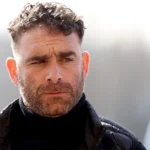
- Large Scale Media-Academia Collaboration: BBC’s Environment Correspondent, Matt McGrath, is collaborating with Cardiff University to undertake a five-month research residency.
- Exploring Unexpected Side Effects: This residency, dubbed Flying on dead donkeys: the unintended consequences of the global clean energy transition, seeks to explore the trade-offs, supply chain challenges, and technological effects that emerge unexpectedly from climate policy.
- Academic Partnerships: Professor Richard Cowell of Cardiff University’s School of Geography and Planning will be working with McGrath on this project; his specializations include local energy planning and low carbon infrastructure governance.
- European Research Council Frontiers Journalism Fellowship: This residency is supported by FRONTIERS, a program by the European Research Council (ERC) aimed at promoting science journalism in frontiers level science journalism.
- Selectivity: McGrath is one of ten international journalists chosen alongside him in this fourth and final residency call, after 60 global applications from nine nationalities.
Cardiff (Cardiff Daily) 15 October 2026 – BBC environment correspondent Matt McGrath has commenced an in-depth reporting project in partnership with academics at Cardiff University to examine the unintended consequences of the global clean energy transition. The five-month residency, titled Flying on dead donkeys: the unintended consequences of the global clean energy transition, pairs veteran journalism with academic research to investigate real-world trade-offs across the UK and Europe as societies shift away from fossil fuels. Supported by Professor Richard Cowell from Cardiff University’s Department of Geography and Planning, the project is funded through the European Research Council’s FRONTIERS initiative, which promotes independent science journalism within leading research institutions.
- Key Points
- What is the scope of Matt McGrath’s clean energy research project at Cardiff University?
- How does Professor Richard Cowell’s research support this investigation?
- What is the FRONTIERS initiative and how was the fellowship awarded?
- Background of the particular development
- How this development can affect energy policy, local communities, and the public
What is the scope of Matt McGrath’s clean energy research project at Cardiff University?
As reported by Cardiff University media, the investigative project aims to uncover what actually occurs on the ground as nations attempt to phase out fossil fuels. Over his thirty-year career in journalism, Matt McGrath has reported extensively on international environmental issues for the BBC. During his five-month fellowship at Cardiff University, McGrath will undertake fieldwork across the United Kingdom and continental Europe to analyze the complex technologies, supply chain tensions, and societal shifts resulting from rapid decarbonisation mandates.
As recorded by university sources, Matt McGrath stated that:
“The clean energy transition is one of the biggest changes to the way we live and power our economies in generations, but the reality is proving far messier and more interesting than the simple story of replacing fossil fuels with renewables.”
McGrath further highlighted the necessity of probing beyond governmental targets and institutional announcements. As noted in the announcement by Cardiff University, McGrath added:
“I want to look behind the targets and the headlines at what is actually being built, bought, burned and changed – and at some of the strange consequences that emerge when ambitious climate policies meet the physical world. Cardiff University is an ideal place to do that. Richard Cowell’s work on energy, infrastructure and the way major transitions play out in real places gives me the opportunity to bring academic insight together with journalism and reporting from the field.”
Explore more Local Cardiff News
Cardiff University Professor Kavita Vedhara Leads UKRI Epidemic Study Cardiff 2026
Putting Cardiff on the Map: Inside DIFF Radio
How does Professor Richard Cowell’s research support this investigation?
According to Cardiff University, Professor Richard Cowell brings extensive expertise in the governance challenges associated with implementing low-carbon energy infrastructure. His empirical research into Local Area Energy Plans across Wales has highlighted the operational friction of aligning diverse commercial, political, and community stakeholders. Furthermore, Professor Cowell’s scholarly work has repeatedly exposed how legacy industrial sites and former fossil fuel infrastructure complicate the deployment of modern renewable projects.
As released by Cardiff University media relations, Professor Richard Cowell stated that:
“I am very excited about our School working with Matt McGrath on his residency project.”
Through this collaborative partnership, Professor Cowell’s academic insights into energy geography and infrastructure governance will provide theoretical rigour to complement McGrath’s field reporting and journalistic inquiry.
What is the FRONTIERS initiative and how was the fellowship awarded?
As documented by the FRONTIERS science journalism initiative, the residency programme is funded directly by the European Research Council (ERC) to enable independent science journalists to work alongside researchers at top-tier academic institutions. The programme guarantees complete journalistic independence, ensuring fellows can pursue critical, evidence-based reporting without editorial interference from funding bodies or host institutions.
As confirmed by FRONTIERS project coordinators, the fourth and final call for applications was highly competitive, attracting sixty applications from journalists around the world. From this pool, ten fellows representing nine distinct nationalities across Europe and the Americas were selected. McGrath’s selection places Cardiff University among an elite group of research institutes hosting science journalists under this ERC-backed initiative.
Background of the particular development
The clean energy transition has accelerated across Europe and the United Kingdom following legislative commitments to achieve Net Zero greenhouse gas emissions by 2050. However, as public sector investments and private capital flow into wind, solar, hydrogen, and battery storage infrastructure, energy analysts and geographers have increasingly highlighted systemic bottlenecks and unexpected trade-offs. These include land-use conflicts, local planning opposition, mineral supply chain constraints, power grid capacity bottlenecks, and the socio-economic displacement of legacy industrial communities.
Cardiff University’s Department of Geography and Planning has long been at the forefront of studying these spatial and governance challenges. In Wales, statutory efforts to implement Local Area Energy Planning have highlighted the complexity of decentralising energy networks while balancing local democratic accountability against national decarbonisation targets. The FRONTIERS programme was launched by the European Research Council specifically to address such multi-layered scientific and societal topics, giving experienced journalists the time and academic resources to conduct in-depth investigative reporting that goes beyond short-term daily news cycles.
How this development can affect energy policy, local communities, and the public
This research collaboration between Matt McGrath and Cardiff University is poised to significantly influence public understanding and policy debates surrounding climate solutions across the UK and Europe.
- Impact on Policymakers and Energy Planners: By scrutinising the unexpected trade-offs and physical realities of green energy infrastructure, the reporting is likely to highlight key regulatory blind spots. Policymakers may be pushed to refine local planning rules, address supply chain vulnerabilities, and design more resilient Local Area Energy Plans that accommodate real-world constraints rather than relying purely on top-down targets.
- Impact on Local Communities and Consumers: Public reporting that uncovers the hidden costs, land-use tensions, and material demands of renewable developments will help local communities better understand the local impact of green infrastructure projects. Increased transparency regarding grid connections, land acquisitions, and ecological trade-offs can lead to more informed community consultations and stronger advocacy for fair transition practices.
- Impact on Environmental Journalism: The fellowship sets a benchmark for cross-disciplinary collaboration between investigative journalism and academic research. By demonstrating how scholarly rigour can enhance field reporting on climate issues, this project could encourage future funding models for independent science journalism, ensuring complex, long-term environmental transitions receive nuanced, evidence-based scrutiny.