Key Points
- Beer Travel Ltd, operating beer bike trips in Bristol and Cardiff, granted a premises licence by Bath & North East Somerset Council to store alcohol in a container in Bath’s Twerton area, despite no operations there.
- Police from South Wales and Avon and Somerset described the application as a “Trojan Horse scenario” to bypass stricter licensing in operating areas.
- South Wales Police licensing officer PC John Crowther warned of significant impact on Cardiff streets, citing public nuisance risks like traffic tailbacks, public urination, and unregulated drinking.
- The licensing hearing occurred on Thursday, 26th March 2026, in Bath, over 50 miles from Cardiff, with PC Crowther attending from Cardiff.
- Alcohol is pre-purchased and stored in Bath, then transported to bikes in Bristol or Cardiff; bikes themselves do not require a licence.
- Avon and Somerset Police objected, noting the storage site’s innocuous location contrasted with business operations elsewhere.
- Solicitor Chris Grunert, representing Beer Travel Ltd, denied deception, citing economic reasons for Bath storage and commitment to regulation over BYOB operations.
- Parties agreed on 31 conditions regulating bike conduct and container access, which PC Crowther preferred to unregulated operations.
- Licensing committee chair Steve Hedges (Combe Down, Liberal Democrat) limited discussion to Bath container only, with no jurisdiction over Bristol or Cardiff.
- Concerns included “all you can drink” slogans, traffic cone drinking in ads, uncontacted Cardiff authorities, and unauthorised pickup at 8 Fitzroy Street, Cathays, unknown to residents.
- Beer Travel Ltd claims over 400 trips run without issues; licence granted, container accessible only by staff near Bath City FC’s Twerton Park.
Bath (Cardiff Daily) March 30, 2026 – A company providing beer bike experiences in Cardiff and Bristol has secured a licence from Bath & North East Somerset Council to store alcohol in the city, prompting strong objections from police who labelled it a “Trojan Horse” ploy to evade local regulations. Beer Travel Ltd’s application for a storage container in Twerton was approved following a heated licensing hearing, despite concerns over public safety in distant operating cities.
- Key Points
- Why Did Police Call This a ‘Trojan Horse Scenario’?
- What Are Beer Bikes and How Do They Operate?
- How Did Bath Council Justify Granting the Licence?
- What Specific Risks Did Police Highlight for Cardiff?
- Were There Objections from Bristol Police Too?
- What Conditions Were Imposed on the Licence?
- Why Choose Bath for Storage Despite No Local Operations?
- How Has Beer Travel Ltd Responded to Criticisms?
- What Happens Next for Beer Bikes in Cardiff and Bristol?
Why Did Police Call This a ‘Trojan Horse Scenario’?
Avon and Somerset Police, in their objection to the licence application, described the setup as “The entire application feels like a Trojan Horse scenario. It seeks to store alcohol in an out-of-the-way rather innocuous location while the overall business plan is to operate in Bristol and Cardiff,” as detailed in submissions to the Bath & North East Somerset Council licensing committee.
South Wales Police licensing officer PC John Crowther, who travelled 56 miles from Cardiff to the Bath hearing, echoed this, stating:
“The granting of this premises licence will have a significant effect on the streets of Cardiff.”
He further argued that Beer Travel Ltd’s choice of Bath, two counties away, appeared to be
“a deliberate attempt to subvert the licensing act.”
PC Crowther highlighted that the firm had operated in Cardiff since at least February 2026 without contacting South Wales Police or Cardiff City Council’s licensing department. A colleague first spotted the bikes then, he told the committee.
What Are Beer Bikes and How Do They Operate?
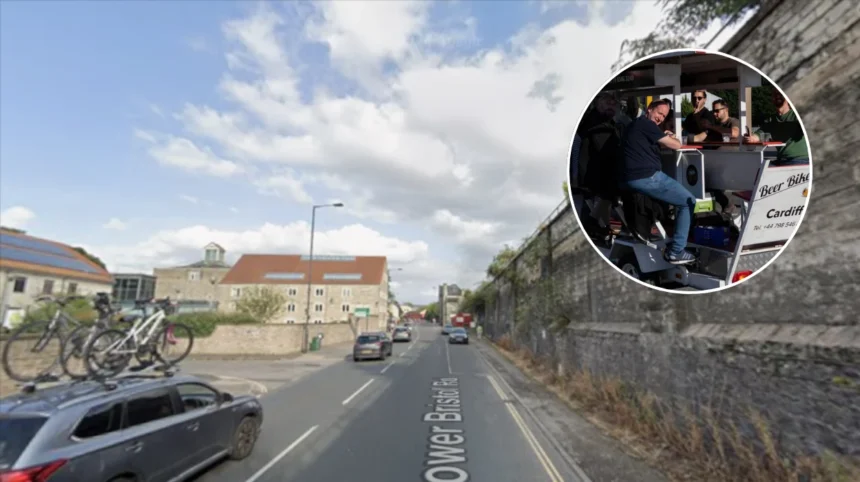
Beer bikes are large, pedal-powered carts seating groups along the sides, popular for stag and hen parties. Beer Travel Ltd runs hour-long drinking trips around Bristol and Cardiff. Alcohol cannot be sold on the bikes, so customers purchase it in advance upon booking.
The firm proposed using a secure storage container in Bath’s Twerton area, near Bath City FC’s Twerton Park ground, solely accessed by staff. Alcohol would be bought there post-licensing and transported to the bikes, akin to online alcohol delivery under licensing law. Bikes themselves require no licence.
As reported by journalists covering the hearing for the Bath Chronicle, the operation allows pre-paid booze without on-site sales, fitting within regulated frameworks.
How Did Bath Council Justify Granting the Licence?
Chair of the licensing committee, Steve Hedges (Combe Down, Liberal Democrat), repeatedly clarified the council’s remit:
“The council was only able to consider issues about the licensing of the storage container and that it had no power over the beer bikes in Bristol and Cardiff.”
Despite objections, the committee approved the licence after Beer Travel Ltd accepted 31 agreed conditions on bike conduct and container security. PC Crowther conceded he preferred this regulated approach over unlicensed “bring your own beer” (BYOB) operations.
Solicitor Chris Grunert, representing Beer Travel Ltd, defended the application: “This is no way a card trick or some sort of magic trick to try to deceive,” citing economic efficiencies in Bath storage. He emphasised: “We are doing exactly what we should be doing,” and noted the firm could operate unlicensed but chose regulation.
What Specific Risks Did Police Highlight for Cardiff?
PC John Crowther raised multiple concerns during the 26th March hearing. He flagged the firm’s website slogan “all you can drink,” advertising videos depicting beer drunk through traffic cones, potential public nuisance, traffic tailbacks, and public urination risks.
“The drinking of the alcohol is not a licensable activity — but it is most definitely where the risk lies,”
PC Crowther stated.
In Cardiff, the advertised pickup is 8 Fitzroy Street in Cathays, a residential student let. PC Crowther spoke to residents, letting agents, and the owner, all unaware of its use.
“Beer Travel Ltd had never contacted South Wales Police licensing officers or Cardiff City Council’s licensing department despite operating in Cardiff,”
he added.
Mr Grunert countered that experiences are “more of a sober affair” than ads suggest, with over 400 trips in Bristol and Cardiff run “for a couple of years” without issues.
“We do take very seriously the care of our customers when they are on the bikes with us,”
he said, vowing zero tolerance for public urination.
Were There Objections from Bristol Police Too?
Yes, Bristol-based Avon and Somerset Police joined South Wales in objecting. Their submission warned of the “Trojan Horse” nature, focusing on the disconnect between Bath storage and operations elsewhere. No specific Bristol incidents were cited, but the force aligned with broader public order fears.
What Conditions Were Imposed on the Licence?
Ahead of the meeting, police and Beer Travel Ltd negotiated 31 conditions. These regulate behaviour on bikes—such as prohibiting excessive drinking or nuisance—and secure the Twerton container, accessible only by staff. PC Crowther supported this over unregulated alternatives.
Why Choose Bath for Storage Despite No Local Operations?
Mr Grunert cited economic reasons, without specifics. Bath & North East Somerset Council’s jurisdiction covers the container, technically no different from an online retailer storing and dispatching alcohol. No plans exist for beer bikes in Bath.
How Has Beer Travel Ltd Responded to Criticisms?
The firm insists on compliance. Mr Grunert told the committee:
“The beer bikes could operate on a bring your own beer basis with no licence at all, but that the company wanted to get a licence and act within a regulated environment.”
He highlighted the issue-free record:
“This has been going for a couple of years and you never had an issue with it.”
What Happens Next for Beer Bikes in Cardiff and Bristol?
The licence enables continued operations under conditions. South Wales Police now knows of the Cardiff presence, potentially prompting local scrutiny. Cardiff City Council may review the Cathays pickup independently.
PC Crowther’s preference for regulated bikes suggests monitoring rather than shutdown. Chair Steve Hedges ensured the decision stayed within Bath’s scope, leaving other councils to act.