Key Points
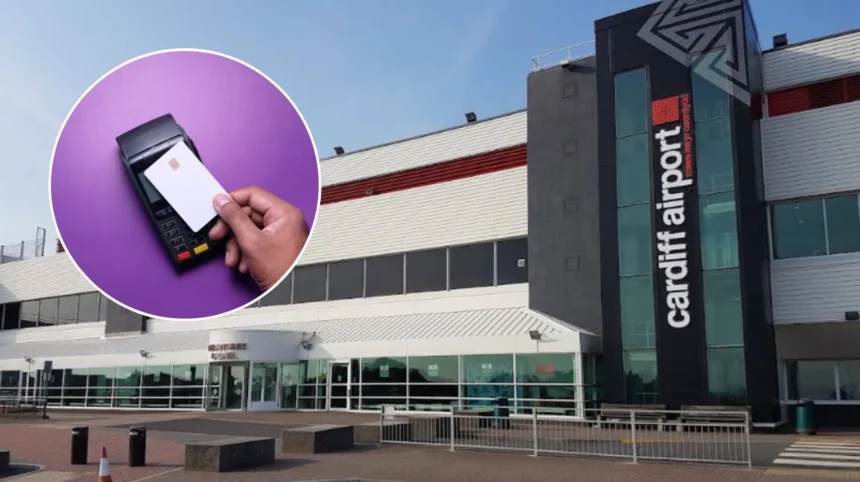
- Contactless Entry: Incoming travelers at Cardiff Airport will now have the chance to use eGates without physically swiping their passport but using facial recognition technology.
- Rollout Across the Nation: The rollout of the system began in East Midlands Airport on Tuesday, 6 October 2026, with plans for the rollout of the system across all UK airports’ eGates by early 2027.
- Time and Efficiencies: Trials suggest that the new system is up to 25% more efficient than the current eGates.
- Eligibility at Launch: Initially, only British passport holders will be able to make use of the new technology.
- In Line with Government Policy: The new development fits into the wider strategy of the government regarding immigration as outlined in the Immigration White Paper, which includes, among other things, ETA and reducing the minimum age for eGates to eight.
South Wales Argus (Cardiff Daily) October 10, 2026 – Arriving passengers at Cardiff Airport are set to experience streamlined border checks following the announcement that a new contactless eGate system is being introduced across the UK. According to a report by Patrick Glover, Trending News Reporter for the South Wales Argus, the initiative forms part of a nationwide border modernization strategy designed to reduce queue times while upholding stringent security protocols.
- Key Points
- How Does the New Contactless eGate Technology Function at UK Airports?
- When Will Cardiff Airport and Other UK Terminals Receive the Upgrade?
- Who Will Be Eligible to Use the Contactless eGates?
- What Is the Background of This Border Modernisation Development?
- What Is the Prediction for How This Development Will Affect Passengers and Airport Operations?
- Impact on Airport Operators and Border Operations
- Operational Considerations during Transition
How Does the New Contactless eGate Technology Function at UK Airports?
As detailed by Patrick Glover in the South Wales Argus, the upgraded eGate system replaces the traditional requirement of scanning a physical passport chip with facial comparison technology. Upon approaching the gate, passengers have their photo taken by integrated cameras. The system compares the live image against existing digital biometric data; if the automated checks pass, the gate opens immediately.
If additional identity verification or border clearances are required, travellers may still be asked to present their physical passport or undergo manual checks by a Border Force official. Border authorities have stressed that passengers must continue carrying their physical passports at all times during international travel, as the document remains legally essential.
As cited by Patrick Glover, Director General of Border Force, Phil Douglas, highlighted the benefits of the technology, stating:
“This is a win for travellers coming to our brilliant country. By using state-of-the-art technology, we are making journeys smoother and faster, all while fully maintaining the UK’s robust border security. Our digital transformation also builds on our work this summer to extend eGates to children aged eight and above, making life a little easier for families.”
In a statement published on social media, the UK Home Office confirmed:
“UK airports are starting to roll out new contactless eGates. Passengers at East Midlands Airport will be able to pass through securely using state-of-the-art facial technology to verify their identity. This is estimated to be up to 25% faster compared to using a passport at an eGate. All airport eGates are set to be contactless by early 2027.”
When Will Cardiff Airport and Other UK Terminals Receive the Upgrade?
As reported by Patrick Glover of the South Wales Argus, the phased national rollout officially commenced on Tuesday, 6 October 2026, at East Midlands Airport. Cardiff Airport is scheduled to receive the upgraded infrastructure by early 2027, though an exact operational date for the Welsh hub has not yet been specified.
Over the coming months, the contactless system will be progressively deployed to major airports across the United Kingdom, including:
- Birmingham Airport
- Bristol Airport
- Edinburgh Airport
- Gatwick Airport
- Glasgow Airport
- Heathrow Airport
- London City Airport
- Luton Airport
- Newcastle Airport
- Stansted Airport
Who Will Be Eligible to Use the Contactless eGates?
According to the South Wales Argus report by Patrick Glover, the contactless gates will initially be restricted to British citizens. As the rollout progresses, eligibility is scheduled to expand to include international travellers from approved countries and additional airport terminals.
Industry representatives have welcomed the operational changes. As quoted by Patrick Glover in the South Wales Argus, Chief Executive of AirportsUK, Karen Dee, stated:
“This will be excellent news for the passenger and demonstrates how UK airports continue to be at the forefront of new technologies to keep our borders safe, while improving the travelling experience. It is vital that we have the fast, efficient borders that arrivals into the UK now expect, and we will work closely with our members and government officials to ensure a smooth rollout.”
The introduction of contactless processing aligns with broader border automation measures under the UK Government’s Immigration White Paper. These include the Electronic Travel Authorisation (ETA) scheme, which pre-screens visa-exempt foreign visitors prior to travel.
Furthermore, as noted by Patrick Glover, the update follows an eGate policy shift introduced in July 2026, which lowered the minimum age for eGate usage from 10 to eight years old (for children at least 120 cm tall accompanied by an adult). That policy adjustment enabled an estimated 1.5 million additional children to use automated gates, reducing reliance on manual Border Force desk processing.
What Is the Background of This Border Modernisation Development?
The implementation of contactless eGates represents the latest phase in the UK Border Force’s multi-year digital transformation strategy. Automated border control gates were first introduced at major UK airports in 2008 to process biometric passports, helping border officials handle rising passenger volumes without increasing manual desk staffing proportionally.
Over the past decade, eligibility for eGates has incrementally expanded from British and European Union citizens to include passport holders from nations such as the United States, Canada, Australia, Japan, New Zealand, Singapore, and South Korea. In parallel, entry criteria regarding passenger age have been modified over time—lowering the age limit from 12 down to eight years old by mid-2026 to assist traveling families.
The movement toward contactless entry removes the physical interaction step between the passport chip and the document reader, leveraging centralized digital biometric records established through advance passenger data systems and the Electronic Travel Authorisation (ETA) framework.
What Is the Prediction for How This Development Will Affect Passengers and Airport Operations?
For British citizens, the primary immediate benefit will be reduced queue times upon arrival at UK airports. With processing speeds estimated to increase by up to 25%, peak-hour congestion at arrival halls is anticipated to ease significantly. Families traveling with children aged eight and above will experience shorter wait times, combining the earlier 2026 age expansion with quicker gate throughput.
Explore more Local Cardiff News:
New Cardiff Music Hub Opens 11 Rehearsal Spaces in Llanishen 2026
New Aldi Store Approved for Multi-Million Pound Investment in Old St Mellons 2026
Impact on Airport Operators and Border Operations
For airport authorities and Border Force personnel, faster automated processing frees up operational capacity at terminal arrivals. Border staff can reallocate supervisory resources toward complex entry checks, secondary screening, and customs enforcement rather than routine document scanning.
Operational Considerations during Transition
During the phased transition leading into early 2027, passenger confusion may occasionally occur regarding eligibility and physical passport requirements. Because the contactless feature will initially apply only to British citizens, international travel groups or non-British nationals arriving at upgraded gates will still need to scan physical passports or proceed through standard lanes, requiring clear terminal signage and queue management during the rollout phase.