Key points
- Prize‑winning novelist Tessa Hadley has lived in Cardiff since 1982, when she was 26 and moved with her young son after her husband took a job at Cardiff University training teachers.
- She describes Cardiff as a plural, “tolerant, witty” city shaped by immigration from rural Wales, south‑west England, Ireland and elsewhere, contrasting it with her experience of Cambridge.
- Hadley underscores that Cardiff is a city built on waves of migration, including Somali sailors who arrived in the docks in the 1890s and helped establish Somali oral‑poetry traditions in dock cafés.
- When she arrived in the 1980s, Cardiff Bay’s docks were largely derelict, with wooden pilings emerging from tidal mud and former dockland banks and the Coal Exchange standing empty.
- From the 1990s Cardiff Bay has been renewed by the construction of a barrage that created a marina, leading to a vibrant waterfront area that hosts festivals, musicals, food fairs, restaurants and cinemas.
- Unlike Bristol’s more gentrified dockland redevelopment, Cardiff Bay retains a more mixed, less money‑driven social character, according to Hadley.
- The Senedd (Welsh Parliament) now meets in a distinctive Richard Rogers‑designed building in Cardiff Bay, while the Welsh National Opera is based at the Wales Millennium Centre.
- At the Wales Millennium Centre interval drinks are served behind the giant cut‑out letters of poet Gwyneth Lewis’s words, which are embedded into the copper‑coloured façade.
- Craft in the Bay showcases jewellery, ceramics and fabrics by Welsh artists, including pieces by David Frith and his late wife Margaret, whose work Hadley owns and prizes.
- Despite modern developments, Cardiff’s city centre still feels essentially Victorian and Edwardian, with adjacent residential districts dominated by terraced housing on a repeating ground‑plan scaled from small to very large.
- Hadley raised her own three sons and three stepsons during school holidays in a large terraced house in Roath, in an unpolished, student‑dense street she describes as “scruffy, scrappy” yet well suited to a busy household.
Cardiff (Cardiff Daily) March 28, 2026 – In a new piece for the Financial Times, award‑winning novelist Tessa Hadley offers an intimate, decades‑deep portrait of Cardiff, the Welsh capital she has called home since 1982, describing it as a “tolerant, witty” city that welcomed her even as a conspicuously English, middle‑class outsider. Drawing on more than four decades of residency, Hadley charts the city’s industrial past, its wave of inward migration, the bleak post‑industrial 1980s waterfront, and the more vibrant, culture‑led Cardiff Bay that emerged from the 1990s onwards, while reaffirming the enduring Victorian‑Edwardian fabric of its inner‑city streets.
- Key points
- What prompted Tessa Hadley’s guide to Cardiff?
- How does Hadley describe Cardiff’s identity?
- How does Hadley portray Cardiff Bay’s transformation?
- What role does politics and culture play in Hadley’s Cardiff?
- How does Hadley view local arts and craft?
- What does Hadley say about Cardiff’s architectural fabric?
- How did Hadley raise her family in Cardiff?
- How has the FT framed Hadley’s contribution?
What prompted Tessa Hadley’s guide to Cardiff?
Tessa Hadley’s article, published under the title
“Tessa Hadley’s guide to Cardiff”
in the Financial Times’ travel and lifestyle section, forms part of the paper’s “How to Spend It in…” series, in which prominent writers and cultural figures curate their favoured cities and neighbourhoods. As reported by the FT, Hadley wrote the piece as a personal reflection interwoven with practical insight, blending memoir with an insider’s recommendation of places she has known and returned to over decades.
In the opening section, Hadley explains that she first moved to Cardiff in 1982, at the age of 26, when her husband took a post at Cardiff University training teachers and the couple settled there with her small son. She adds that, after Cambridge, where she never felt she “fitted in,” Cardiff’s easy, pluralistic atmosphere felt immediately more comfortable, even though she was
How does Hadley describe Cardiff’s identity?
Throughout her guide, Hadley stresses that Cardiff’s character is rooted in immigration and industrial expansion. As written in her FT piece, the city grew from fewer than 2,000 residents in 1800 to more than 180,000 by 1911, as people arrived from rural west Wales, south‑west England, Ireland and other parts of the UK to work in the coal mines and steelworks.
She also highlights the arrival of the first Somali sailors in the Cardiff docks in the 1890s, noting that Somali epic poetry—one of the world’s major oral traditions—was recited in dock cafés, a detail she offers as evidence of Cardiff’s long‑standing multicultural layers. In her own words, cited by the FT, Cardiff is “a city built out of its immigrants,” a description that frames her entire narrative as a story of coming‑together rather than a nostalgic view of a monolithic “traditional” city.
How does Hadley portray Cardiff Bay’s transformation?
A key section of the guide focuses on Cardiff Bay, which Hadley recalls as derelict and melancholy when she arrived in the 1980s.
As she recounts for the Financial Times, the docks south of the city centre then showed wooden pilings jutting out of tidal mud, while grand dockland banks, insurance offices and the Coal Exchange stood hollowed out, testaments to the end of south Wales’s industrial era.
According to the FT account, the 1990s brought a major intervention: the construction of a barrage that created a marina and re‑energised the Bay. Today, writes Hadley, the area is
“cheerful and full of the city’s people,”
who gather for festivals, musicals, food fairs, restaurants and cinemas.
Yet, she adds, this renewal is not as “gentrified” as nearby Bristol’s dockland development, pointing to differences in local sociology and available capital. As paraphrased in the FT’s own coverage of the piece, Cardiff Bay’s renaissance feels more mixed and community‑oriented than a purely upscale lifestyle project.
What role does politics and culture play in Hadley’s Cardiff?
In her guide, Hadley singles out the Senedd (the Welsh Parliament) in Cardiff Bay, meeting in an architecturally striking building by Richard Rogers, as one of the city’s modern‑era landmarks. The FT notes that the structure is celebrated not only for its function but also for its design, which sits alongside the Wales Millennium Centre as anchors of the Bay’s cultural and political life.
The Welsh National Opera, according to Hadley’s description, has made the Wales Millennium Centre its home, lending the waterfront both prestige and a steady season of performances.
A particularly vivid detail she offers, as recorded by the FT, is that interval drinks inside the centre are served behind the enormous cut‑out letters of Gwyneth Lewis’s poetry, which are embedded into the copper‑coloured façade.
How does Hadley view local arts and craft?
Craft in the Bay, a creative hub on the Cardiff Bay waterfront, receives particular praise in Hadley’s article, as she characterises it as a showcase for jewellery, ceramics and fabrics by Welsh artists. The FT piece notes that Hadley singles out work by David Frith, recalling that she once treated herself to “a huge dish” by him that now has “pride of place” in her front room.
She also mentions a precious old teapot, minus its missing lid, by David’s late wife Margaret, underscoring her long‑standing attachment to Welsh craft. Through these references, the FT’s version of her guide suggests that Cardiff’s creative scene is not only institutionally robust but also deeply woven into the domestic lives of long‑term residents such as Hadley.
What does Hadley say about Cardiff’s architectural fabric?
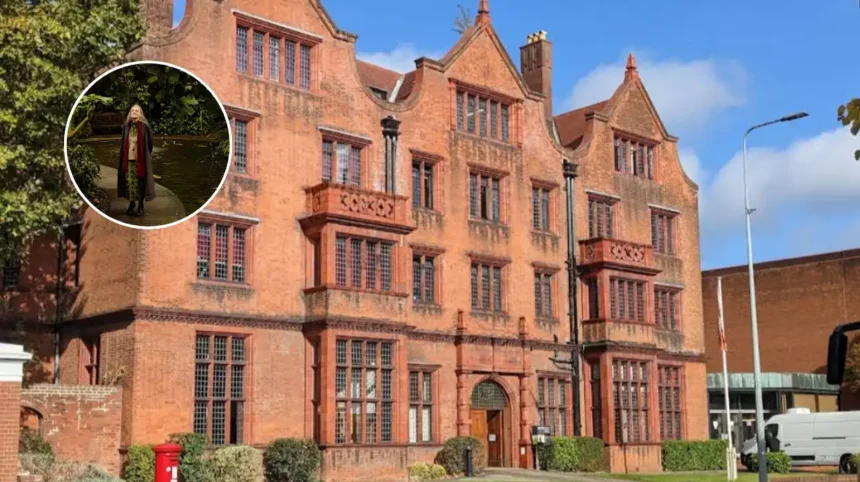
Beyond the Bay, Hadley turns to the city centre and its surrounding residential areas, emphasising that Cardiff still feels “essentially Victorian and Edwardian” despite overlays of modernity.
As laid out in the FT article, contiguous districts near the centre are dominated by terraced houses, which follow a more or less standard ground‑plan scaled from small through medium, big and very big.
This architectural uniformity, she implies, shapes everyday life and social composition, providing a stable backdrop to the city’s changing identity. Her point is not that the city is frozen in time, but that its late‑Victorian and Edwardian grain remains clearly legible beneath newer developments and infrastructure.
How did Hadley raise her family in Cardiff?
In the domestic‑life section of the guide, Hadley recalls raising her own three sons and three stepsons during school holidays in a large terraced house in Roath, in the east of the city. The FT notes that she describes the street as “scruffy, scrappy,” filled with bedsits and students, but well suited to a “houseful of boys” and the “occasional tempests” that came with such a crowded, lively household.
Through this vignette, Hadley offers a counterpoint to the polished, tourist‑oriented images of Cardiff Bay and the Wales Millennium Centre, instead grounding her portrait in the messy, everyday realities of school runs, family tensions and shared meals.
As the FT frames it, these passages give the guide its emotional weight, turning the city from a showcase of monuments into a lived‑in, multi‑generational home.
How has the FT framed Hadley’s contribution?
In its own promotional material, the Financial Times situates Hadley’s piece within a broader travel‑feature strand, listing “Tessa Hadley’s guide to Cardiff” alongside other destination‑focused articles such as recommendations for European wellness getaways.
The paper’s editorial notes emphasise the author’s dual status as a Cardiff resident and a major literary voice, implying that readers are gaining access not just to a tourist itinerary but to a novelist’s eye on place, memory and community.