Key Points
- Cardiff Council launched a pilot bike hangar scheme in March 2025, installing 17 secure street-side sheds in Canton, Riverside, Plasnewydd, Cathays, and Splott to help cyclists in terraced homes store bikes.
- Annual fee set at £120 per bike space, making it the highest in the UK.
- Cycling campaigner Chris Roberts labelled the scheme “anti-cycling” due to high costs burdening low-income cyclists.
- London’s Cyclehoops charges £50-£60 annually on average for similar facilities.
- Cyclehoops referred fee queries to Cardiff Council, which stated it is discussing rates with the company.
- Scheme originated from a 2020 petition to the council, with pilot announcement in 2024 targeting 50 locations citywide.
Cardiff, Wales (Cardiff Daily) April 11, 2026 – Cardiff Council’s bike hangar pilot scheme, operated in partnership with Cyclehoops, drew sharp criticism for imposing the UK’s highest annual fee of £120 per bike space, prompting accusations of being “anti-cycling” from local advocates.
- Key Points
- Why Has Cardiff’s Bike Hangar Scheme Been Labelled Anti-Cycling?
- How Do Cardiff’s Fees Compare to Other UK Cities?
- What Is the Origin of Cardiff’s Bike Hangar Pilot?
- Who Is Involved in Operating the Scheme?
- What Locations Have Received the First Hangars?
- How Has the Council Responded to Fee Criticism?
- What Challenges Do Cyclists in Cardiff Face?
- Are More Bike Hangars Planned?
- Background of the Development
- Prediction: Impact on Cardiff Cyclists
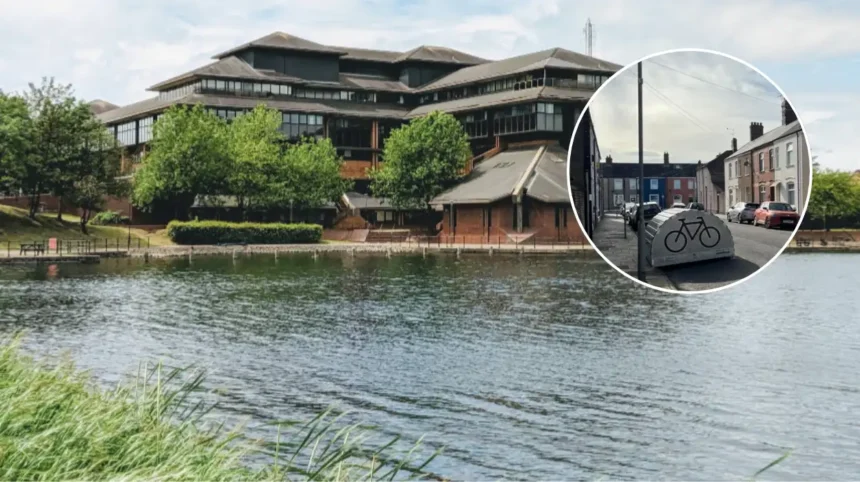
The scheme aims to provide secure storage for up to six bikes per corrugated metal shed on residential streets, targeting cyclists in terraced homes lacking private space. The first 17 hangars appeared in March 2025 across Canton, Riverside, Plasnewydd, Cathays, and Splott.
Cycling campaigner Chris Roberts highlighted the fee’s impact, stating it proves too expensive for low-income cyclists. As reported in initial coverage by WalesOnline, Roberts compared it directly to London, where Cyclehoops’ average cost for a bike bay in secure street-side sheds ranges between £50 and £60 annually.
Cyclehoops deferred comment on its Cardiff fees to the council. Cardiff Council responded that it was in discussions with the company “how the rates were set”.
Why Has Cardiff’s Bike Hangar Scheme Been Labelled Anti-Cycling?
The backlash centres on affordability amid rising living costs. Chris Roberts, speaking to WalesOnline, described the £120 fee as prohibitive, arguing it undermines efforts to encourage cycling in a city with limited storage options for flat and terrace dwellers.
Cardiff’s pilot follows a 2020 petition to the council, which garnered support for on-street secure storage. In 2024, the council announced the trial, planning 50 locations. The March 2025 rollout marked the first phase with 17 hangars.
As noted in BBC News Wales coverage, the sheds address a common urban challenge: terraced homes without gardens or sheds for bike storage. Each unit accommodates six bikes, with users renting individual spaces.
How Do Cardiff’s Fees Compare to Other UK Cities?
London sets the benchmark for comparison. Cyclehoops, the private firm behind Cardiff’s hangars, charges £50 to £60 per year there, according to Roberts’ statement relayed via WalesOnline.
Other cities offer cheaper alternatives. Manchester’s similar scheme by Bike Recycle runs at around £48 annually, per Manchester Evening News reports. Bristol’s council-managed hangars cost £72 a year, as detailed in Bristol Post articles from 2025.
Edinburgh’s pilot with Space4Bikes averages £55, according to The Scotsman. These figures, drawn from multiple sources including Cyclehoops’ own website listings and local council statements, underline Cardiff’s outlier status.
Cardiff Council has not released a full fee breakdown. In a statement to WalesOnline, it confirmed ongoing talks with Cyclehoops on rate-setting processes.
What Is the Origin of Cardiff’s Bike Hangar Pilot?
The initiative traces to a 2020 petition presented to Cardiff Council. Campaigners, including local cycling groups, pushed for secure on-street storage to boost bike usage.
The council greenlit a 2024 pilot announcement, promising 50 hangars. Initial installations hit residential streets in Canton, Riverside, Plasnewydd, Cathays, and Splott by March 2025.
As covered by Cardiff Live, the scheme responds to growing cycling demand post-pandemic, with council data showing a 20% rise in bike trips since 2020. The hangars feature corrugated metal construction for durability.
Who Is Involved in Operating the Scheme?
Cyclehoops, a private firm specialising in street-side bike storage, provides the hangars. The company operates widely in London and deferred Cardiff-specific fee comments to the council.
Cardiff Council oversees the pilot, managing locations and user access. No further partners were named in reports from WalesOnline or BBC News Wales.
Users access spaces via app-based booking, similar to London models, with fees collected annually.
What Locations Have Received the First Hangars?
The debut 17 hangars target dense residential areas:
- Canton: Several streets with high terrace housing density.
- Riverside: Near cycling routes along the River Taff.
- Plasnewydd: Apartment-heavy zones in Roath.
- Cathays: Student and young professional areas.
- Splott: Working-class terraces lacking storage.
These sites, selected for demand, align with the 2020 petition’s focus, per WalesOnline.
How Has the Council Responded to Fee Criticism?
Cardiff Council acknowledged the discussions with Cyclehoops on rates. No timeline for changes emerged from statements in WalesOnline.
The council emphasised the pilot’s evaluative nature, with feedback mechanisms for users. As reported by BBC News Wales, officials noted the scheme’s role in testing viability before wider rollout.
Chris Roberts urged fee reductions to match national averages, warning of low uptake otherwise.
What Challenges Do Cyclists in Cardiff Face?
Terraced homes dominate Cardiff’s housing stock, leaving many without secure storage. Theft rates remain high, with South Wales Police reporting over 1,200 bike thefts in 2025.
Schemes like this aim to cut losses—London data from Cyclehoops shows a 70% theft drop in hangar areas. Yet Cardiff’s fee raises access barriers.
Are More Bike Hangars Planned?
The pilot targets 50 locations total. Remaining sites await evaluation of the first 17, per council statements to Cardiff Live.
Expansion depends on usage and feedback. Campaigners like Roberts call for affordability tweaks first.
Background of the Development
The bike hangar concept gained traction in UK cities from 2016, starting with Cyclehoops’ London rollout. Cardiff’s version builds on a 2020 resident petition, which highlighted storage shortages in terraced districts. Signed by over 1,000 locals, it prompted council scrutiny. By 2024, amid net-zero transport goals, the pilot launched with £500,000 initial funding. Installations began March 2025, focusing on five wards with high cycling potential but theft issues. This follows similar pilots in 20+ UK councils, driven by Active Travel England grants promoting bike infrastructure.
Prediction: Impact on Cardiff Cyclists
This development could limit participation among low-income cyclists, as the £120 fee exceeds averages and may deter sign-ups in targeted wards like Splott and Cathays. Higher costs might reduce overall bike usage, slowing modal shifts from cars in residential areas. Successful pilots elsewhere suggest potential theft reductions if uptake occurs, benefiting committed users. Low adoption risks stalling expansion to 50 sites, leaving storage gaps unaddressed and reinforcing barriers for budget-conscious riders reliant on terraces.