Key Points
- Cardiff Council has faced severe accusations from community campaigners of “rushing to committee” with a contentious proposal to construct a massive data centre on the Cardiff East Park and Ride site.
- As reported by Martin Shipton of Nation. Cymru, the project has accumulated more than 3,000 individual objections, making it officially the most objected-to planning application in Welsh history.
- Community group Save Cardiff East founder Nick Richards criticized the local authority for refusing a request to delay the special committee meeting scheduled for November 12, 2026.
- Natural Resources Wales (NRW) has raised major environmental concerns regarding potential land contamination, risks to controlled waters, and severe flood hazards in extreme weather events.
- A Cardiff Council spokesperson strongly refuted the allegations of rushing, stating that an additional 21-day non-synthetic consultation period was provided after the formal window closed on October 28.
Cardiff (Cardiff Daily) November 7, 2026 — Cardiff Council has been accused of “rushing to committee” with a highly contentious proposal to build a massive data centre that has drawn a record-breaking volume of opposition from local residents and community stakeholders, according to a report published by Martin Shipton of Nation.Cymru.
- Key Points
- Why Is Cardiff Council Facing Accusations Over the Proposed Data Centre?
- What Are the Main Concerns Regarding the Planning Timeline and Process?
- What Environmental and Flood Risks Have Been Highlighted by Natural Resources Wales?
- How Has Cardiff Council Responded to the Claims of Rushed Procedures?
- Background of the Particular Development
- Prediction
Why Is Cardiff Council Facing Accusations Over the Proposed Data Centre?
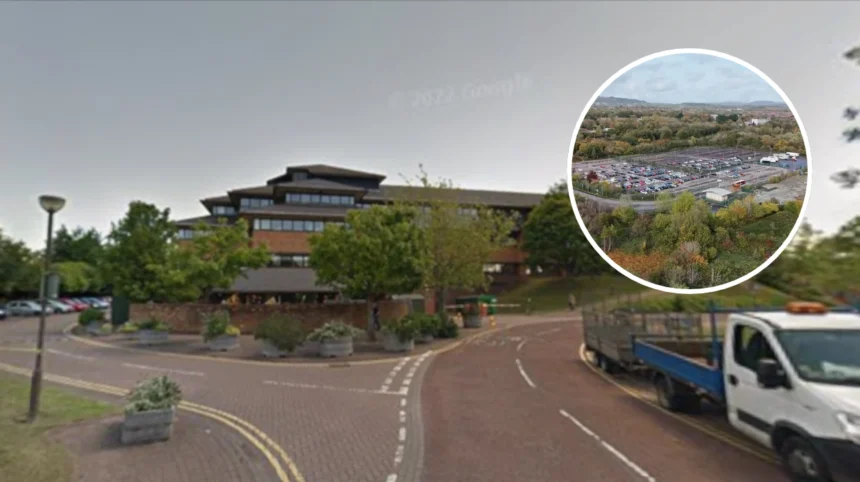
As reported by Martin Shipton of Nation.Cymru, planning officers have officially recommended that the major data centre development—proposed for the city’s existing east park-and-ride site—should be granted approval. However, this recommendation has triggered an immediate and fierce backlash from local campaigners who argue that the local authority is bypassing proper scrutiny.
Nick Richards, founder of the community opposition group Save Cardiff East, spoke out regarding the velocity of the planning process. As reported by Martin Shipton of Nation.Cymru, Nick Richards stated that:
“Following the close of the public consultation window, it is now confirmed, with over 3,000 individual objections, that this is the most objected-to planning application in Wales’ history.”
Campaigners have pointed out that senior political figures, including senior Labour councillor Lee Bridgeman and Shav Taj MS, have submitted formal objections to the initiative. Furthermore, critics emphasize that broader Welsh Government policy work regarding data centres remains actively ongoing, making local decisions premature.
What Are the Main Concerns Regarding the Planning Timeline and Process?
Community representatives have questioned the urgency demonstrated by local planners in scheduling the determination of the project. As reported by Martin Shipton of Nation.Cymru, Nick Richards questioned the timeline, stating:
“Our question being asked is why is the council rushing this to committee? They refused the request to delay the meeting. It could easily have gone to next month’s scheduled planning meeting. There is a lot to be discussed here.”
According to the reporting by Martin Shipton of Nation.Cymru, local opposition has been further fueled by wider industry trends. Nick Richards noted that recent media coverage by the BBC has highlighted four alternative sites where on-site gas-powered generation is utilized, driven largely by the UK Government’s ‘Data Centre Covenant’, which recommends gas power as a dominant strategy to bypass widespread grid connection delays.
Ahead of the formal decision, a structured schedule has been put in place. As reported by Martin Shipton of Nation.Cymru, the planning committee is scheduled to visit the Cardiff East Park and Ride site, followed by a special committee meeting to decide upon the application. Community representatives, including Nick Richards, have petitioned to speak at the session alongside expected high levels of press attendance.
Explore More Cardiff Council News
Cardiff Proposes New HMO Licensing Scheme After Inspection Failings 2026
Cardiff Council Tax Arrears Exceed £11m in Cardiff 2026
What Environmental and Flood Risks Have Been Highlighted by Natural Resources Wales?
Environmental scrutiny has formed a core pillar of the opposition against the project. As reported by Martin Shipton of Nation.Cymru, the official council planning officer’s report acknowledges that Natural Resources Wales (NRW) maintains significant objections because critical information remains outstanding. These unresolved issues specifically concern potential land contamination and risks posed to controlled waters resulting from proposed energy infrastructure, pollutant storage, and firewater management.
In addition to contamination risks, serious concerns persist regarding flood dynamics. As reported by Martin Shipton of Nation.Cymru, while the development plateau is predicted to remain free of flooding during standard design events, shallow flooding, excessive water velocities, and hazardous conditions are explicitly predicted during extreme events.
Natural Resources Wales has formally advised that the applicant has failed to adequately demonstrate that the development will avoid exacerbating flood risks elsewhere—particularly affecting Ball Lane and third-party land during a 0.1% annual exceedance probability event compounded by climate change and potential bridge blockages.
How Has Cardiff Council Responded to the Claims of Rushed Procedures?
In response to the widespread criticism and allegations of procedural acceleration, local government representatives have strongly defended their administrative timeline. As reported by Martin Shipton of Nation.Cymru, a Cardiff Council spokesperson issued a direct response, stating:
“It is incorrect to suggest that the Local Planning Authority is rushing this application to the Planning Committee.”
Elaborating on the consultation framework, the Cardiff Council spokesperson stated as reported by Martin Shipton of Nation.Cymru that:
“The formal consultation period concluded on October 28 and, although there was no statutory requirement to undertake a further consultation on the amended plans, the Local Planning Authority considered it appropriate to provide an additional 21-day non-statutory consultation period to give residents and other interested parties a further opportunity to comment.”
Furthermore, the local authority clarified that the application will only advance to the Planning Committee once municipal officers are fully satisfied that all pertinent material planning considerations have been thoroughly evaluated. The council emphasized that representations continue to be accepted even after formal windows close—including submissions relating to published committee reports up to 24 hours prior to the meeting—to ensure comprehensive public input is factored into the final determination.
Background of the Particular Development
The controversy surrounding the Cardiff East data centre proposal stems from the intersection of rapid technological infrastructure demands and local environmental and residential preservation. Data centres have become a critical focal point across the United Kingdom as digital consumption scales upward, yet they impose immense demands on local power grids, water resources, and spatial planning. In Cardiff, the decision to target the city’s east park-and-ride site transformed a routine logistical planning application into a flashpoint for community activism. The emergence of grassroots resistance, embodied by groups like Save Cardiff East, highlights a growing tension between national economic digital strategies—such as the UK Government’s push for reliable on-site gas power to mitigate grid delays—and localized concerns regarding environmental degradation, industrialization of suburban fringes, and unprecedented public mobilization reflected in thousands of individual objections.
Prediction
This high-profile planning decision carries significant ramifications for local residents, municipal governance, and future industrial developments across South Wales. For the immediate community in east Cardiff, the outcome of the November 12 special committee meeting will directly dictate whether heavy industrial infrastructure and auxiliary gas-powered generation are introduced into their immediate suburban environment, with direct implications for local air quality, noise pollution, and property values. For Cardiff Council, navigating an application with the highest volume of objections in Welsh history establishes a vital precedent for how local authorities balance regional economic digitalization against intense public dissent. If approved over substantial environmental warnings from bodies like Natural Resources Wales, the development could provoke prolonged legal challenges, increase political friction between local councillors and Welsh Government policy frameworks, and set a contentious benchmark for how future greenfield and public transit sites are repurposed for high-tech industrial use.