Key Points
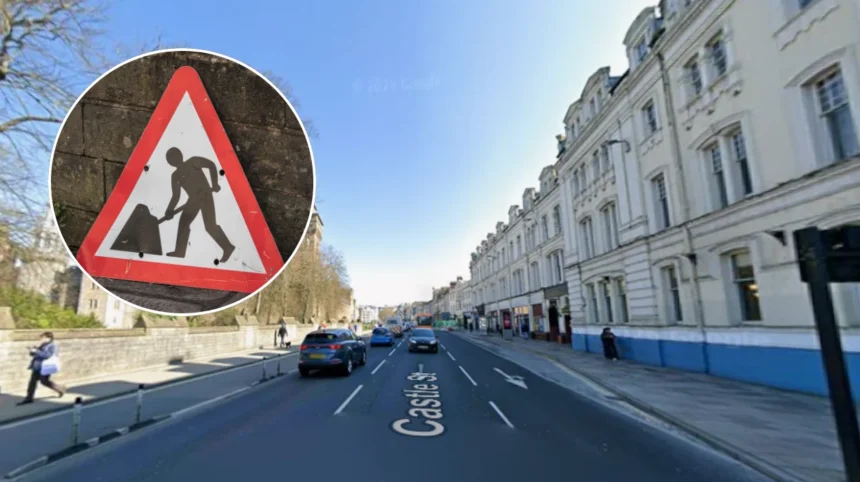
- Cardiff Half Marathon Approach: Extensive works are being undertaken along Castle Street in Cardiff city center, which happens to be located just outside Cardiff Castle, amid preparations for the soon-to-happen Cardiff Half Marathon.
- Course and Logistical Challenges: The race course is 13.3 miles long and starts just outside Cardiff Castle, thus making the ongoing road works and maintenance a key point of interest for the runners and other commuters.
- Wave Timing Information: The organizers have provided the following information on the wave timings, where the white, green, red, and pink wave is set to start at 10:00 am (pens open at 9:15 am) and the blue, purple, and yellow wave will start at 10:10 am (pens open at 9:40 am).
- More Travel Considerations: Aside from the above changes to Castle Street, travelers visiting the Welsh capital are advised to take into consideration the train schedule changes due to the upcoming football match between Wales and Denmark at the Cardiff City Stadium.
Cardiff (Cardiff Daily) October 2, 2026 – Cardiff Council has issued a fresh update regarding ongoing roadworks on Castle Street as the city prepares to host the highly anticipated Cardiff Half Marathon this weekend. Thousands of runners and spectators flooding into the Welsh capital will encounter significant highway alterations right at the heart of the 13.3-mile race route. As reported by Kathryn Williams, What’s On Editor of WalesOnline, participants taking part in the event might have already spotted heavy machinery and active construction zones situated directly near the town centre start line.
What Do Runners and Visitors Need to Know About the Cardiff Half Marathon Start Line?
As detailed by Kathryn Williams of WalesOnline, the famous race kicks off directly outside Cardiff Castle, putting the ongoing infrastructure improvements squarely in the spotlight. Organisers have laid out precise timings to manage the large volume of athletes congregating in the area.
As outlined by Kathryn Williams of WalesOnline, the event structure is split into distinct wave formations:
- The white, green, red, and pink start commences at 10:00 am, with starting pens opening beforehand at 9:15 am.
- The blue, purple, and yellow start follows closely at 10:10 am, with corresponding pens opening at 9:40 am.
As reported by Kathryn Williams of WalesOnline, participants and local residents looking for granular navigation details have been directed to consult official event mapping resources provided by the council and race organisers to bypass bottlenecks caused by the combination of race infrastructure and ongoing structural works.
How Are Public Transport Services Adapting to the Castle Street Developments?
The alignment of public transport services with the physical alterations on Castle Street has been a central focus for regional transit operators. According to operational service updates issued by Cardiff Bus, recent engineering milestones on Castle Street have reached a stage where key amenities are gradually returning to standard operation.
As detailed by Cardiff Bus, the central Castle Street bus stop (KC) has successfully reached a phase in the works allowing it to be brought back into active use for commuters. However, travellers have experienced rolling adjustments over preceding months, such as the rerouting of services 44 and 45 from Castle Street stop KC to alternative bay locations like Westgate Street stop KD to accommodate continuous engineering activities.
What Additional Travel Disruption Should Commuters Anticipate Across the City?
Navigating Cardiff during the busy weekend requires attention beyond the immediate vicinity of Castle Street. As highlighted in reporting by Kathryn Williams of WalesOnline, visitors heading into the city centre must account for multiple concurrent transit pressures.
As stated by Kathryn Williams of WalesOnline, “As well as road closures planned, visitors to Cardiff should also be aware there are train alterations, too, as Wales face Denmark at the Cardiff City Stadium.” This convergence of a major international sporting fixture, a mass participation running event, and urban highway interventions has created a complex logistical environment across municipal transit corridors. Local authorities and transport networks continue to monitor traffic flow meticulously to minimise delays for both residents and visiting crowds.
Explore More Cardiff Council News
Cardiff Council Wins LGC Digital Impact Award for Child Safeguarding Cardiff 2026
Cardiff Council School Drop-Off Zone Sparks Resident Backlash Cardiff 2026
Background of the Particular Development
The structural and traffic updates surrounding Cardiff’s Castle Street represent the latest chapter in a multi-year saga regarding how one of the city’s most critical thoroughfares should be utilised. Following a temporary pedestrianisation scheme introduced during the summer of 2020 in response to the COVID-19 pandemic, Castle Street underwent successive rounds of public consultation, partial reopenings for buses and taxis, and eventual trial reopenings to general traffic to balance environmental air quality compliance with urban economic vitality. Over subsequent years, Cardiff Council has continually refined the street layout—integrating segregated cycle lanes, bus priority corridors, and pedestrian zones. Consequently, ongoing engineering adjustments and short-term highway maintenance are frequently required to finalise permanent infrastructure, maintain public safety standards, and accommodate high-profile civic events like the Cardiff Half Marathon that utilise the historic castle precinct as a cultural and geographic anchor.
This ongoing development will likely cause short-term travel friction, localized congestion, and temporary transit delays for commuters, runners, and retail visitors navigating central Cardiff during major event weekends. However, the systematic upgrading of Castle Street infrastructure aims to streamline long-term public transport reliability and pedestrian safety. For the particular audience of local residents, daily commuters, and regional visitors, these adjustments signal a transitional phase toward a more permanently structured city centre. While immediate inconveniences such as rerouted bus stops and altered train schedules require careful journey planning, the completed works are intended to optimize traffic management, bolster public transit flow, and secure a more resilient, accessible urban core for future large-scale events and everyday use alike