Key Points
- New Hospitality Venture Proposed: Croeso Pubs Ltd has formally submitted a planning application to Cardiff Council to transform a Grade II-listed vacant building in the city centre into a pub.
- Prime Location: The proposed site is located at 47-48 St Mary Street, a prominent commercial property in the heart of Cardiff.
- Economic Boost and Employment: The development is expected to create 30 full-time and part-time jobs across management, supervisory, and kitchen operations, while contributing approximately £30,000 annually to local business rates.
- Anticipated Footfall: According to planning submission documents, the proposed establishment expects to attract more than 65,000 visitors annually.
- Proposed Operating Hours: Operating hours submitted for council review extend from 09:00 to 02:00, Monday through Sunday.
- Addressing Long-Term Vacancy: The building has remained empty since 2016 following the departure of a sports retail business, despite extended commercial marketing campaigns.
- Heritage Status: Historic statutory body Cadw dates the property back to the turn of the 19th century, citing its Grade II listing for its well-preserved commercial frontage.
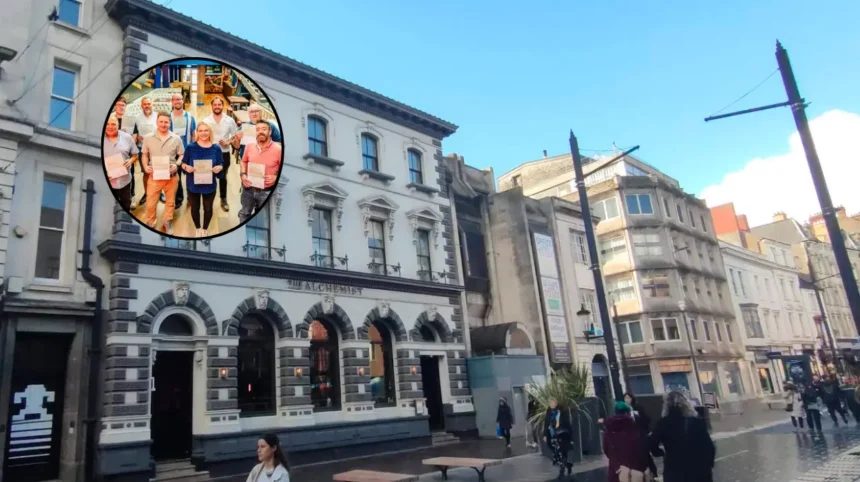
Cardiff (Cardiff Daily) August 7, 2026 — Plans have formally emerged to convert a historic Grade II-listed building in Cardiff city centre into a new public house. The property at 47-48 St Mary Street, which has stood empty for eight years, has been earmarked for redevelopment by South Wales hospitality operator Croeso Pubs Ltd. The venue operator has submitted detailed proposals to Cardiff Council seeking approval to adapt the vacant premises to serve the city’s expanding night-time and leisure economy.
- Key Points
- How Will the Proposal Impact the Local Economy and Local Employment?
- What Is the Operational History and Heritage Significance of the St Mary Street Site?
- Who Are Croeso Pubs Ltd and What Is Their Existing Cardiff Footprint?
- What Is the Background to This Particular Development?
- How Could This Development Affect Cardiff’s Residents, Local Businesses, and City-Centre Visitors?
As reported by Kieran Molloy of WalesOnline, official planning documents submitted to local authorities indicate that St Mary Street has experienced a “notable shift in character” in recent years, moving away from conventional retail and placing a heightened emphasis on food and beverage offerings. The documents note that this evolution has led to the thoroughfare establishing itself as a key
“destination for dining and socialising”.
How Will the Proposal Impact the Local Economy and Local Employment?
According to statements made by the applicant in the submission to Cardiff Council, the proposed establishment is anticipated to draw significant commercial activity to the central thoroughfare.
The planning documents outline that the new venue is expected to welcome in excess of 65,000 visitors each year once operational.
In terms of direct local economic impact, the developer estimates that the venture will create 30 jobs on-site. These employment opportunities are scheduled to span across management, supervisory, bar, and kitchen positions. Furthermore, the planning submission highlights that the operational pub will generate approximately £30,000 per year in business rates for Cardiff Council.
The proposed operational schedule submitted for review details opening hours running from 09:00 to 02:00, seven days a week.
What Is the Operational History and Heritage Significance of the St Mary Street Site?
The property at 47-48 St Mary Street holds historical significance within Cardiff’s urban conservation area. As detailed in official Cadw heritage records, the structure dates back to the turn of the 19th century. It retains a Grade II listing specifically designated due to its preserved historic commercial frontage.
The site was previously used as a retail outlet for rugby and sports merchandise. However, the ground floor and basement areas have remained unoccupied since 2016. As stated in the planning submission prepared on behalf of Croeso Pubs Ltd,
“The premises have been actively marketed without viable interest from retail operators with demand instead coming from the hospitality sector.”
The applicant further highlighted that the continued vacancy of the historic site has exerted a “negative impact” on the surrounding streetscape, asserting that bringing the structure back into active use will support urban renewal along St Mary Street.
Previous proposals for the building included a July 2024 planning approval to convert the upper storeys into 10 residential apartments, though that specific development scheme did not progress to completion.
Who Are Croeso Pubs Ltd and What Is Their Existing Cardiff Footprint?
Croeso Pubs Ltd is an established independent hospitality group operating across South Wales. The business manages a diverse portfolio of venues within Cardiff city centre and the wider region, including:
- Blue Bell (St Mary Street)
- Brewhouse (St Mary Street)
- The Philharmonic (St Mary Street)
- Retro (Mill Lane)
- Daffodil (Windsor Place)
- The Cricketers (Cathedral Road)
- The Discovery (Lakeside)
- The Dock (Mermaid Quay, Cardiff Bay)
- The Bear’s Head (Penarth)
The acquisition and conversion of 47-48 St Mary Street would expand the group’s presence on St Mary Street, where it already operates key venues such as Blue Bell and The Philharmonic.
Explore More Cardiff Council News
Cardiff church shops plan stalls over privacy concerns 2026
Cardiff Council Launches Backline Music Scheme With Music Venue Trust Cardiff 2026
What Is the Background to This Particular Development?
St Mary Street has historically served as one of Cardiff’s premier commercial corridors, traditionally characterized by high-street retail, banks, and mercantile services dating back to the Victorian and Edwardian eras.
Over the past two decades, changes in consumer habits, the growth of online shopping, and the opening of large retail complexes such as the St David’s Dewi Sant shopping centre have shifted primary retail activity away from traditional high-street frontages.
This broader structural change left several multi-storey buildings along St Mary Street vacant or underutilised, particularly on upper levels and secondary retail footprints.
In response, Cardiff Council’s urban planning frameworks have increasingly accommodated change-of-use applications, enabling commercial premises to transition into leisure, food, beverage, and residential uses.
The specific building at 47-48 St Mary Street reflects this wider urban trend. Following the closure of its long-term sports retail tenant in 2016, commercial property agents marketed the ground floor and lower ground levels for retail use for several years.
The absence of viable retail occupiers prompted property owners to explore alternative planning pathways, including the previously approved 2024 residential scheme for the upper floors. Croeso Pubs Ltd’s current planning application represents the latest initiative to bring the entirety of the long-vacant Grade II-listed structure back into active economic use under a leisure designation.
How Could This Development Affect Cardiff’s Residents, Local Businesses, and City-Centre Visitors?
If Cardiff Council grants planning consent for the conversion of 47-48 St Mary Street, the development is expected to have notable effects across several key groups within the city:
The addition of a large, multi-hour pub venue operated by an established chain will intensify competition along the St Mary Street leisure corridor.
Nearby food and beverage operators may experience altered footfall patterns, particularly during peak evening hours, weekends, and major event days at the nearby Principality Stadium.
Conversely, the reduction of a major vacant frontage will likely improve visual amenity, potentially lifting footfall across adjacent businesses.
The conversion will yield an estimated £30,000 in annual business rates for Cardiff Council, providing revenue for local public services.
However, a venue operating until 02:00 seven days a week may require local licensing authorities, South Wales Police, and street cleanliness teams to manage late-night activity, crowd dispersal, and safety along the main night-time economy route.
The creation of 30 full-time and part-time positions offers immediate employment opportunities within the local service sector. This may benefit hospitality workers, students, and hourly-wage employees seeking roles ranging from kitchen staff to venue management.
Because the property is Grade II-listed, heritage advocates and planners will monitor how the internal and external alterations respect the building’s historic character.
Successful adaptive reuse preserves structural heritage by securing commercial funding for maintenance, preventing the fabric of the building from deteriorating further due to prolonged disuse.
City-centre patrons will gain an additional social venue, broadening the leisure offerings on St Mary Street. However, any nearby residents—including occupants of upper-floor conversions along St Mary Street—may track the planning process regarding noise mitigation, waste management, and late-night operational controls during the council’s public consultation period.