Key Points
- Action by the Independent Group: An open letter by Cardiff council’s independent group criticized the council over the proposed disposal of the East Cardiff Park and Ride site.
- Background Information: Initially, Curtis Hall Ltd applied in January 2026 for a data center on the site, which received intense opposition from local residents, campaigners, and local councillors.
- Main Requirements: Those signing the letter required details about the financial gains, environmental effects, water and energy use, and consistency with the Well-being of Future Generations (Wales) Act 2015.
- Government Intervention: Previously, the Welsh government had put a holding directive on the application such that Cardiff council could only discuss and either approve or reject the project as ministers weigh whether to intervene.
- Future Discussion: There will be a meeting of the Cardiff Council planning committee on November 12, 2026, to discuss the controversial application.
Cardiff (Cardiff Daily) November 6, 2026 — Cardiff council’s independent group has published a sharp open letter condemning the local authority’s decision to sell the East Cardiff Park and Ride site to facilitate a controversial data centre development. The move comes ahead of a crucial planning committee debate scheduled for later this month, amplifying mounting local opposition against the commercial land disposal.
Why Is the Sale of the East Cardiff Park and Ride Site Facing Heavy Criticism?
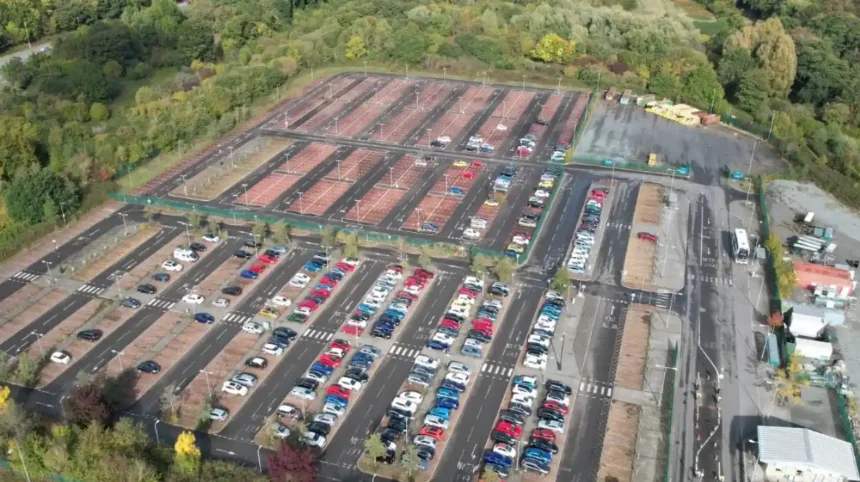
The controversy surrounds plans submitted in January by developer Curtis Hall Ltd to build a data centre campus on the East Cardiff Park and Ride location. As reported by Kieran Molloy of Wales Online, the proposal has encountered profound local opposition from residents, MSs, activists, and councillors, resulting in multiple campaigns aiming to block the approval. While the developer previously held permission to develop the site for other purposes, the shift toward a data centre campus has intensified public scrutiny.
The open letter condemning the land disposal was officially signed by Councillor Peter Littlechild and Councillor Emma Reid-Jones. As reported by Kieran Molloy of Wales Online, the letter states:
“We are calling on Cardiff Council not to sell council-owned land for data centre development unless and until it can be clearly demonstrated that doing so is in the best long-term interests of Cardiff residents.”
The signatories emphasized the fiduciary responsibility of local authorities, writing:
“Public assets belong to the people of Cardiff. The council is their custodian, entrusted with protecting them for current and future generations. Decisions to dispose of public land should be guided not simply by commercial opportunity or immediate financial return, but by what delivers the greatest overall benefit for local communities.”
Furthermore, the authors argued that the transaction conflicts with statutory duties outlined in the Well-being of Future Generations (Wales) Act 2015.
What Specific Financial and Environmental Demands Are Being Made of the Council?
The independent councillors have set out a series of demanding transparency benchmarks for the local authority. As reported by Kieran Molloy of Wales Online, the open letter calls upon Cardiff Council to issue a comprehensive public response detailing the exact financial returns generated by the land sale. Specifically, the letter asks whether these monetary returns have been rigorously weighed against the long-term public value of keeping the land in municipal hands.
The letter also presses the council to publish the complete financial, social, economic, and environmental business case associated with parting ways with public assets for data centre projects. Questions were raised regarding concrete long-term dividends for local communities, including guaranteed local employment figures, apprenticeship schemes, and wider business opportunities. This scrutiny directly challenges assertions from developer Curtis Hall Ltd, which has maintained that the project will deliver tangible employment opportunities.
On the environmental front, the signatories demanded clarification on whether independent audits have evaluated the scheme’s massive energy and water consumption, carbon footprint, and subsequent strain on regional infrastructure. While Curtis Hall Ltd has previously rejected claims that the data centre’s resource usage would trigger negative local consequences, local skeptics remain unconvinced. The open letter also questions whether alternative public uses for the site were given adequate consideration before pursuing the sale.
The open letter concludes with a stern challenge to local leadership:
“With thousands of residents having raised concerns about the proposed disposal, what evidence demonstrates that selling this public asset will deliver a lasting public benefit for Cardiff, how has that benefit been assessed, and why does Cardiff council believe it outweighs both the strength of public opposition and the loss of a strategically important public asset?”
How Has Cardiff Council Responded to the Backlash?
In response to the mounting pressure and public outcry, a spokesperson for Cardiff Council defended the procedural history of the land agreement. As reported by Kieran Molloy of Wales Online, a Cardiff Council spokesperson stated:
“The agreement relating to the site was reached a number of years ago following a market process designed to support the council’s stated strategic priority of delivering improved infrastructure and connectivity in east Cardiff, including a new bridge.”
The local authority highlighted that the developer has already secured foundational planning permission, granting them legal rights to proceed with development. However, the council noted that the developer has recently pursued a modified planning permission application to alter specific elements of the master plan. This revision involves relocating existing car parking bays that are currently utilized on an informal basis by local National Health Service (NHS) staff.
Reaffirming the council’s commitment to regional infrastructure, the spokesperson added:
“Delivering improved infrastructure and connectivity in east Cardiff including a new bridge remains a priority, and the council will continue to engage in the development process.”
Addressing concerns over the NHS parking facilities, the council confirmed that it successfully negotiated terms ensuring current staff parking will remain protected until the developer establishes a suitable alternative location.
Addressing the economic rationale behind asset disposals, the Cardiff Council spokesperson stated:
“More broadly, proposals involving the disposal of council-owned land are only progressed where the supporting business case demonstrates value for money for Cardiff taxpayers and supports the council’s wider strategic objectives.”
What Role Is the Welsh Government Playing in the Planning Process?
The local planning battle has also attracted regional government intervention. Earlier this year, the Welsh Government placed a formal holding directive on the data centre proposals. Under this directive, Cardiff Council’s statutory powers are restricted; the local authority is permitted to debate or refuse the scheme, but final substantive approval is frozen while Welsh ministers evaluate whether to step in and act as the ultimate decision-makers.
To advance the local parliamentary process, the Local Democracy Reporting Service (LDRS) understands that a special meeting hosted by the Cardiff Council planning committee has been formally arranged for November 12, 2026. This session will provide a public platform for councillors to debate the contentious proposal amidst intense scrutiny from community stakeholders.
Explore More Cardiff Council News
Cardiff Proposes New HMO Licensing Scheme After Inspection Failings 2026
Cardiff Council Tax Arrears Exceed £11m in Cardiff 2026
Background of the Development
The controversy surrounding the East Cardiff Park and Ride site stems from long-standing municipal efforts to balance urban infrastructure investment with public asset retention. Years prior, Cardiff Council initiated a market-led procurement process intended to secure strategic transport enhancements in the eastern corridor of the Welsh capital, including the funding and construction of a new bridge to improve regional connectivity.
As part of these historical commercial arrangements, rights to the park and ride site were tied to development milestones. However, the modern transition from traditional commercial usage toward a high-capacity data centre campus—formalised by Curtis Hall Ltd in January 2026—shifted public sentiment. Data centres have faced rising national and international scrutiny over intensive power consumption, massive water usage, and carbon footprints, transforming a routine municipal land disposal into a high-profile flashpoint for local governance, community activism, and regional environmental policy enforcement in South Wales.
This intensifying confrontation between Cardiff Council, independent politicians, and local residents could establish a critical legal and political precedent for how local authorities across Wales manage municipal land sales under the Well-being of Future Generations framework. If public pressure and the Welsh Government’s holding directive result in a refusal or significant delay at the upcoming November 12 planning committee meeting, it may embolden community groups to challenge other commercial tech developments across the region.
Conversely, if the council proceeds with the sale, it risks deepening a crisis of trust between local voters and municipal leadership, potentially fueling voter backlash in upcoming local elections. For the residents of Cardiff, the outcome of this dispute will directly determine the aesthetic, environmental, and infrastructural landscape of their local neighborhoods, setting a benchmark for how transparency, community consultation, and climate responsibilities are balanced against commercial tech investments in the capital.