Key Points
- The planning decision regarding a massive data centre proposed for Cardiff has been taken out of Cardiff Council’s hands and will now be decided by the Welsh Government, as reported by Novara Media.
- Welsh planning minister Sian Gwenllian determined the issue was too significant for a single local council due to conflicts with national transport, energy, and flood risk policies.
- Developer Curtis Hall applied to construct a 30,000 square metre facility at the Cardiff East Park and Ride site, incorporating temporary gas turbines for power.
- The proposal triggered severe local backlash, environmental apprehensions over air quality, noise, water usage, and the loss of the park and ride service, attracting approximately 3,000 objections.
- Local anti-data centre campaigners, including the Save Cardiff East group, hailed the ministerial intervention as a “massive victory” and believe it could be the most objected-to planning application in Welsh history.
Cardiff (Cardiff Daily) November 13, 2026 – As reported by Novara Media, the high-stakes planning decision regarding a controversial data centre in Cardiff has been officially stripped from the local authority and transferred to the Welsh Government following fierce community resistance.
- Key Points
- Why Was the Cardiff Data Centre Decision Taken Away From the Council?
- What Were the Main Grounds for Local Backlash and Objections?
- How Did Political Figures and Developers Respond to the Intervention?
- Background of the Particular Development
- Prediction on How This Development Can Affect the Particular Audience
Why Was the Cardiff Data Centre Decision Taken Away From the Council?
As detailed by Novara Media, Welsh planning minister Sian Gwenllian intervened because the scheme possessed implications far too substantial for an individual municipal body to oversee. According to the reporting, the minister concluded that the project presented a
“potential conflict with national policy on transport, energy and flood risk”.
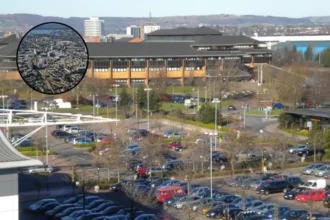
The application, spearheaded by developer Curtis Hall Ltd, aimed to build a sprawling 30,000 square metre facility on the grounds of the Cardiff East Park and Ride. Crucially, the developer sought permission to utilise temporary gas turbines to power the site, a strategy increasingly adopted across the United Kingdom due to widespread grid-connection bottlenecks.
What Were the Main Grounds for Local Backlash and Objections?
As highlighted in coverage by Novara Media, the development faced an unprecedented wave of community resistance. Local residents, environmental campaigners, and community groups raised severe alarms regarding the environmental and ecological footprint of the facility.
As reported by Novara Media, primary concerns centred on potential degradation of local air quality, heavy noise pollution, increased flood risks, heavy water consumption, and the permanent loss of vital green space and biodiversity. Furthermore, the development threatened the immediate closure of the Cardiff East Park and Ride service, which serves as an essential transport link for local commuters and healthcare workers accessing nearby hospital infrastructure.
According to figures cited by Novara Media, the project attracted approximately 3,000 individual public objections. A spokesperson from the local campaign coalition Save Cardiff East stated to Novara Media that the community had
“made its position overwhelmingly clear: we do not want a huge gas-fired power station and associated data centre on our doorstep”.
The spokesperson added:
“We believe this could be the most objected-to planning application in Welsh history”.
How Did Political Figures and Developers Respond to the Intervention?
As documented across regional coverage by outlets including Wales Online and Nation.Cymru, the ministerial “call-in” arrived less than 24 hours before Cardiff Council’s planning committee was scheduled to convene and vote on the application.
As reported by Wales Online, local councillor Joel Williams for Pontprennau and Old St Mellons remarked that the intervention
“follows many months of campaigning, petitions, thousands of objections and a series of public meetings”.
However, Councillor Williams cautioned residents:
“It is an important development, but it is not a time to celebrate yet. Welsh ministers could still grant permission”.
Similarly, Nation.Cymru quoted Pentwyn Liberal Democrat councillor Joe Carter, who had fought the proposals for eleven months, describing the ministerial action as “a huge win for our community”. Councillor Carter stated:
“The idea of removing a park and ride to build an energy-intensive data centre goes against all of the council’s environmental credentials, and the Well-being of Future Generations Act. The minister can now look at the evidence, reject this and put a moratorium on any further massive data centres in Wales”.
Conversely, developer Curtis Hall Ltd maintained that the proposal would bring valuable digital investment and employment, asserting through earlier statements reported by the Pembrokeshire Herald that the scheme would not inflict significant negative impacts on the surrounding environment, and that local NHS parking arrangements would be safeguarded until viable alternatives materialized. Nevertheless, with the Welsh Government assuming direct control, the application enters an exhaustive ministerial review process led by a planning inspector, keeping the future of the Cardiff East site entirely uncertain.
Background of the Particular Development
The controversy surrounding the Cardiff East Park and Ride site reflects a broader national tension across the United Kingdom as technology firms scramble to construct hyperscale data centres to support artificial intelligence and cloud computing infrastructure. Because national grid connections face severe capacity queues, developers have increasingly turned to temporary fossil-fuel generation—such as gas turbines—to power facilities independently during initial phases.
In Cardiff, the choice of the park-and-ride location directly intersected with crucial public municipal assets. The proposed facility threatened not only local green spaces and wildlife corridors but also removed a cornerstone transportation node relied upon by hospital staff, patients, and city commuters. These compounding pressures transformed a routine municipal planning submission into a historic flashpoint, culminating in thousands of formal objections and unprecedented political intervention by the Welsh administration.
Prediction on How This Development Can Affect the Particular Audience
For local residents, environmental groups, and regular commuters in Cardiff, the Welsh Government’s decision to call in the application buys critical time but guarantees prolonged uncertainty. While the intervention prevents the local Labour-run council from fast-tracking approval and validates the unprecedented community mobilization, local stakeholders face a rigorous national planning inquiry where economic growth arguments surrounding AI infrastructure will clash directly with environmental protection and public service preservation.
If the Welsh Government ultimately greenlights the project despite local resistance, residents could face heavy industrial noise, compromised local air quality, the permanent loss of the park and ride facility, and heightened strains on local water and energy resources. Conversely, a ministerial rejection would establish a powerful precedent across Wales, signalling that localized ecological concerns, community pushback, and adherence to future-generation well-being legislation can successfully halt the unbridled expansion of energy-intensive tech facilities.