Key Points:
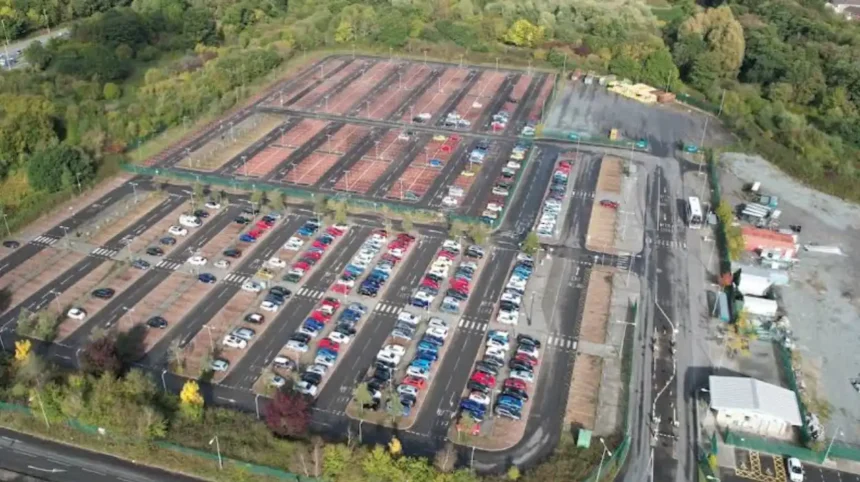
- Curtis Hall Ltd submitted plans in January 2026 to build a data centre at the Cardiff East Park and Ride site in Llanrumney.
- An initial air quality assessment indicated that running emergency backup generators for over 30 minutes would likely breach short-term nitrogen dioxide ($NO_2$) safety objectives.
- The original assessment recommended advising nearby residents to stay indoors with windows closed during emergency generator operation lasting longer than 30 minutes.
- A revised assessment in April 2026 adjusted testing protocols to run generators individually, classifying the resulting emissions as acceptable for human health.
- Members of the Senedd Nick Carter and Zaynub Akbar expressed strong concerns, noting that revised models still predict up to three air quality breaches annually near Glan-yr-Afon Primary School.
- The Welsh Government issued a holding directive preventing Cardiff Council from granting planning permission while it evaluates whether to call in the application for final determination.
- Local residents and elected representatives, including Councillor Joe Carter, have launched multiple community campaigns opposing the development.
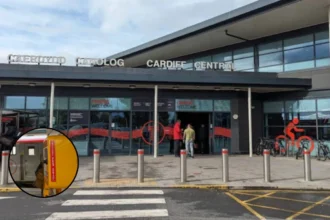
Cardiff (Cardiff Daily) September 10, 2026 – Mounting opposition has emerged regarding a planning application submitted by Curtis Hall Ltd to construct a data centre on the site of the Cardiff East Park and Ride in Llanrumney. Local residents and elected representatives have voiced serious health and environmental concerns after environmental impact documents revealed potential risks to regional air quality. The central issue involves the facility’s proposed emergency backup generators, which original technical documentation showed could cause localized nitrogen dioxide emissions to exceed safe threshold levels for human health during extended operation.
- Key Points:
- What are the specific air quality concerns raised in the initial planning submission?
- How did the developer modify the air quality modeling in subsequent assessments?
- Why are Members of the Senedd challenging the developer’s revised findings?
- What regulatory actions has the Welsh Government taken regarding the application?
- How has the local Llanrumney community responded to the proposed facility?
- Background of the particular development
- Prediction: How this development can affect local residents and planning policy
What are the specific air quality concerns raised in the initial planning submission?
The planning application, initially submitted to Cardiff Council in January 2026, included a comprehensive environmental and air quality assessment detailing the operational parameters of the facility’s emergency power infrastructure. Under a section dedicated to the operational impacts of backup generators running for periods exceeding 30 minutes, the documentation acknowledged a significant environmental risk.
The report stated that the short-term impact of nitrogen dioxide ($NO_2$) emissions from the backup emergency generators, when operated for more than 30 minutes, would likely result in the exceedance of the short-term $NO_2$ air quality objective established for the protection of human health.
To mitigate potential public exposure during an extended power outage or system test requiring generator operation, the initial assessment outlined emergency protocols for surrounding households. The document noted that in the event of emergency use of the backup generators at the data centre, operators were recommended to take additional precautions to limit public exposure, such as advising neighboring residents to remain indoors and keep their windows closed.
How did the developer modify the air quality modeling in subsequent assessments?
Following initial scrutinization by local authority planners, a secondary environmental assessment was produced in April 2026. This revised evaluation introduced altered operational testing methodologies for the backup generation systems. Under the updated framework, the developer specified that each backup generator would be tested individually on a weekly schedule rather than running multiple units concurrently.
Based on this modified testing regimen, the revised documentation concluded that the forecasted nitrogen dioxide levels emitted during routine maintenance and testing were considered acceptable for the protection of human health.
However, the revised conclusions failed to fully satisfy local politicians and community groups, who argue that the updated modeling merely narrows the scope of testing conditions without resolving the underlying risks associated with real-world emergency scenarios.
Why are Members of the Senedd challenging the developer’s revised findings?
Members of the Senedd (MSs) Nick Carter and Zaynub Akbar issued a joint statement highlighting their ongoing concerns regarding the development’s proximity to residential areas and local educational infrastructure.
Carter and Akbar stated that people in Llanrumney should never be told that breaching air quality standards next to their children’s school is acceptable. They emphasized that nearby homes and Glan-yr-Afon Primary School continue to face up to three predicted breaches of safe nitrogen dioxide levels per year, even under the developer’s revised modeling.
The MSs pointed out that the applicant’s original air quality assessment found that running backup generators for more than half an hour would likely breach safe nitrogen dioxide limits, requiring nearby residents to stay indoors with their windows shut. They noted that following queries from Cardiff Council, the applicant narrowed the testing conditions to test generators individually rather than together, subsequently revising the impact model to “acceptable.” Carter and Akbar stated that while the developer considers this compliant because it falls beneath an overall annual threshold, they strongly disagree with that interpretation.
What regulatory actions has the Welsh Government taken regarding the application?
In response to growing public scrutiny and representation from local stakeholders, the Welsh Government intervened in the local planning process by issuing a formal holding directive.
This administrative intervention explicitly restricts Cardiff Council from granting planning permission for the data centre proposal while ministers evaluate whether the application should be “called in.” A call-in decision would transfer the ultimate authority for approving or refusing the planning permission from Cardiff Council to Welsh Ministers.
The holding directive does not prevent Cardiff Council’s planning committee from formally debating the proposal or moving to refuse the application. The decision to issue the directive was publicly welcomed by both Senedd members as a necessary measure to ensure comprehensive scrutiny.
How has the local Llanrumney community responded to the proposed facility?
The planning application has prompted significant public opposition within the Llanrumney ward and surrounding neighborhoods. Local residents have organized multiple campaign groups aimed at highlighting the potential environmental, health, and visual impacts of converting the existing park and ride infrastructure into an industrial data facility.
Community organizing efforts have been supported by local ward representatives, including Councillor Joe Carter, who has led campaign initiatives against the current development plans. Objectors have consistently cited the proximity of the proposed development to Glan-yr-Afon Primary School and established residential streets as primary reasons for their opposition, calling for the protection of local air quality standards.
Background of the particular development
Data centres form the backbone of modern digital infrastructure, housing the server arrays, data storage hardware, and networking equipment necessary to support cloud computing, digital services, and enterprise data management. These facilities require uninterrupted electrical supply to ensure continuous operational uptime. Consequently, standard industry practice involves installing large-scale industrial diesel or gas backup generators to supply emergency power in the event of mains grid failure.
The site selected by Curtis Hall Ltd currently serves as the Cardiff East Park and Ride in Llanrumney, a transport hub located on the eastern periphery of Cardiff. The site is situated near existing residential communities, key transport arteries, and local community facilities, including Glan-yr-Afon Primary School.
Under the UK and Welsh statutory planning frameworks, developments capable of releasing atmospheric pollutants are required to submit detailed environmental impact assessments to local planning authorities. Nitrogen dioxide ($NO_2$) is a key regulated pollutant produced during fossil fuel combustion. UK Air Quality Standards define specific short-term hourly limits and long-term annual mean limits for $NO_2$ concentrations to prevent respiratory complications and broader public health issues.
The conflict between expanding digital infrastructure and maintaining local environmental standards has increasingly become a subject of scrutiny across Wales and the wider United Kingdom, as the demand for localized data storage hubs grows alongside stringent environmental compliance targets.
Explore More Local Cardiff News
Dr Rebecca Thomas Wins Daniel Owen Memorial Medal in Pembrokeshire 2026
Sophiaworks Set to Light Up Sophia Gardens Cardiff 2026
Prediction: How this development can affect local residents and planning policy
The eventual decision on the Curtis Hall Ltd planning application carries implications for the local Llanrumney community, Cardiff Council, and the wider Welsh digital infrastructure landscape.
For the primary audience—the residents of Llanrumney and the families associated with Glan-yr-Afon Primary School—the outcome will directly affect their localized living environment and public health safeguards. If the project proceeds under its current design, residents will face the operational presence of heavy backup power generation adjacent to homes and educational facilities. Even if operational tests occur individually as proposed in the April 2026 revision, the residual potential for $NO_2$ limit exceedances during emergency situations creates an ongoing environmental concern for nearby households. Conversely, if the planning application is rejected or subjected to stringent additional mitigation conditions, it will provide reassurance to the local community regarding the prioritization of public health over industrial development in residential corridors.
From a regulatory perspective, a call-in by the Welsh Government would set an important precedent for how data centre applications are evaluated across Wales. As data infrastructure demands increase, planning authorities will increasingly be required to balance technical infrastructure needs against local air quality objectives. The resolution of this case will likely establish clearer guidelines regarding acceptable thresholds for emergency generator testing and the proximity of industrial backup systems to sensitive receptors such as schools and residential neighborhoods.