Key Points
- Developers have submitted plans to demolish part of the Clydesmuir Road Industrial Estate in Tremorfa, Cardiff, where a popular indoor flea market is based.
- The proposed development would deliver 93–96 new affordable homes, ranging from one‑bed flats to three‑bed houses, as part of a wider regeneration effort.
- The Cardiff Indoor Flea Market, operating since 2014 inside a building earmarked for demolition, is widely frequented by shoppers and antique enthusiasts.
- The estate also hosts a self‑storage facility, a church centre, an auction house, and several other commercial tenants.
- The site spans about 1.84 hectares and would be cleared of existing light industrial structures if the application is approved.
- The planning application has been submitted by Pegasus Developments, with Cardiff and Vale Housing Association, represented by Arcadis as planning agent.
- Public consultation on the scheme is open until 1 May 2026, giving local residents and businesses time to respond.
- Cardiff East railway station is due to start construction later in 2026 on the opposite side of the railway line, which planners say will enhance transport links.
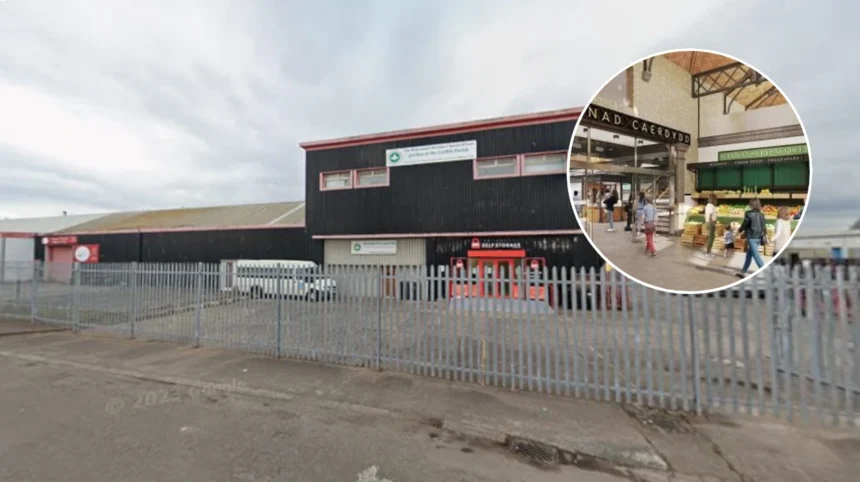
Cardiff (Cardiff Daily) April 14, 2026 – Plans have been submitted to knock down part of the Clydesmuir Road Industrial Estate in Tremorfa, Cardiff, where the Cardiff Indoor Flea Market is based, to make way for a housing development of about 93–96 new council‑style homes. As reported by Eleanor Cole of WalesOnline, the proposal by Pegasus Developments would see the existing light industrial building housing the popular indoor market demolished if the full planning application is approved by Cardiff Council.
- Key Points
- What do the housing plans entail?
- How might the market and other businesses be affected?
- What is the wider context of regeneration in eastern Cardiff?
- How long is the public consultation and what can local residents do?
- Background of the Clydesmuir development
- Prediction: How this development could affect key audiences
The flea market, which has operated inside the estate since 2014, has become a well‑known destination for shoppers and antique lovers, drawing visitors from across the capital and beyond. According to the same WalesOnline report, traders and regular customers have expressed concern about the possible loss of the venue, which is described as a “cherished” community hub.
What do the housing plans entail?
The development proposal, outlined in a Design and Access Statement for the Clydesmuir scheme, calls for the complete demolition of existing industrial units on about 1.84 hectares of the Clydesmuir Road Industrial Estate. Arcadis, acting as planning agent for Pegasus Developments and Cardiff and Vale Housing Association, states that the site would be redeveloped to deliver 96 new affordable homes, including a mix of one‑bed flats, two‑bed walk‑up apartments, and two‑ and three‑bed terraced and semi‑detached houses.
In the public‑facing project description, Arcadis notes that the scheme also includes associated works such as access routes, drainage, parking, landscaping, and sustainable‑drainage measures. The wording emphasises that the design aims to balance “design ambition” with viability and to “exploit the opportunities presented by the site and its location,” while addressing what is described as a “challenging site” in the current industrial estate layout.
How might the market and other businesses be affected?
The building set for demolition is currently home not only to the indoor flea market but also to a self‑storage facility, a church centre, an auction house, and other small commercial enterprises. According to WalesOnline, traders and tenants have raised questions about relocation and viability should the plans be approved, with at least one market representative quoted as saying the site
“has been a stable base for many small businesses over the years.”
Under the current planning submission, no specific details about temporary relocation or alternative premises have yet been published in the main documents seen by WalesOnline and other outlets, though the consultation phase invites responses on such practical impacts. The publication notes that community feedback on the loss of the market and supporting businesses is expected to form part of the council’s assessment when deciding whether to grant permission.
What is the wider context of regeneration in eastern Cardiff?
The Clydesmuir scheme sits within a broader push to expand housing and transport infrastructure in eastern Cardiff. As highlighted in the Clydesmuir project materials, construction of Cardiff East railway station is scheduled to begin later in 2026 on the opposite side of the railway line, with planners stating this will improve connectivity for future residents of the proposed homes.
Elsewhere in the city, Cardiff Council and partners such as Lovells and various housing associations are pursuing other large‑scale housing projects, including the redevelopment of the former Ysgol Glan Morfa site in Splott, which is intended to help meet the council’s target of around 2,260 new homes over the next decade. The Clydesmuir application is framed by the developers as part of this wider effort to address housing pressures while reusing under‑used industrial land.
How long is the public consultation and what can local residents do?
The planning application for the Clydesmuir housing scheme is currently open for public consultation until 1 May 2026, giving local residents, traders, and other stakeholders a formal window to submit comments. Cardiff Council’s planning portal allows objections, support statements, or technical comments to be lodged on the application, which will be taken into account before any decision is made.
As reported by WalesOnline, some local figures have encouraged people to use the consultation to raise concerns about the impact on the indoor market, employment, and the character of the industrial estate. The council will then weigh these responses alongside planning policy, design considerations, and transport‑related factors before deciding whether to approve, refuse, or seek modifications to the scheme.
Background of the Clydesmuir development
The Clydesmuir Road Industrial Estate in Tremorfa has historically been used for light industry and small commercial units, evolving from farmland in the mid‑20th century alongside residential expansion in eastern Cardiff. The Cardiff Indoor Flea Market moved into the site in 2014, gradually growing into a destination for second‑hand and vintage goods, with regular traders and loyal customer base.
The new housing application, lodged by Pegasus Developments and Cardiff and Vale Housing Association, is for a full planning consent that would clear existing industrial structures and replace them with a mix of affordable homes aimed at social and mid‑market rental. Cardiff Council’s long‑term housing strategy, which includes partnerships with housing associations and private developers, has identified a need for additional affordable stock, and the Clydesmuir site is being presented as one way to meet that demand on land that is not currently intensive residential use.
Prediction: How this development could affect key audiences
If the Clydesmuir scheme is approved, the most immediate impact would likely fall on the traders and regular customers of the Cardiff Indoor Flea Market, who may face relocation or loss of a long‑standing trading venue. For small businesses and self‑storage users on the estate, a change of premises or operating conditions could follow, potentially disrupting established customer patterns and adding costs.
For local residents in Tremorfa and nearby areas, the addition of up to 96 new homes could increase housing supply and ease some pressure on the private rental market, especially if the units are genuinely affordable and let at below‑market rates. At the same time, any increase in traffic, parking demand, and construction activity around Clydesmuir Road will be a material consideration for neighbours, whose comments during the consultation period may shape traffic‑management and green‑space provisions in the final scheme.
For Cardiff Council and its housing partners, proceeding with the development would form part of a broader city‑wide strategy to regenerate under‑used industrial sites and expand the social‑housing stock amid continuing housing shortages. Conversely, if local opposition or planning‑policy objections grow strong enough, the council may request design changes or even refuse the application, leaving the indoor market and surrounding businesses in place while forcing developers to reconsider alternative sites or layouts.