Key Points
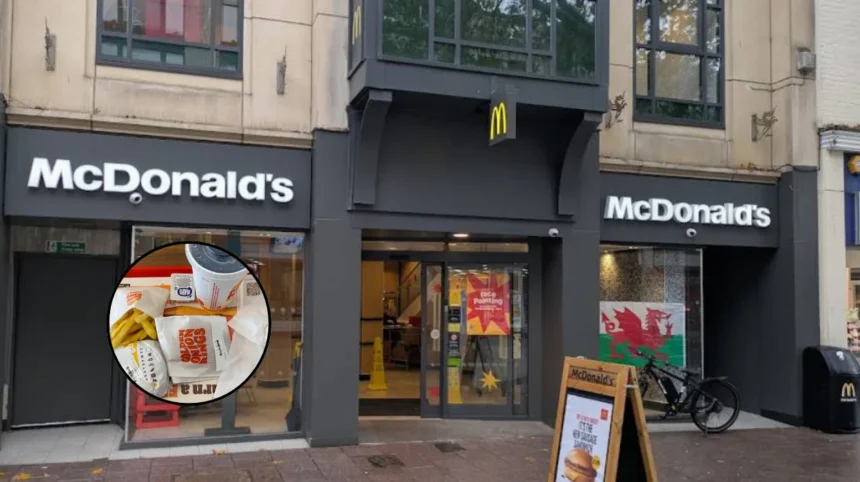
- Location of Incident: The McDonald’s restaurant located on St Mary Street in Cardiff city centre has been completely closed to the public.
- Reason for Closure: The fast-food outlet initiated a voluntary temporary shutdown after a “pest sighting,” which is understood to have involved a cockroach.
- Duration of Shut Down: The branch has been out of operation for approximately four weeks while specialists handle the situation.
- Resolution Protocol: A professional pest control firm was deployed to thoroughly investigate, treat, and resolve the environmental issue.
- Official Stance: A McDonald’s corporate spokesperson confirmed that the pest problem has been fully addressed, ensuring the premises meet necessary hygiene standards before a planned reopening.
Cardiff (Cardiff Daily) June 3, 2026 – A highly frequented McDonald’s restaurant situated in the heart of Cardiff city centre has been forced to suspend its operations for an extended period of roughly four weeks. The sudden closure of the prominent St Mary Street franchise was prompted by an internal investigation into an isolated pest sighting on the premises. According to corporate communication channels, management enacted the closure immediately after a cockroach was observed inside the facility, necessitating an intensive deep-clean and pest eradication protocol to ensure absolute compliance with statutory public health regulations.
- Key Points
- Why Was the St Mary Street McDonald’s Forced to Close?
- How Long Has the Cardiff City Centre Branch Been Closed to the Public?
- What Actions Were Taken by McDonald’s to Address the Pest Issue?
- Background of the St Mary Street Pest Control Development
- How This Temporary Closure Can Affect City Centre Consumers and Local Businesses
- Increased Public Hygiene Awareness
The prolonged shutdown of the commercial venue has drawn significant attention from local commuters, late-night patrons, and neighboring businesses, given the branch’s strategic position as a primary food service hub in the Welsh capital.
To manage the biological hazard effectively, corporate operators engaged a licensed independent pest control agency to systematically treat the entire building structure. Representatives from the multi-national fast-food chain have since issued statements verifying that the remediation process is complete and that the targeted pest presence has been thoroughly cleared under professional supervision.
Why Was the St Mary Street McDonald’s Forced to Close?
The primary catalyst behind the operational freeze at the Cardiff city centre branch was the identification of a structural pest vulnerability. In statements distributed across local media outlets, a corporate spokesperson for McDonald’s clarified that the franchise was temporarily decommissioned immediately following a single “pest sighting.”
While official corporate documentation initially utilized generalized terminology regarding the incident, subsequent reports verified that the specific organism responsible for triggering the emergency health protocol was a cockroach.
Upon the discovery of the insect, local branch managers implemented an immediate cessation of all food preparation and customer service operations. Standard operating procedures within the hospitality and food service industry dictate that any evidence of high-risk pests, such as cockroaches, requires an immediate halt to business to mitigate the risks of cross-contamination or wider infestation.
The St Mary Street site chosen for this voluntary closure is notable for its high footfall, meaning any perceived compromise in food hygiene standards demanded urgent, comprehensive intervention.
How Long Has the Cardiff City Centre Branch Been Closed to the Public?
According to compiled architectural data and local business logs tracking the high street footprint, the fast-food outlet has remained entirely inaccessible to consumers for approximately four weeks.
This extended period of inactivity highlights the rigorous nature of the sanitation measures required to guarantee the safety of the site. A four-week closure represents a major operational disruption for a major urban franchise, indicating that operators prioritised systematic structural checking over immediate commercial turnover.
During this month-long period, the interior of the restaurant was completely handed over to specialized environmental health contractors.
The process involved moving heavy kitchen machinery, lifting floor coverings, and inspecting internal wall cavities to map out any potential nesting zones or points of entry used by pests.
Regular updates regarding the exact date for the resumption of standard business operations were strictly managed through the brand’s regional corporate communications office.
What Actions Were Taken by McDonald’s to Address the Pest Issue?
To ensure the venue could safely return to active service, McDonald’s management authorized a full-scale deployment of an external pest control firm. Contractors specializing in commercial urban infestations were tasked with implementing a multi-phase eradication and prevention strategy.
The scope of work included chemical treatments, the placement of monitoring arrays, and the comprehensive sealing of structural gaps near waste management sectors or plumbing lines where pests typically seek moisture.
Following the initial treatment phase, the location underwent multiple rounds of sanitisation to eliminate any chemical residues or biological trace elements.
According to an official statement provided by an un-named company representative on behalf of the brand, the targeted pest issue has now been officially dealt with. The firm emphasized that the lengthy closure was a necessary step to allow the external pest control technicians sufficient time to monitor the building and ensure that the treatment yielded a completely sterile environment.
Background of the St Mary Street Pest Control Development
Urban food service establishments frequently face complex environmental pressures, particularly when located within historic or densely populated city centers like Cardiff. St Mary Street houses a dense concentration of Victorian-era architecture, subterranean drainage systems, and interconnected commercial basements.
These architectural characteristics mean that pest migration between independent structures is a persistent challenge for environmental health departments.
Cockroaches are drawn to commercial kitchens due to the predictable presence of heat, moisture, and organic materials. Because these insects can travel through minute cracks in brickwork or shared utility conduits, an issue arising in an adjacent property or a public sewer line can quickly impact a nearby food establishment.
Historically, local councils and environmental health officers maintain a strict oversight regime regarding these incidents. Under standard UK food safety laws, business operators must demonstrate a proactive approach to pest management.
By opting for a voluntary closure rather than waiting for an official statutory prohibition order from Cardiff Council inspectors, the corporate entity managed to maintain direct control over its remediation timeline while safeguarding its wider brand reputation.
Explore More Local Cardiff News
Metallica and Take That Concerts Trigger Mass Road Closures: Cardiff 2026
Lake-Themed Inclusive Play Area Reopens at Rhydypennau Park Cardiff 2026
How This Temporary Closure Can Affect City Centre Consumers and Local Businesses
The month-long disruption of this major fast-food asset will likely influence consumer habits and operational dynamics within the local night-time economy. For the primary audience—consisting of Cardiff city centre visitors, students, late-night hospitality workers, and nearby retail operators—the closure alters the availability of affordable, late-night dining options in the immediate vicinity.
- Redirected Consumer Traffic: With the St Mary Street branch out of commission, a significant portion of late-night footfall is likely to shift toward alternative fast-food outlets on nearby Caroline Street (locally known as ‘Chippy Lane’) or Queen Street. This could cause longer wait times and increased crowding at competing venues during peak weekend hours.
- Impact on Delivery Economy: Gig-economy delivery couriers who rely heavily on high-volume fast-food nodes in the city center will experience a temporary reduction in localized order density, forcing them to adjust their transit patterns to alternative pick-up zones.
Increased Public Hygiene Awareness
- Heightened Consumer Scrutiny: The public disclosure of a cockroach sighting at a major brand location naturally increases consumer sensitivity regarding food hygiene across the wider city center. Patrons visiting neighbouring eateries may become more observant of cleanliness standards, potentially driving up the use of official Food Hygiene Rating scores as a primary metric for choosing where to eat.
- Collaborative Pest Management: Because pests do not respect property boundaries, the high-profile nature of this closure will likely prompt adjacent retail and hospitality owners to review their own pest control contracts and structural integrity, ultimately leading to a temporary upgrade in preventative maintenance standards across the St Mary Street commercial block.