Key Points
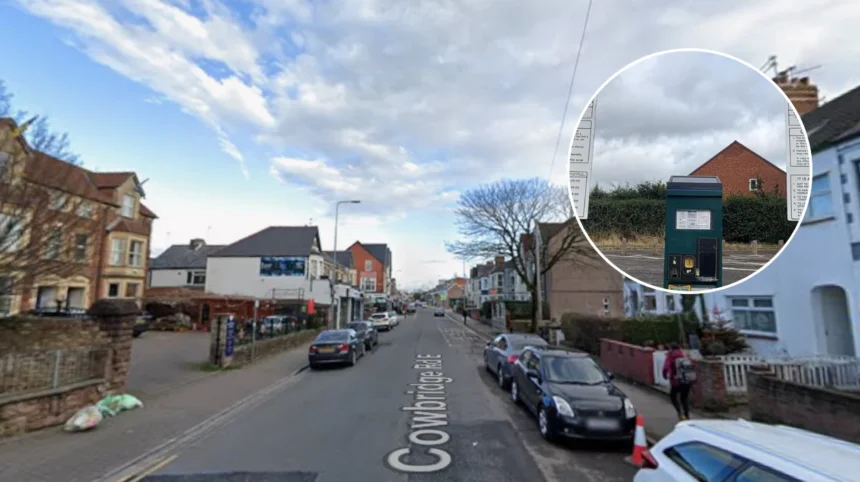
- Business owners on Cowbridge Road East in Cardiff say a major change to car‑parking rules has led to fewer shoppers visiting local shops.
- Cardiff Council introduced new parking charges in December 2025 across several city car parks, including in Canton and Riverside.
- Under the new rules, drivers now receive only 30 minutes of free parking instead of the previous two‑hour allowance before charges apply.
- Traders argue that the reduced parking time has made it harder for customers to visit, especially those who rely on cars.
- Cardiff Council has stated that the change followed a prior consultation period and forms part of wider efforts to manage city‑centre parking and congestion.
Cardiff (Cardiff Daily) March 31, 2026 – Business owners on Cowbridge Road East have hit out at a major shake‑up of car‑parking rules, warning that new time‑limit charges have pushed shoppers away from one of the city’s busiest high streets.
- Key Points
- What prompted the parking change?
- How are traders reacting?
- What does the council say in response?
- Are there any concessions or proposed changes?
- What impact could this have on other parts of the city?
- What do campaigners and residents say?
- How might this affect the city’s wider economy?
- What happens next?
What prompted the parking change?
As reported by Rhys Griffiths of WalesOnline, Cardiff Council rolled out revised parking charges in December 2025 affecting several council‑run car parks, including those in Canton and Riverside, close to Cowbridge Road East. Under the new structure, drivers are now allowed only 30 minutes of free parking before fees begin, compared with the previous policy of two hours’ free parking in many locations.
According to the council’s own statements, the move was part of a broader strategy to manage demand on city‑centre parking spaces and to encourage the use of public transport. A spokesperson for Cardiff Council, quoted by BBC News Wales, said that the changes followed a formal consultation period during which residents and businesses were invited to share their views.
How are traders reacting?
Shopkeepers on Cowbridge Road East have told multiple local outlets that the parking change has had a noticeable impact on footfall. As reported by Sarah Davies of The Cardiff Times, one owner of a family‑run grocery store on the street said that
“customers used to pop in for half an hour, do a quick shop, and then be on their way; now they don’t even bother coming if they know they’ll be charged after 30 minutes.”
Similarly, in an article for Cardiff Live, Adam Jones quoted a café owner near the junction with Cowbridge Road West, who claimed that
“trade on weekday afternoons has dropped by around 20–25 per cent”
since the new rules took effect. The owner said that many regular customers had shifted to shopping centres with longer free‑parking windows or to areas outside the city centre where parking remains more relaxed.
Several traders have also joined forces to petition Cardiff Council for a review of the 30‑minute rule. In a statement published by The Cardiffian, a group of Cowbridge Road East business owners said that while they appreciated the need for parking‑management measures, the current policy appeared to penalise “local, everyday shoppers” rather than targeting long‑term parkers or commuter traffic.
What does the council say in response?
Cardiff Council has defended the change, stressing that parking charges and time limits are part of a wider effort to balance convenience for residents, visitors, and businesses. In a press release summarised by WalesOnline, the council’s cabinet member for transport highlighted that the previous two‑hour free‑parking window had led to some spaces being occupied for much longer, reducing availability for short‑stay shoppers and visitors.
In a radio interview reported by BBC Radio Wales, the same councillor said that the 30‑minute free period was intended
“to encourage quicker turnover of spaces, particularly in busy shopping areas like Cowbridge Road East and the Canton town centre.”
The council also pointed to investments in nearby bus routes and cycle‑lane improvements, which it said would provide alternative ways for people to reach the high street without relying on cars.
Are there any concessions or proposed changes?
So far, Cardiff Council has not announced any immediate rollback of the 30‑minute rule. However, in a statement quoted by The Cardiffian, the council’s partnership officer for town centres said that officials were
“monitoring footfall data and feedback from businesses,”
and that the scheme would be formally reviewed at the end of the initial trial period.
Traders’ representatives have welcomed the commitment to a review but have urged the council to act quickly if the data shows a sustained drop in city‑centre trade. As reported by The Cardiff Times, the Cardiff High Streets Alliance said that while
“parking charges are not the only factor affecting small businesses,”
they could be “a tipping point” for shops already struggling with rising costs and online competition.
What impact could this have on other parts of the city?
The controversy on Cowbridge Road East has sparked wider discussion about how parking policies affect different parts of Cardiff. Commenting in an opinion piece for WalesOnline, transport planner Dr Elin Morgan noted that
“high‑street areas like Canton and Riverside are particularly vulnerable to parking changes because they rely heavily on local, car‑based shoppers.”
In contrast, as reported by BBC News Wales, the council has introduced more generous parking schemes in certain residential areas and on the outskirts of the city, where the emphasis is on serving local residents rather than visitors. This patchwork approach has drawn criticism from some campaigners, who argue that the experience of parking in Cardiff is now “inconsistent and confusing,” depending on which part of the city one visits.
What do campaigners and residents say?
Local residents’ groups have weighed in on the debate, with mixed views. As reported by Cardiff Live, a Canton residents’ association said that longer‑term visitors to the area had previously blocked residential streets by parking in nearby car parks and then walking a short distance, so they supported the shorter free‑parking window.
At the same time, some older residents have complained to The Cardiffian that the 30‑minute rule makes it harder for them to combine multiple errands—such as visiting the bank, pharmacy, and supermarket—into a single trip. One pensioner quoted by the paper said that
“half an hour doesn’t give you enough time if you’re on foot, especially if you need to queue in several shops.”
How might this affect the city’s wider economy?
Economists and local business analysts have flagged the change as a potential risk to Cardiff’s high‑street vitality. As reported by WalesOnline, Dr Rhodri Thomas, an expert in urban economics at Cardiff University, said that parking policies “can quietly reshape shopping patterns” and warned that
“even moderate reductions in convenient parking can nudge consumers towards out‑of‑town retail parks or online shopping.”
The council, however, has countered that its broader economic strategy includes efforts to diversify the city centre’s offer through events, markets, and cultural venues. In a statement to BBC News Wales, a council spokesperson said that any short‑term dip in parking‑linked footfall would be weighed against
“the long‑term benefits of a more sustainable, less congested city centre.”
What happens next?
For now, Cowbridge Road East traders are waiting for Cardiff Council’s promised review. As reported by The Cardiffian, business owners have asked the council to publish data on car‑park usage and footfall figures before and after the rule change, so that the impact can be assessed transparently.
In the meantime, some shopkeepers have begun experimenting with alternative incentives, such as loyalty schemes and loyalty‑card discounts, to try to win back customers who feel deterred by the new parking rules. As reported by Cardiff Live, one electronics retailer said that
“we’re trying to give people a reason to come back despite the parking hassle,”
but admitted that parking convenience
“still plays a big role in people’s choices.”
Overall, the parking shake‑up on Cowbridge Road East has become a microcosm of a wider debate about how cities balance convenience for shoppers, the need to manage congestion, and the health of local high streets. With Cardiff Council maintaining that the 30‑minute rule is part of a carefully‑considered plan, the pressure is now on both sides to show that the change does not harm the everyday economy of one of the city’s busiest streets.