Key Points
- Elson Sinanaj, 34, was caught dealing drugs in the Cathays area of Cardiff after police observed a street deal.
- Officers seized Class A and Class B substances valued at over £16,000, along with mobile phones and cash.
- Sinanaj entered the United Kingdom illegally and turned to drug dealing in exchange for accommodation after becoming homeless.
- Cardiff Crown Court heard details of his role within the operation, leading to a custodial sentence.
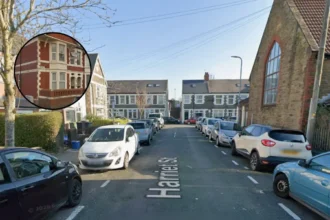
Cardiff (Cardiff Daily) August 19, 2026 –A 34-year-old man who entered the United Kingdom without legal permission was apprehended by law enforcement after officers witnessed a street-level drug transaction in the Cathays area of Cardiff. Elson Sinanaj, residing at City Road, Cardiff, was caught in possession of controlled drugs with an estimated street value exceeding £16,000.
The court heard that police officers on patrol observed suspicious activity involving Sinanaj, which prompted a search and his subsequent arrest. Upon searching the defendant and related premises, officers uncovered a significant quantity of Class A and Class B drugs, multiple mobile devices used to facilitate supply, and cash linked to illicit transactions.
Why Was Elson Sinanaj Involved in the Drug Trade?
During court proceedings, details emerged regarding the circumstances that led to Sinanaj’s involvement in criminal activity.
Having arrived in the UK illegally, he eventually found himself without shelter or a stable income. Facing severe homelessness, Sinanaj agreed to act as a drug distributor in exchange for basic accommodation provided by individuals operating within the illegal drug supply network.
Counsel representing the defence detailed how his precarious living conditions left him vulnerable to exploitation by organized entities. Sinanaj’s desperation for a place to stay propelled him down a path that ultimately resulted in his arrest, prosecution, and severe legal consequences.
What Charges and Legal Consequences Did the Defendant Face?
At Cardiff Crown Court, Sinanaj faced charges related to the possession of controlled substances with the intent to supply.
The prosecution outlined the scale of the operation, emphasizing the commercial value of the seized drugs and the role played by the defendant as a local distributor on the streets of Cardiff.
The judge considered the arguments regarding Sinanaj’s level of involvement, acknowledging that while he performed a operational role under direction to secure housing, the quantity of drugs involved carried significant weight in determining the final custodial sentence.
Explore More Cathays News
Cardiff Heat Network Wins UKDEA Green Energy Award Cardiff 2026
Cardiff Unveils 60 New Council Homes on Crwys Road – Cardiff 2026
Background to the Development
The prosecution of individuals involved in street-level drug distribution in South Wales reflects ongoing operations by South Wales Police to target organized crime networks. The Cathays district of Cardiff, characterized by a dense student population and rented housing, has frequently been an area of focused police activity aimed at curbing drug-related offenses.
In recent years, law enforcement authorities across the UK have highlighted a recurring pattern in which vulnerable individuals—particularly non-nationals without legal immigration status or access to public support—are recruited by organized crime groups.
These individuals are often provided with food, money, or shelter in exchange for performing high-risk roles such as street dealing or managing stash houses.
What Does This Development Mean for the Local Community and Public Services?
This case highlights several broader social and law enforcement implications for the local Cardiff community, public safety authorities, and support services.
For local police forces, successful prosecutions reinforce strategies aimed at dismantling street-level drug networks. The seizure of £16,000 worth of illegal substances removes a significant volume of drugs from public circulation, temporarily disrupting local supply chains in Cathays. However, it also illustrates the persistent demand for street-level dealers to sustain larger distribution networks.
Residents in areas like Cathays may see continued high-visibility policing intended to deter open drug dealing. Successful enforcement actions reduce associated anti-social behavior, property crime, and safety concerns within residential neighborhoods.
The circumstances surrounding Sinanaj’s involvement draw attention to the intersection between illegal immigration, homelessness, and criminal exploitation.
Individuals living outside formal support structures remain susceptible to coercion by criminal syndicates offering basic shelter in exchange for unlawful labor. Local social services and non-governmental organizations face ongoing challenges in addressing the root causes of rough sleeping while navigating complex legal frameworks regarding undocumented individuals.