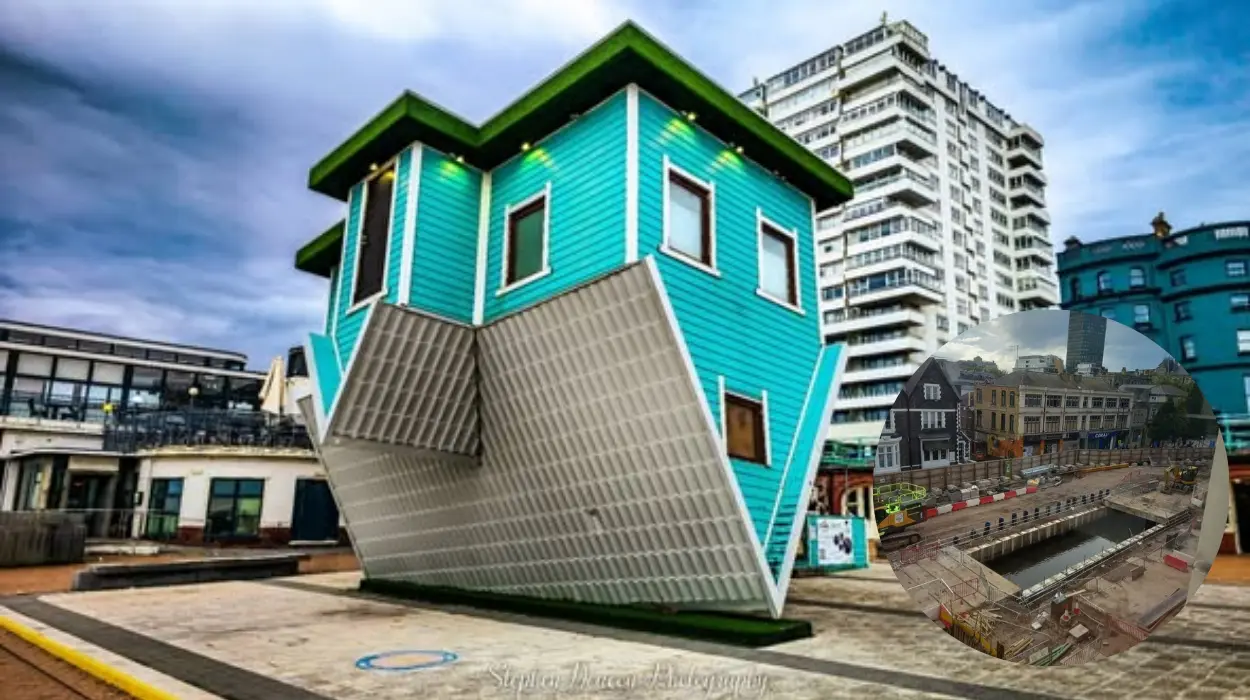
Key Points
- A house designed to appear upside down has received planning approval from Cardiff Council.
- The attraction, operated by Upside Down House UK Ltd, is not for living but for family photos and tourism.
- It will be located at 2 Churchill Way in Cardiff city centre, near the Cathays student area.
- Approval is for a temporary one-year installation.
- There are already 13 similar upside-down houses across the UK, drawing millions of visitors since 2018.
- In Brighton, it attracts nearly 100,000 visitors annually, with 80-85% being families and over three million total visitors UK-wide.
- The attraction aligns with Cardiff’s Canal Quarter regeneration masterplan and is expected to boost local economy and tourism.
- Design features green body with white roof to reflect Welsh flag colours.
- Includes wheelchair-friendly pathways and discounts for families, NHS workers, and Max Card holders.
- Planning officer’s report confirms no adverse impact on conservation area character, historic buildings, highway safety, or neighbouring properties due to its temporary nature and location.
Inverted Pyramid Structure
- Key Points
- What Is the Upside Down House Attraction?
- Where Will Cardiff’s Upside Down House Be Located?
- Why Did Cardiff Council Approve the Upside Down House?
- How Does the Design Reflect Local Identity?
- What Economic Impact Could It Have on Cardiff?
- Are There Similar Attractions Elsewhere in the UK?
- What Makes This Approval Significant for Cardiff?
- Could There Be Any Concerns or Objections?
- When Will the Upside Down House Open in Cardiff?
Cathays (Cardiff Daily) February 03, 2026 – Cardiff Council has granted planning approval for an upside-down house attraction at 2 Churchill Way in the city centre, near the popular student district of Cathays. The novel tourist draw, proposed by Upside Down House UK Ltd, sits on its roof and is designed purely for visitors seeking amusing photographs rather than habitation. Planners have approved it for a temporary stay of one year, highlighting its potential to enhance Cardiff’s tourism appeal.
This two-storey structure mimics a conventional home flipped inverted, joining 13 existing upside-down houses across the UK. As detailed in the original WalesOnline coverage, the concept has proven a hit since its founding in late 2018, amassing over three million visitors nationwide, with approximately 80-85% comprising families.
What Is the Upside Down House Attraction?
The Upside Down House functions as an interactive photo opportunity, where visitors enter a fully furnished home appearing defying gravity—floors become ceilings, furniture hangs from above, and everyday items are positioned in surreal, inverted orientations. According to the planning application submitted by Upside Down House UK Ltd, as reported in WalesOnline, “The Upside Down House has been a popular attraction, founded in late 2018. In this time it has received over three million visitors with approximately 80-85% of the visitors being families. In Brighton alone Upside Down House receives close to 100,000 visitors every year.”
This family-oriented appeal positions it as a quick, fun stop ideal for social media snaps, particularly appealing to parents and children exploring city centres.
Where Will Cardiff’s Upside Down House Be Located?
The site at 2 Churchill Way places the attraction squarely in Cardiff’s bustling city centre, mere steps from the vibrant Cathays neighbourhood known for its student population and lively atmosphere. This prime positioning, as outlined in the WalesOnline article, ensures easy access for locals and tourists alike, integrating seamlessly with nearby amenities.
Proximity to Cathays underscores its draw for younger crowds, while the central location funnels visitors towards other city highlights.
Why Did Cardiff Council Approve the Upside Down House?
Council planners endorsed the project citing its alignment with the Canal Quarter regeneration masterplan. The planning statement, quoted extensively in WalesOnline, emphasises economic benefits: upside-down houses “strongly support the local economy” and “significantly boost tourist attractions” for host cities and towns.
Further, the documents assert, “There are clear public benefits from the siting of the upside down house. It is a significant tourist attraction in its own right. Ensuring these visitors are taken into the heart of the Cardiff tourism area will lead to opportunities for spending at other attractions in the city centre.”
The planning officer’s report reinforced this, noting the temporary one-year duration minimises long-term impacts. Due to its distance from nearby historic buildings, it “would preserve the character of the conservation area.” Additionally, “It is considered that the proposal would not be overbearing or generally unneighbourly to justify concern for the local planning authority.” The officer also determined that the installation would “not have any adverse impact upon highway pedestrian safety.”
How Does the Design Reflect Local Identity?
Aesthetically, the Cardiff iteration will feature a green body paired with a white roof, deliberately chosen “for the purpose of reflecting and complementing the colours of the Welsh national flag,” as per the application details reported by WalesOnline. This patriotic touch aims to resonate with Welsh pride, making it more than just a novelty.
Accessibility remains a priority, with wheelchair-friendly pathways ensuring inclusivity. Discounts target families, NHS workers, and Max Card holders—those eligible for support via the Max Card scheme for families with disabled children—broadening its reach.
What Economic Impact Could It Have on Cardiff?
Proponents argue the attraction will act as a tourism magnet, drawing crowds that spill over to shops, eateries, and landmarks. The planning documents highlight its role in “complement[ing] Cardiff city and cultural centre,” positioning it as a gateway experience that encourages extended stays and spending.
With Brighton’s site logging nearly 100,000 visitors yearly, Cardiff could see similar footfall, injecting vitality into the Canal Quarter amid ongoing regeneration efforts. This temporary pop-up model allows low-risk testing of its viability before any permanent commitment.
Are There Similar Attractions Elsewhere in the UK?
Yes, Upside Down House UK Ltd operates 13 such sites nationwide, from coastal spots like Brighton to inland locales. Each has cultivated a reputation as a must-snap destination, contributing to local buzz. The WelshOnline reporting notes their collective draw of over three million visitors since inception, underscoring a proven formula for family entertainment.
This network demonstrates scalability, with Cardiff’s addition expanding the brand’s footprint into the capital.
What Makes This Approval Significant for Cardiff?
In a city pushing regeneration agendas, this nod signals openness to innovative, low-impact attractions. By weaving fun into urban renewal, Cardiff Council balances preservation with progress. The officer’s assurances on no harm to heritage or safety pave the way for more such ventures.
As WalesOnline’s coverage illustrates, the project’s modest scale—temporary, accessible, and economically promising—ticks key boxes for planners wary of overdevelopment.
Could There Be Any Concerns or Objections?
While the planning report dismisses major issues, the temporary status addresses potential neighbourly gripes. Its distance from conservation-sensitive spots and lack of highway risks were pivotal. No public objections are mentioned in the available documents, suggesting broad planner confidence.
Future monitoring during the year-long run could inform extensions, but for now, it’s full steam ahead.
When Will the Upside Down House Open in Cardiff?
Exact opening dates remain unconfirmed in the approval documents, but with planning secured, installation could follow swiftly. The one-year limit starts upon setup, pressuring operators to mobilise. Visitors near Cathays and the city centre should watch for announcements from Upside Down House UK Ltd.
This development adds a whimsical chapter to Cardiff’s evolving tourism tapestry, blending novelty with national colours for memorable family outings. As regeneration continues, such attractions could redefine the Canal Quarter’s allure.