Key Points
- Draycott Group has secured a £67.2 million financing facility from Close Brothers Property Finance.
- The funding will support Harlech Court, a 340-unit build-to-rent development in central Cardiff.
- The scheme has a gross development value of more than £100 million.
- At 30 storeys, the building is expected to become one of the tallest structures in Wales when completed.
- Construction will take place on the site of a former purpose-built office block.
- The development will include one- and two-bedroom apartments, a co-working space, meeting room, gym, residents’ lounge and sky lounge.
- The transaction comes as Wales’ build-to-rent pipeline increased by 16% year on year between Q1 2025 and Q1 2026.
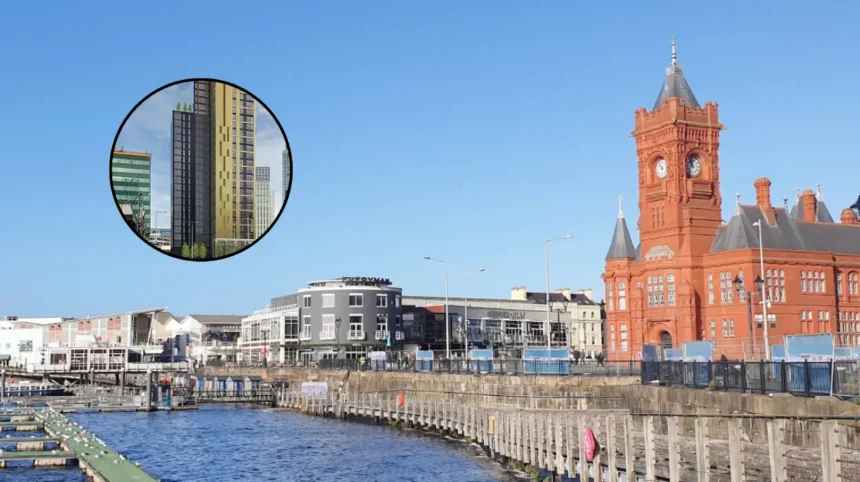
Cardiff (Cardiff Daily) August 24, 2026 – Draycott Group has arranged a £67.2m development facility with Close Brothers Property Finance to bring forward a major Build-to-Rent (BTR) scheme located in central Cardiff. The project, named Harlech Court, carries a gross development value in excess of £100m and will deliver 340 purpose-built rental apartments to the Welsh capital.
- Key Points
- How Will the Harlech Court Development Impact Cardiff’s Urban Landscape?
- What Statements Were Issued by Draycott Group and Close Brothers?
- What Is the Current State of the Build-to-Rent Market in Wales?
- Background of the Particular Development
- Prediction: How This Development Can Affect the Particular Audience
The agreement marks a significant commitment to regional residential delivery, funding the transformation of a site previously occupied by a purpose-built office block. Designed to reach 30 storeys, the landmark tower will rank among the tallest residential buildings in Wales. The apartment mix will focus on one- and two-bedroom layouts, complemented by dedicated communal facilities, including a residents’ lounge, co-working space, meeting rooms, a private gym, and an elevated sky lounge.
Close Brothers Property Finance provided the structured facility to support the delivery phase, reflecting the lender’s strategic push toward higher-value regional developments. The transaction underlines strong institutional appetite for Cardiff’s primary housing market, where student population dynamics and urban employment growth continue to fuel demand for professionally managed accommodation.
How Will the Harlech Court Development Impact Cardiff’s Urban Landscape?
The redevelopment of Harlech Court converts obsolete commercial office stock into high-density residential housing within Cardiff’s city centre core. The transition from commercial office footprint to residential vertical living aligns with modern masterplanning frameworks that aim to increase inner-city footfall and optimize urban brownfield locations.
Rising 30 storeys, the tower will alter Cardiff’s skyline significantly. High-density residential construction of this scale reflects a continuing shift toward tall-building typologies in regional UK capitals, where land values in central business districts necessitate vertical development. The accommodation target focuses primarily on young professionals, key workers, and urban dwellers seeking flexible, managed tenure models close to transport links and employment hubs.
The integrated amenities reflect established operational models in the BTR sector. By offering on-site workspaces, leisure facilities, and shared social areas, the property aims to reduce tenant reliance on external private amenities while creating a self-contained residential community within a single structure.
What Statements Were Issued by Draycott Group and Close Brothers?
Representing the funding institution, Chief Executive of Close Brothers Phil Hooper stated that
“Harlech Court is exactly the type of scheme our structured finance team was set up to back: a landmark development in an excellent central location in a capital city that continues to see strong demand for quality rental stock.”
The transaction highlights the willingness of specialized property finance units to underwrite large-scale regional projects where underlying market fundamentals remain resilient.
Outlining the scale of the undertaking, Draycott Chief Executive Sajid Ghaffar stated that
“this is the largest scheme that we have delivered to date and it will transform the Cardiff city skyline.”
He noted the firm’s long-standing operational presence in the region, adding that
“Cardiff is a market we know extremely well, having been active in residential and commercial property development for over 40 years, and Harlech Court builds on that long-standing track record.”
What Is the Current State of the Build-to-Rent Market in Wales?
The financing of Harlech Court comes during a period of sustained expansion for the build-to-rent asset class across Wales. Official industry data demonstrates that the total regional BTR pipeline—comprising completed units, projects under construction, and schemes navigating the planning process—grew by 16% over a twelve-month period, expanding from 3,296 units in Q1 2025 to 3,824 units in Q1 2026.
Within that aggregate expansion, the early-stage development pipeline experienced the sharpest increase. The volume of BTR units sitting within the planning system expanded by two thirds over the same Q1 2025 to Q1 2026 period. This growth highlights a growing structural reliance on corporate-backed rental developments to meet regional housing targets, offsetting declines in private individual landlord supply across secondary rental markets.
Cardiff remains the primary focal point for Welsh BTR investment. Higher education institutions, expanding financial and professional services sectors, and net population inflows have maintained demand for managed residential assets. Consequently, institutional lenders and developers continue to prioritize the capital city for large-scale structured finance allocations.
Background of the Particular Development
The site of Harlech Court has long formed part of central Cardiff’s commercial core, originally housing a mid-rise, purpose-built office building designed for mid-to-late 20th-century business requirements. As corporate occupiers in Cardiff progressively migrated toward modern, energy-efficient Grade A office spaces—particularly around the Central Square regeneration area—older administrative buildings across the city centre experienced rising void rates and functional obsolescence.
Recognizing the shift in central land use, developers began targeting underperforming office assets for residential conversion or complete site clearance and reconstruction. The strategic position of Harlech Court, situated within walking distance of central retail corridors and rail infrastructure, made it a primary candidate for high-density residential repositioning.
Draycott Group acquired and progressed the site through the planning stages, designing a scheme that maximized site efficiency while responding to local authority density targets. The securing of the £67.2m development facility from Close Brothers Property Finance represents the final financial milestone, enabling the project to transition from the planning and pre-development phase into full construction.
Explore More Local Cardiff News
Victorian Cardiff Pub Redevelopment Approved for Restaurant and Flats, Canton 2026
Cardiff Hospitality Community Unites for Lab 22 10K Challenge Cardiff 2026
Prediction: How This Development Can Affect the Particular Audience
The delivery of a £100m+, 340-unit scheme will directly influence several key stakeholder groups across the regional property ecosystem:
- Local Renters and Urban Residents: For local tenants, the addition of 340 purpose-built units introduces significant high-specification rental supply into the city centre core. This increased inventory provides managed options for professionals seeking dedicated amenities, though it may maintain upward pressure on average city-centre rental rates given the premium pricing typically associated with BTR assets.
- Institutional Investors and Financiers: The successful funding of a 30-storey regional project serves as a key benchmark for financial institutions. If the construction and lease-up phases hit targets, it will likely catalyze further institutional debt deployment into Wales, encouraging rival debt providers to underwrite larger regional BTR developments outside of established English core markets like Manchester and Birmingham.
- Local Construction and Supply Chains: The magnitude of the build phase will generate sustained demand for regional contractors, specialized engineering firms, and tradespeople over the multi-year construction timeframe. Surrounding retail and hospitality businesses in central Cardiff are also expected to see increased footfall both during construction and upon full residential occupation.
- Cardiff City Council and Urban Planners: The development will test local infrastructure capacity regarding utilities, public transit integration, and urban services for tall buildings. A successful delivery will validate local planning strategies aimed at brownfield redevelopment and high-density central living, potentially smoothing the trajectory for similar high-rise planning applications currently in the pipeline.