Key Points
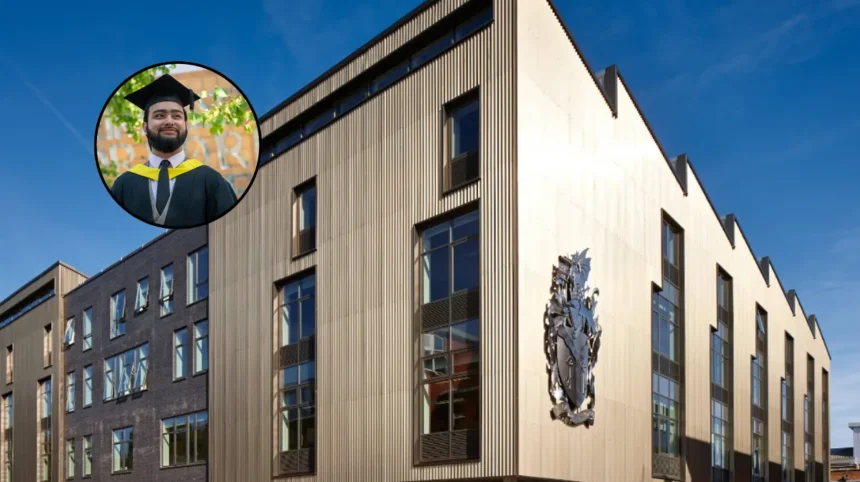
- Romzan Ali, 22, from Ely, Cardiff, has graduated with first-class honours in Aviation Management from Cardiff Metropolitan University (Cardiff Met).
- In 2019, Romzan lost his father suddenly; shortly afterwards, his mother, who had been living in Bangladesh following their parents’ divorce, also passed away.
- The double loss brought his education to an abrupt halt while he was studying for his A-levels.
- After stepping away from his studies, Romzan experienced unsuccessful applications and limited course availability when trying to return to education.
- Determined to go to university, he self-funded an online Access programme using his own savings, completing the equivalent of three A-levels within a year.
- He was admitted to Cardiff Met, where he developed a strong interest in aviation and the wider airport industry.
- Alongside his degree, Romzan has undertaken additional modules with Embry-Riddle Aeronautical University.
- He is currently leading a consultancy project focused on revenue development strategies for Cardiff Airport.
- Through this work, he has developed key skills including strategic planning, project management, data analysis, and problem solving.
- Romzan credits much of his progress to the support of his sister Shahela and brother-in-law Mahmud, as well as staff at Cardiff Met.
Ely (Cardiff Daily) July 15, 2026 – A Cardiff Metropolitan University student has demonstrated remarkable resilience in overcoming profound personal tragedy to pursue his ambitions in the aviation industry, graduating with first-class honours in an Aviation Management degree after navigating significant challenges to return to education.
- Key Points
- What Happened to Romzan Ali Before He Returned to Study?
- How Did Romzan Ali Manage to Return to Education After Losing Both Parents?
- Why Did Romzan Ali Choose Aviation Management at Cardiff Metropolitan University?
- What Role Has the Consultancy Project on Cardiff Airport Played in Romzan’s Development?
- Who Supported Romzan Ali During His Journey Back to University?
- Background: The Development of Romzan Ali’s Path from Tragedy to Aviation Graduation
- Prediction: How Could This Development Affect Young People in Cardiff and the Wider Aviation Sector?
What Happened to Romzan Ali Before He Returned to Study?
Romzan Ali, 22, from Ely, Cardiff, faced the sudden loss of his father in 2019. Shortly afterwards, his mother, who was living in Bangladesh following their divorce, also passed away.
The loss of both parents brought his education to an abrupt halt while he was studying for his A-levels, leaving him without either parental support or the ability to continue his studies at that time.
How Did Romzan Ali Manage to Return to Education After Losing Both Parents?
After stepping away from his studies, Romzan faced further setbacks when attempting to return to education, including unsuccessful applications and limited course availability.
These barriers meant that standard routes back into full-time study were not readily accessible, and he was unable to secure a place through conventional applications.
Determined to pursue his goal of going to university, Romzan self-funded an online Access programme using his own savings, completing the equivalent of three A-levels within a year.
This decision required him to invest not only money but also considerable time and effort, as he worked to prove his academic readiness without financial or familial backing.
Why Did Romzan Ali Choose Aviation Management at Cardiff Metropolitan University?
His determination led him to Cardiff Metropolitan University, where he has developed a strong interest in aviation and the wider airport industry.
The combination of his academic reset through the Access programme and his personal drive to build a new future made Cardiff Met a viable and supportive environment for his ambitions.
Alongside his degree, Romzan has undertaken additional modules with Embry-Riddle Aeronautical University, an institution recognised for its aviation-focused programmes.
These supplementary modules have allowed him to deepen his technical and industry-specific knowledge beyond the core Cardiff Met curriculum.
What Role Has the Consultancy Project on Cardiff Airport Played in Romzan’s Development?
Romzan is currently leading a consultancy project focused on revenue development strategies for Cardiff Airport. This project places him in a practical, real-world setting where he must apply theoretical knowledge to actual industry challenges, including ways to improve the airport’s financial performance.
Through this work, he has developed key skills including strategic planning, project management, data analysis, and problem solving.
These competencies are directly relevant to careers in airport operations, commercial management, and aviation consultancy, aligning closely with his stated ambition to work in the aviation sector.
Who Supported Romzan Ali During His Journey Back to University?
Romzan credits much of his progress to the support of his sister Shahela and brother-in-law Mahmud, as well as staff at Cardiff Met. Their encouragement and practical assistance helped him navigate the emotional and logistical difficulties of returning to education after such significant personal losses.
Staff at Cardiff Met, including academic and support teams, also played a role in enabling him to complete his degree and engage in advanced projects such as the Cardiff Airport consultancy.
Their involvement illustrates how institutional support can be critical for students who have experienced severe disruption to their earlier education.
Background: The Development of Romzan Ali’s Path from Tragedy to Aviation Graduation
This development centres on the educational and professional trajectory of Romzan Ali, a Cardiff Met student whose journey from the loss of both parents to graduating with first-class honours in Aviation Management reflects a multi-stage process of personal and academic recovery.
The background begins in 2019, when Romzan lost his father suddenly, followed shortly by the death of his mother in Bangladesh after their parents’ divorce. These events interrupted his A-level studies and forced him to step away from formal education.
The subsequent phase involved repeated attempts to re-enter education, which were initially unsuccessful due to application hurdles and limited course availability.
Romzan then chose an alternative route: an online Access programme, which he funded himself using his own savings and completed within a year, achieving the equivalent of three A-levels.
This academic reset enabled him to gain admission to Cardiff Metropolitan University, where he selected Aviation Management as his degree subject and engaged with additional modules from Embry-Riddle Aeronautical University.
His current leadership of a consultancy project on revenue development strategies for Cardiff Airport demonstrates how his educational path has translated into practical industry experience.
The overall development is not a single event but a sequence of decisions and actions taken over several years, shaped by personal tragedy, financial self-reliance, and institutional support at Cardiff Met.
Prediction: How Could This Development Affect Young People in Cardiff and the Wider Aviation Sector?
This development may affect young people in Cardiff and the wider aviation sector in several ways, particularly in terms of perceptions of what is possible after educational disruption and in terms of recruitment and training pathways into aviation.
First, Romzan’s story could influence how young people in Cardiff and similar communities view their own chances of returning to education after significant setbacks such as family loss, financial hardship, or interrupted schooling.
By demonstrating that an Access programme, self-funding, and persistent applications can lead to a first-class degree and real industry projects, his path provides a tangible example of resilience and achievable progression.
Second, for the aviation sector, this development highlights the value of attracting individuals who have demonstrated strong problem-solving, project management, and strategic thinking skills through non-traditional routes.
Employers at airports such as Cardiff Airport, and in aviation consultancy and operations, may increasingly consider candidates with similar backgrounds when recruiting for roles that require both technical knowledge and the ability to adapt under pressure.
Third, universities and colleges in the region may see Romzan’s case as evidence of the importance of Access programmes and flexible entry routes for students who have experienced disruption.
This could encourage institutions to expand support structures, funding options, and tailored guidance for students with complex personal histories, potentially increasing the number of aviation graduates from diverse backgrounds.
Finally, the story may affect local community narratives in areas such as Ely, where young people face multiple challenges in accessing higher education.
By publicising a locally rooted example of success in a high-profile sector like aviation, the development could strengthen aspirations and provide a reference point for mentors, teachers, and family members supporting young people through difficult transitions.