Key Points
- Stephen Flynn said weakening the United Kingdom’s zero-emission vehicle mandate would be “wholly unacceptable”.
- The current rules require zero-emission vehicles to account for 80% of new car and van sales by 2030 and 100% of new cars and vans by 2035.[3]
- The Climate Change Committee warned that weakening the mandate could put the United Kingdom’s legal climate targets at risk and increase exposure to fossil-fuel prices.[3][7]
- The United Kingdom Government said it remains committed to ending new petrol and diesel car sales by 2030 and achieving zero-emission new car and van sales by 2035.[2][3]
- Ministers are reviewing consultation responses, with any changes expected to apply from the 2027 compliance year.[5]
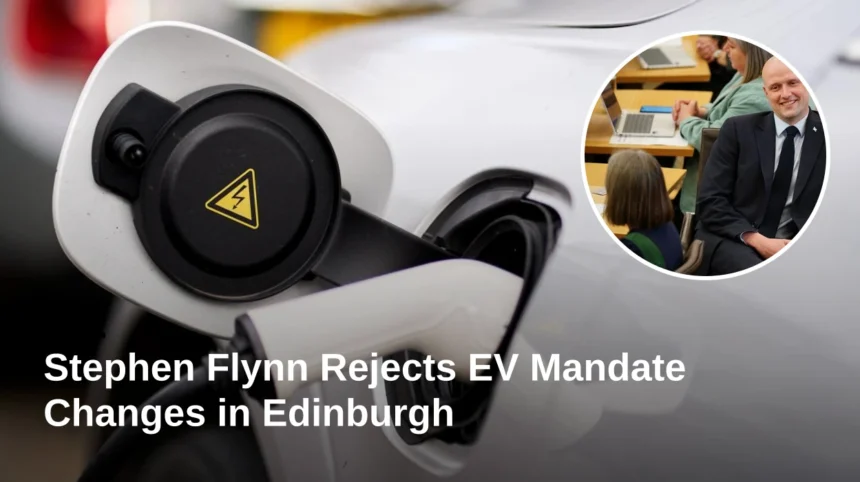
Edinburgh (Cardiff Daily) November 18, 2026 — Scottish Transport Secretary Stephen Flynn has warned that weakening the United Kingdom’s zero-emission vehicle mandate would be “wholly unacceptable”, as ministers consider changes sought by parts of the automotive industry. Stephen Flynn said the policy could not be altered without the agreement of the governments and parliaments of all four nations, while the Climate Change Committee warned that reducing the targets could jeopardise legally binding climate goals.
- Key Points
- Why has Stephen Flynn opposed changes to the electric vehicle mandate?
- What has the Climate Change Committee warned?
- What is the United Kingdom Government’s position?
- What happens next for the zero-emission vehicle mandate?
- What is the background to the dispute?
- How could the decision affect Stephen Flynn’s position?
Why has Stephen Flynn opposed changes to the electric vehicle mandate?
As reported by the York Press, Stephen Flynn said a weaker mandate would undermine the established four-nation approach to electric vehicle policy and hinder efforts by devolved governments to reduce vehicle emissions.[1] He said Scottish ministers opposed rolling back the targets because it could increase costs for consumers during the cost-of-living crisis and weaken efforts to cut emissions.
“It is wholly unacceptable that the UK Government is signalling a willingness to weaken ambition in relation to electric vehicles,” Stephen Flynn said, as reported by the York Press.[1]
Stephen Flynn said the United Kingdom Government should work with devolved administrations to strengthen climate action rather than undermine it. He also referred to the Climate Change Committee’s view that the mandate was working effectively and that its current trajectory should be maintained.[1]
What has the Climate Change Committee warned?
The Climate Change Committee said the United Kingdom was likely to miss its legal climate targets if the mandate was weakened.[3][7] In a letter to Transport Secretary Heidi Alexander, Climate Change Committee Chair Nigel Topping warned that reducing the targets could increase economic and energy-security costs, expose households to volatile fossil-fuel prices and damage long-term competitiveness as major export markets move towards electric vehicles.[2][3]
The current rules require zero-emission vehicles to make up an increasing share of manufacturers’ annual sales. The headline target for new cars rises from 33% in 2026 to 80% in 2030 and 100% by 2035.[5] Consultation options included reducing the 2030 target to 50%, 60% or 70%.[8]
What is the United Kingdom Government’s position?
A United Kingdom Government spokesperson said the Government remained committed to phasing out all new petrol and diesel cars by 2030, ensuring all new cars and vans sold from 2035 were zero-emission, and meeting legally binding net-zero targets.[2][3]
The spokesperson said the consultation would not change those commitments and was intended to support a “pragmatic and balanced approach” to the transition to zero-emission vehicles.[2] The Department for Transport said in a parliamentary response on November 9 that no policy decision had been taken.[5]
What happens next for the zero-emission vehicle mandate?
The consultation ran from August 14 to October 23, 2026, and ministers are reviewing responses from manufacturers, consumers and other stakeholders.[5][10] The Government is expected to publish its response by the end of 2026, with any approved changes taking effect from the 2027 compliance year.[5]
What is the background to the dispute?
The zero-emission vehicle mandate requires manufacturers to increase the proportion of electric vehicles in their annual sales. The existing framework sets an 80% zero-emission target for new cars and vans by 2030, rising to 100% by 2035.[3][5] Ministers opened a consultation after concerns from carmakers about meeting the targets, while climate advisers urged them to retain the current trajectory.[2][4] The dispute also concerns how vehicle policy is coordinated between the United Kingdom Government and the devolved administrations.[1]
How could the decision affect Stephen Flynn’s position?
A decision to reduce the mandate could intensify disagreement between the United Kingdom Government and devolved administrations over climate and transport policy. It could also prompt further scrutiny from the Climate Change Committee if weaker targets require alternative measures to meet legal emissions goals.[3][10] Retaining the current targets would preserve the existing timetable but leave manufacturers under pressure to increase electric vehicle sales rapidly. The Government’s final response will determine whether the current 2030 trajectory remains in place or changes from 2027.