Key Points
- Site Redevelopment: A vacant, deteriorating former women’s toilet block situated in the upper part of the historic Cathays Cemetery in Heath, Cardiff, is slated to be converted into a new community cafe.
- Dual-Building Strategy: Under the proposed scheme, the ladies’ conveniences will be repurposed to house the main cafe space, while the nearby former men’s toilet block will be refurbished to contain an accessible toilet and baby-changing facility alongside outdoor seating areas.
- Heritage Clearance: Cadw, the Welsh Government’s official historic environment agency, confirmed it raised no objections to the plans, determining that the project would result in only “minor and acceptable impacts on the registered historic park and garden.”
- Conservation Design: Submitted on behalf of applicant Neil Lewis and designed by Borley Architectural Design, the scheme adopts a “conservation-led approach” with a modest footprint and minimal signage to avoid over-commercialisation of the Victorian grounds.
- Financial Model: Planning documentation indicates the structures have been out of beneficial use for approximately 25 years (last used around 2003), noting that returning them to public service via private investment saves Cardiff Council significant restoration and maintenance expenditure.
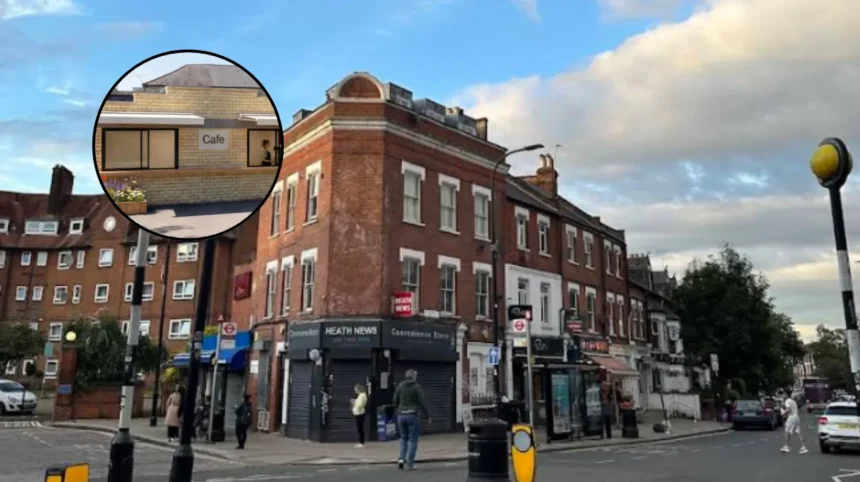
Cardiff (Cardiff Daily) August 13, 2026 –A long-disused public convenience block inside one of Cardiff’s most notable heritage grounds is set to undergo a full restoration, turning a dilapidated facility into a brand-new local eating spot. As reported by Kieran Molloy of Wales Online, a formal planning proposal submitted to Cardiff Council outlines the intention to convert the former ladies’ toilet block located within the upper portion of Cathays Cemetery in Heath into a functional community cafe.
The toilet structures, which are owned by the local authority, have remained redundant and unoccupied for over two decades, having last seen active public use around 2003.
Under the detailed specifications submitted by applicant Neil Lewis, the development will encompass two existing brick structures.
While the former women’s conveniences will be reconfigured internally to accommodate the food and drink outlet, kitchen facilities, and internal customer amenities, the adjacent former men’s toilet block is designated for complete refurbishment to house a fully accessible public toilet and baby-changing space.
Additionally, plans prepared by Borley Architectural Design include provisions for outside seating and tables, integrated behind the curved walls at the site’s entrance.
As highlighted by Local Democracy Reporter Kieran Molloy in coverage for Nation.Cymru, official planning documents argue that the scheme delivers “clear public and community benefits” while representing a “sustainable reuse of two redundant buildings.” Explaining the financial context, the application text reads:
“The toilet blocks have been out of beneficial use for ~25 years, and currently lay redundant and dilapidated. To bring them back into public service would be at huge expense and maintenance costs to Cardiff Council, unless otherwise privately funded, as proposed.”
How Will the Development Protect the Historic Victorian Heritage of the Site?
Because Cathays Cemetery is listed as a Grade II-registered historic park and garden of significant regional importance, the design strategy was required to meet stringent heritage and landscape parameters. As reported by Kieran Molloy of Wales Online, Cadw, the Welsh Government’s statutory historic environment body, formally assessed the scheme and offered no objections, stating that the conversion would lead to only
“minor and acceptable impacts on the registered historic park and garden.”
The site’s historical context is officially documented by Historic Wales, which notes that Cathays Cemetery is
“registered for its historic interest as a well-preserved large Victorian multi-denominational cemetery, retaining most of its original layout and ornamental evergreen planting,”
whilst containing
“some elaborate and interesting memorials dating from 1859 onwards.”
Addressing these historic sensitivities, the planning documentation emphasizes that the application buildings themselves represent small utilitarian additions to the wider ground rather than primary monuments.
As detailed by Kieran Molloy of Wales Online, the development applies a “conservation-led approach” that prioritises retaining original building fabric and materials. The application reads:
“It is considered that the proposal respects the character of the site and avoids overcommercialisation through the modest footprint and sympathetic/minimal signage.”
Furthermore, regarding operational dynamics and outdoor seating, the planning document clarifies:
“The seating areas will be dependent on weather and pre-organised events held at the cemetery, and in prior notice of the Bereavements department. The seating will be modest and carefully integrated in the areas behind the curved walls of the entrance to the cemetery.”
The application asserts that
“the provision of a café in addition to the accessible toilets and baby-changing facility are considered an enhanced community service.”
Explore More Local Cardiff News
Cardiff Student Prompts Custom Maths Syllabus Before Oxford Entry Cardiff 2026
Cardiff Heat Network Wins National Scheme of the Year Award Cardiff 2026
Background of the Particular Development
Cathays Cemetery, established in the mid-19th century and officially opened in 1859, stands as one of the United Kingdom’s largest and most historically intact Victorian burial grounds.
Spanning over 100 acres, it features Grade II-listed chapels, elaborate monuments, and extensive arboreal land. Over the decades, changing municipal budgets and evolving public utility needs left several small operational outbuildings across the city’s historic parks unfunded.
The toilet blocks in the upper section of Cathays Cemetery fell into disuse by 2003, subsequently suffering years of weather exposure, structural deterioration, and disrepair.
In recent years, Cardiff Council, like many local authorities across the United Kingdom, has explored public-private partnerships and commercial reuse options to preserve unlisted or auxiliary municipal structures without drawing directly from public funds.
Converting disused civic infrastructure—particularly public toilets and park lodges—into cafes, micro-businesses, or community hubs has become a growing trend across Welsh urban areas.
This development in Cathays Cemetery reflects a wider planning policy shift toward adaptive reuse, enabling private operators to foot the capital expenditure for structural restoration while offering revised amenities to visitors, local residents, and heritage enthusiasts.
Prediction: How This Development Can Affect the Local Community and Cemetery Visitors
The successful approval and execution of this conversion project is anticipated to bring tangible operational and social changes for several distinct groups across Heath and the wider Cardiff area:
For regular visitors, dog walkers, and individuals attending graves or memorial services, the introduction of a managed cafe provides an immediate upgrade in convenience.
The addition of a clean, modern accessible toilet and dedicated baby-changing unit fulfills a infrastructure gap that has existed since the original facilities closed in 2003.
The presence of low-impact, indoor and outdoor seating offers a quiet rest point, making extended visits to the historic grounds more accessible to elderly residents and families with young children.
From an architectural and heritage preservation standpoint, the privately funded venture secures the physical structure of two deteriorating municipal buildings that might otherwise have faced eventual demolition through neglect.
By adhering to Cadw’s guidance and using a conservation-led design with minimal signage and a restricted footprint, the development establishes a potential blueprint for how utility structures in sensitive Grade II-listed landscapes can be commercially repurposed without diluting the solemnity, Victorian character, or quiet environment of the surrounding cemetery.
For Cardiff Council and its Bereavements department, the private investment relieves the local authority of substantial repair liabilities and ongoing maintenance overheads during a period of tight council budgets.
Because the cafe’s seating and event schedules are planned in explicit coordination with the Bereavements department, operational protocols can be maintained to ensure that commercial activity does not overlap with or disrupt funeral corteges, memorial services, or formal cemetery proceedings.