Key Points:
- Cardiff Council has officially granted planning permission to Cardiff-based investment firm Avalon Glen to redevelop former Royal Mail and SA Brain & Co offices in Llanishen.
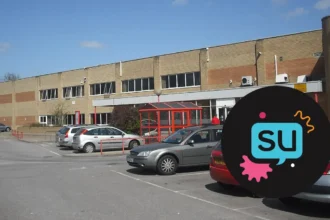
- The vacant commercial site—bounded by Ty Glas Avenue, Earlswood Road, and Parc Ty Glas—will be transformed into a major new leisure and sports destination.
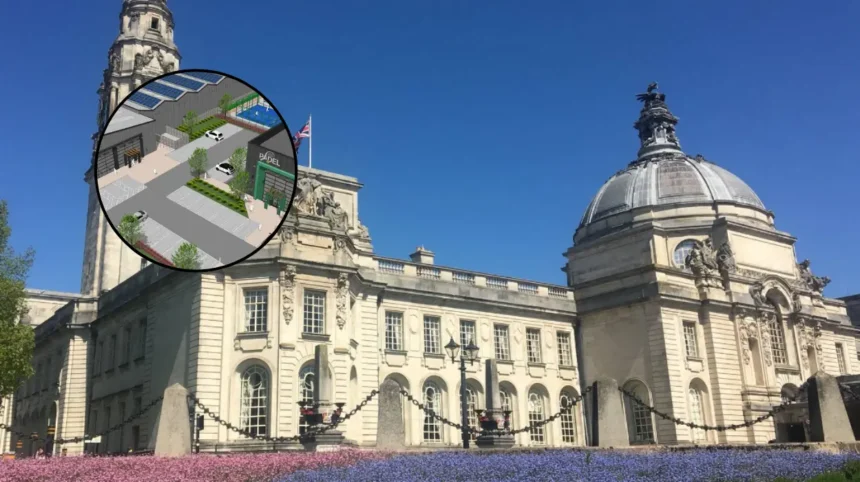
- The modernised development will feature seven padel courts (four indoor and three outdoor), an 11,000 sq ft fitness gym, a reception area, a small-scale café, and supporting amenities.
- The project involves demolishing the site’s front office block and sections of the existing warehouse, whilst preserving smaller commercial spaces to maintain a core employment footprint.
- Official planning documentation highlighted that the outdated buildings were “impossible to let” in their previous condition, noting that private investment will arrest local visual decay and upgrade infrastructure.
- Parking provisions will be retained and laid out more efficiently, with designated accessible spaces for visitors and commercial tenants.
Llanishen (Cardiff Daily) August 20, 2026 – Cardiff Council has officially approved plans submitted by Cardiff-based property investment firm Avalon Glen to convert a disused commercial development in North Cardiff into a comprehensive fitness and sports complex. The site, which historically served as distribution and administrative offices for both Royal Mail and Welsh brewery SA Brain & Co, encompasses a substantial parcel of land surrounded by Ty Glas Avenue, Earlswood Road, and Parc Ty Glas in Llanishen.
- Key Points:
- What facilities will be included in the new leisure development?
- How do developers justify the transformation of the site?
- What is padel and why is it included in the project?
- Background of the particular development
- Prediction: How this development can affect local residents, businesses, and sports enthusiasts
As reported by Kieran Molloy, Local Democracy Reporter for WalesOnline and Nation.Cymru, planning documentation submitted alongside the application stated that the vacant buildings had become “impossible to let” in their existing state. In response, the landowner is making a substantial capital investment to repurpose the site sustainably, shifting its primary focus towards health and leisure while maintaining key commercial uses.
What facilities will be included in the new leisure development?
According to the planning officer’s report cited by reporter Kieran Molloy of Nation.Cymru, the newly approved leisure hub will feature an 11,000-square-foot fitness gym alongside seven padel courts. Four of these padel courts will be constructed indoors within the reconfigured structure, while three courts will be situated outdoors.
The completed complex will also house a dedicated reception area, a small-scale café serving visitors and athletes, and associated support amenities including modernized changing facilities. To facilitate the layout, the developer plans to demolish the site’s front office block as well as selected portions of the existing warehouse frame.
As detailed in the application from architectural consultancy CW Architects, as noted by WalesOnline, the development seeks to retain a core commercial aspect by offering smaller, refurbished business spaces suitable for local enterprises alongside the main sports venue. The overall count of vehicle parking spaces at the venue will be maintained, but the layout will undergo restructuring to improve traffic flow and increase the availability of dedicated accessible parking bays.
How do developers justify the transformation of the site?
In official planning submissions prepared by CW Architects and cited by Kieran Molloy for WalesOnline, representatives for Avalon Glen emphasized the necessity of architectural intervention to prevent long-term decline. As reported by Kieran Molloy, planning documents state:
“The proposals will represent an increase in the visual quality of the built environment in this location and arrest visual decay by repurposing and reinventing buildings in a more visually pleasing manner”.
The documentation further outlined the balance between commercial retention and community leisure, stating:
“The proposal retains a good core of employer uses on this tired, outdated employment site. The current facility is impossible to let in its current state and the owner is hereby making a considerable investment to change its prospects by sustainable use of the buildings in a new way and adding a modicum of ‘other’ uses”.
What is padel and why is it included in the project?
Padel is a fast-growing racket sport that combines elements of both tennis and squash. Typically played in doubles format within an enclosed court roughly one-third smaller than a standard tennis court, the sport utilizes solid, stringless rackets and depressed-pressure tennis balls. The court features a central net and service lines similar to tennis, but players are permitted to play the ball off glass walls surrounding the court, akin to squash.
The inclusion of seven dedicated courts reflects a wider, rapid increase in demand across South Wales and the wider United Kingdom for specialized indoor and outdoor padel venues.
Background of the particular development
The industrial and commercial sectors of Llanishen, situated roughly three and a half miles north of Cardiff city centre, have historically served as crucial operational nodes for national and regional businesses. The Parc Ty Glas estate and surrounding business corridors previously accommodated high-volume logistics and distribution hubs for prominent entities, including Royal Mail postal operations and distribution centers for Cardiff’s iconic SA Brain & Co brewery.
Over the past decade, shifting commercial demands, urban centralization, and changes in corporate logistics left several larger industrial spaces in North Cardiff redundant or structurally outdated. Traditional occupiers frequently require modern specifications, such as higher clear-internal ceiling heights, energy-efficient building envelopes, and tailored loading infrastructure, which legacy mid-20th-century office and distribution blocks fail to provide without extensive overhaul.
Consequently, industrial areas surrounding Ty Glas Avenue have undergone a transition towards mixed-use employment, modern trade counter parks, and commercial leisure facilities. Property investment firms like Avalon Glen have sought planning permissions across similar commercial sites in Cardiff to adapt vacant industrial architecture into alternative revenue-generating uses. The approval of this development aligns with broader local authority planning framework policies in South Wales that prioritize urban brownfield regeneration and brownfield repurposing over greenfield expansion.
Explore More Llanishen News
20,000 Fined Over £500k for Llanishen Rat Run, Cardiff 2026
Cardiff Met Student Lands Data Job from Rugby, Llanishen 2026
Prediction: How this development can affect local residents, businesses, and sports enthusiasts
The transformation of the former Royal Mail and Brains distribution offices into a sports and commercial hub is anticipated to exert several direct effects on local stakeholders in North Cardiff:
- For Local Residents: Residents in Llanishen, Lisvane, and surrounding northern suburbs will gain immediate, localized access to a modern community health and fitness complex, reducing the need to travel to central Cardiff or outer-ring private facilities. However, residents living directly adjacent to Ty Glas Avenue and Earlswood Road may experience localized shifts in vehicular traffic flow and parking usage, particularly during peak evening and weekend hours when outdoor court usage and recreational activity are highest.
- For Surrounding Businesses and Commercial Tenants: The introduction of an 11,000 sq ft gym, a public café, and multiple sports courts will generate steady daily footfall in Parc Ty Glas. Nearby retail outlets, eateries, and trade counter operators could see increased secondary patronage from venue visitors. Additionally, the retention of smaller, modernized employment units on-site ensures that small-to-medium enterprises (SMEs) retain accessible commercial space in a rehabilitated business environment.
- For Sports Enthusiasts and the Regional Padel Community: The establishment of seven dedicated courts (including four covered indoor courts) will significantly expand Cardiff’s racquet sports infrastructure. By providing year-round playing capability independent of weather conditions, the venue is poised to become a central hub for regional padel tournaments, club leagues, and introductory coaching programs, accommodating both social players and competitive athletes across South Wales.