Key Points
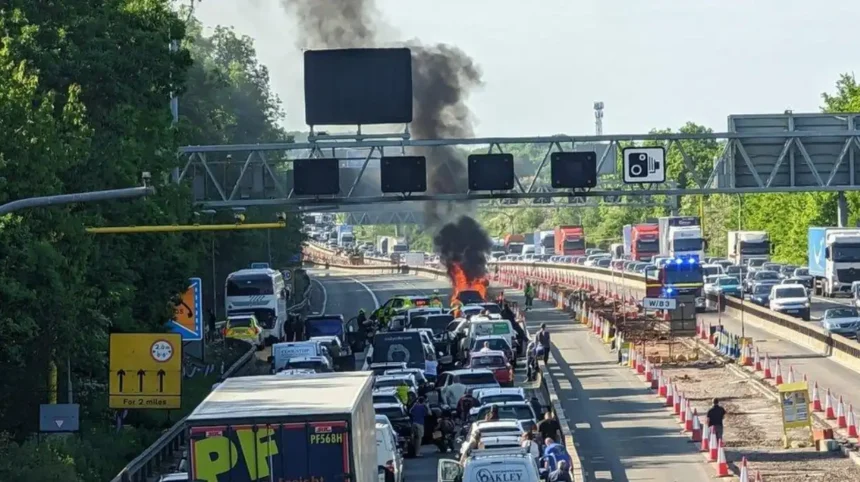
- A serious multi-vehicle collision occurred on the M4 motorway near Cardiff on Tuesday morning, November 10, 2026.
- The crash blocked multiple lanes in both directions between Junction 33 (Capel Llanilltern) and Junction 32 (Coryton).
- Traffic monitoring sources and emergency updates reported debris scattered across the carriageway, forcing motorists onto the hard shoulder.
- Severe congestion built up rapidly, with queues stretching across multiple junctions and average speeds dropping significantly in both the westbound and eastbound directions.
- Traffic Wales and local reporting agencies issued active travel warnings, advising drivers to seek alternative routes or expect substantial delays.
Cardiff, Wales (Cardiff Daily) November 10, 2026 — Motorists traveling along a vital stretch of the M4 near Cardiff faced severe gridlock and substantial travel disruption on Tuesday morning following a multi-vehicle collision that blocked lanes in both directions and scattered debris across the carriageway.
- Key Points
- Why did a multi-vehicle crash on the M4 near Cardiff cause widespread travel chaos?
- How severely was traffic disrupted across the motorway network?
- What emergency response measures were deployed at the scene?
- Background of the particular development
- Prediction on how this development can affect commuters, transport networks, and local businesses
Why did a multi-vehicle crash on the M4 near Cardiff cause widespread travel chaos?
The sudden morning incident brought significant sections of South Wales’ busiest arterial motorway to a near-standstill, stranding commuters and freight vehicles alike. As reported by Ellie Gosley of Wales Online,
“Drivers travelling on the M4 near Cardiff are facing long delays this morning due to a crash. The collision has closed multiple lanes in both directions, and congestion is quickly building.”
The disruption stemmed from a multi-vehicle collision that took place during the height of the morning rush hour. According to updates provided by Traffic Wales South via official channels, the collision impacted the crucial corridor between Junction 33 at Capel Llanilltern and Junction 32 at Coryton. Initial assessments from the scene indicated that multiple lanes were abruptly shut down, restricting the flow of traffic and forcing transport authorities to intervene immediately.
How severely was traffic disrupted across the motorway network?
The physical impact of the collision quickly translated into severe logistical bottlenecks for the surrounding regional road network. As detailed by the South Wales Argus, the scale of the blockage forced authorities to manage cascading queues stretching back across multiple junctions.
Traffic data compiled during the incident outlined the severity of the slowdown:
- Westbound Carriageway: Three lanes were reported blocked near Junction 33, compelling frustrated drivers to utilize the hard shoulder just to crawl past the wreckage. Queues stretched back heavily, with vehicles experiencing delays exceeding 20 minutes between Junction 30 and Junction 33, averaging speeds of roughly 10 mph.
- Eastbound Carriageway: Though the primary collision occurred on specific lanes, rubbernecking and residual congestion caused severe knock-on delays. Commuters traveling eastbound faced tailbacks lasting upwards of 33 minutes between Junction 35 and Junction 30, with average speeds dropping to a sluggish 5 mph.
As noted in regional reports by outlets such as Wales 247, the incident effectively paralyzed normal transit times for thousands of local workers and commercial hauliers. Drivers were cautioned that debris strewn across the tarmac presented an active hazard, requiring emergency response teams to execute delicate clearing operations before full lane capacity could be safely restored.
Explore More Local Cardiff News
Cardiff University Vice-Chancellor Criticised Over Cuts Language Cardiff 2026
James Evans Welcomes Gwernyfed Students to Welsh Parliament Senedd 2026
What emergency response measures were deployed at the scene?
Traffic Wales officials, alongside emergency response units, mobilized swiftly to manage the unfolding crisis. Monitoring systems and motorway traffic cameras highlighted the heavy presence of recovery vehicles working to clear the wreckage.
As traffic monitoring feeds recorded, drivers navigating the stretch between Capel Llanilltern and Coryton were met with rolling roadblocks and emergency cones redirecting stream traffic. Public safety advisories were broadcast across regional digital media platforms, urging motorists to check live traffic feeds before embarking on journeys through South Wales and to allocate significantly extended travel times for morning appointments.
Background of the particular development
The M4 motorway serves as the economic lifeblood and primary strategic highway corridor running across South Wales, connecting major urban hubs such as Swansea, Cardiff, and Newport directly to the English border. Because this specific section near Cardiff handles intense volumes of daily commuter traffic, commercial freight, and inter-city transit, any unexpected lane closure or multi-vehicle collision instantly triggers a domino effect across the wider regional transport grid.
Junctions 32 (Coryton) and 33 (Capel Llanilltern) are particularly critical nodes that absorb heavy inflows from local link roads and the capital’s northern outskirts. Historical traffic data for this corridor consistently demonstrates that accidents during peak morning windows can add hours to standard journey times, heightening scrutiny on infrastructure resilience, incident clearance times, and regional traffic management protocols.
Prediction on how this development can affect commuters, transport networks, and local businesses
This sudden M4 collision and the ensuing gridlock will likely prompt immediate repercussions for local commuters, logistics operators, and businesses across the Cardiff Capital Region. For daily commuters, repeated major incidents on this artery reinforce growing demands for enhanced commuter rail options and flexible working models to mitigate reliance on a single vulnerable motorway route.
For commercial transport and delivery services, unexpected delays of over half an hour directly translate into financial inefficiencies, missed delivery windows, and disrupted supply chains across South Wales. Furthermore, municipal authorities and regional planners will likely face renewed pressure to accelerate intelligent transport systems, dynamic speed management, and faster clearance deployment strategies to safeguard the M4 corridor against prolonged, paralyzing bottlenecks in future incidents.