Key Points
- National Museum Cardiff is described by its boss as surviving each week as a “mini miracle” because of the scale of repair work needed.
- Amgueddfa Cymru – Museum Wales chief executive Jane Richardson said no final decision has been made on how the renovation will be handled.
- Richardson said a prolonged closure is a realistic option, but she did not confirm a four-year shutdown.
- The Public and Commercial Services Union wants guarantees that there will be no compulsory redundancies if the site closes for repairs.
- The Welsh government says it has already allocated up to £4.8m for urgent improvement works and to help protect Wales’s national collections.
- The museum says the building needs work in every corner and that the project must be delivered in the most efficient and cost-effective way possible.
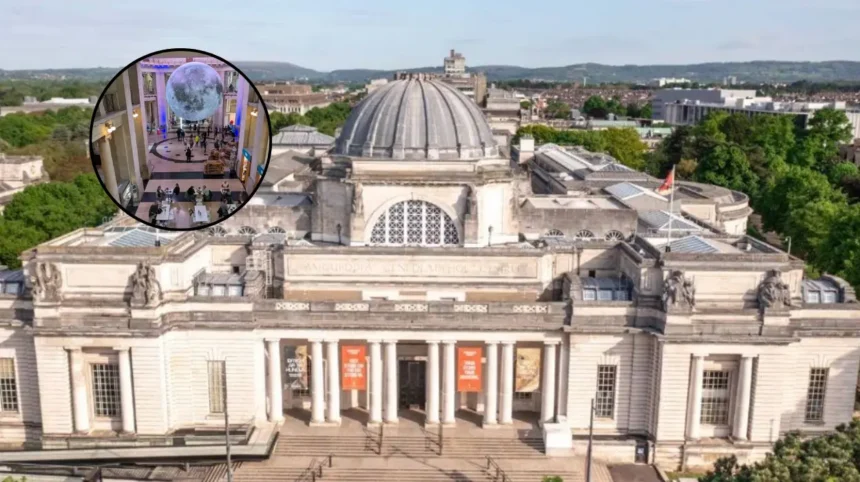
Cardiff (Cardiff Daily) July 17, 2026 – National Museum Cardiff is surviving each week as a “mini miracle” because of the amount of repair work required across the building, according to the chief executive of Amgueddfa Cymru – Museum Wales, Jane Richardson. As reported by BBC Wales, Richardson said the museum’s condition is so serious that every wall, ceiling and space needs attention, although no final decision has yet been taken on the best way to carry out the work.
- Key Points
- What did Jane Richardson say about the building?
- Why is a prolonged closure being discussed?
- What are the unions and staff concerned about?
- What has the Welsh government said?
- What does this mean for the museum’s future?
- What is the background to this development?
- What could happen next for visitors and staff?
What did Jane Richardson say about the building?
Richardson said the project needed at National Museum Cardiff is “massive” and involves “every single corner and part of the museum”, according to BBC Wales.
She added that it was too soon to say what the preferred option would be, but she did not rule out a four-year closure if that turned out to be the most realistic way to complete the work.
She also said the museum had to be responsible with public money and identify the most efficient route to deliver renovation on such a scale.
That point reflects the broader newswriting principle that the most important facts should come first and that key details should be developed in descending order of importance.
Why is a prolonged closure being discussed?
Richardson told BBC Wales that a prolonged closure is a realistic option because the work is extensive and affects the whole museum.
The report says the building’s problems are not limited to one area, which is why the renovation planning is being treated as a major project rather than a standard maintenance exercise.
The museum leadership is therefore weighing how to complete the work in a way that balances cost, practicality and the need to protect the collection. BBC Wales reported that the final decision has not been made, so the timeframe remains uncertain.
What are the unions and staff concerned about?
The Public and Commercial Services Union said its members want guarantees that there will be no compulsory redundancies if the site closes for repairs.
According to the BBC Wales report, this concern arose after rumours that the museum could close for four years while the work is carried out.
That puts staffing questions at the centre of the debate, alongside the repair programme itself. Any prolonged closure would not only affect the building and visitors, but also the people working there and the way the museum’s day-to-day operations are managed.
What has the Welsh government said?
The Welsh government said it has already allocated up to £4.8m to support the most urgent improvement works and help protect the nation’s national collections.
It also said it is in conversations about future requirements, suggesting further funding discussions may still be needed as the museum decides on the next stage.
That support indicates the issue is being treated as a matter of public heritage and institutional upkeep, not simply a local facilities problem.
The government funding mentioned in the BBC Wales report appears to be aimed at immediate priorities while longer-term needs are worked out.
What does this mean for the museum’s future?
The museum’s leadership is now focused on determining the most practical and affordable way to complete a large-scale renovation.
Richardson’s comments suggest that the museum is trying to avoid short-term decisions that could make the project more expensive or less effective in the long run.
Because no final decision has been made, the situation remains open, but the possibility of a longer shutdown is now clearly on the table.
The report shows that the condition of the building itself is driving the debate, rather than an optional upgrade or expansion.
What is the background to this development?
National Museum Cardiff is one of Wales’s major cultural institutions, and the current discussion comes after ongoing concerns about the state of the building.
BBC Wales reported that the museum’s chief executive took office in 2023 and is now overseeing a situation in which major repairs are being considered across the site.
The wider background is that heritage buildings often require large and expensive maintenance programmes when long-term wear begins to affect multiple parts of a structure.
In this case, the issue has become significant enough that museum leaders, staff representatives and the Welsh government are all involved in discussions about what happens next.
What could happen next for visitors and staff?
If the museum closes for a prolonged period, visitors to Cardiff would lose access to one of Wales’s key cultural venues for an extended time.
Staff would also face uncertainty over work arrangements, and the union’s call for redundancy guarantees suggests employment terms could become a central issue.
For the museum itself, the most likely immediate next step is more detailed planning on how to carry out the repairs and whether the work can happen in phases or requires a full closure.
The BBC Wales report indicates that the final decision will depend on what is judged to be the most realistic and cost-effective option.