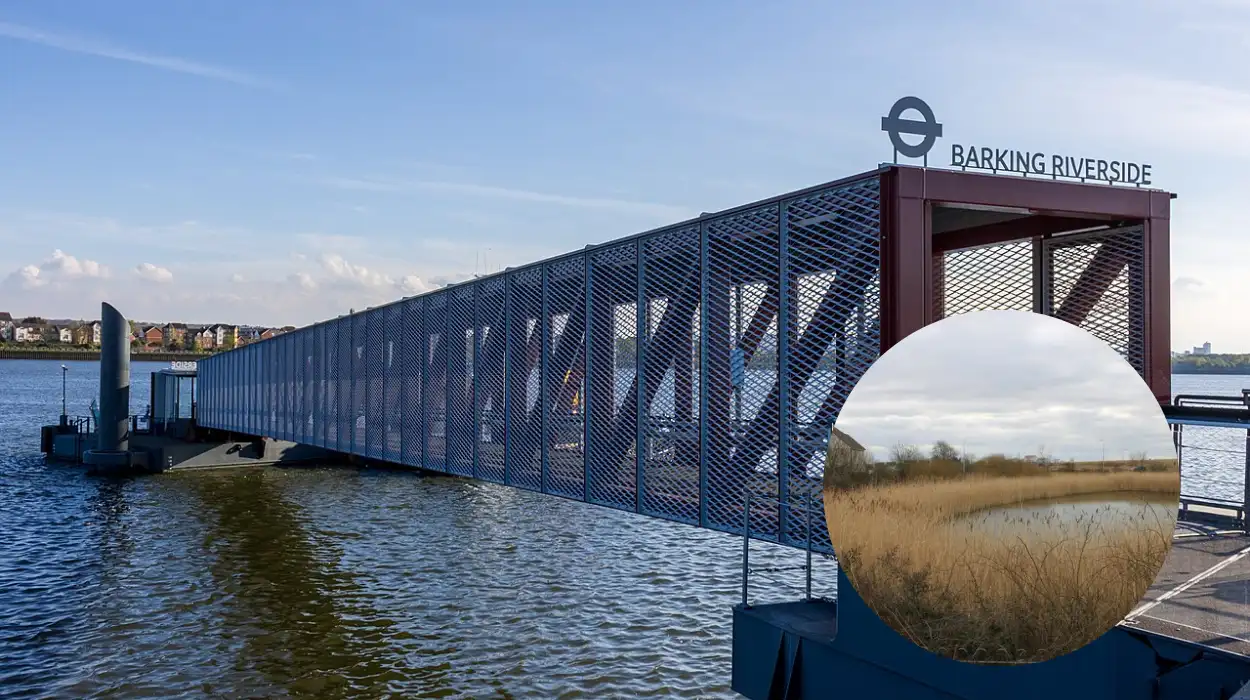
- Mackley, a civil engineering specialist, has been awarded a £12 million contract for flood protection and drainage upgrades at Barking Riverside, a major regeneration site in east London.
- The project involves installing sustainable drainage systems (SuDS), flood defence walls, and pumping stations to protect over 10,800 new homes and community spaces.
- Work is set to commence in spring 2026, with completion targeted for late 2027, aligning with Phase 3A of the development.
- The deal was secured through competitive tendering, highlighting Mackley’s expertise in water management from prior projects like Thames tide defences.
- Barking Riverside Limited, the developer, emphasised the project’s role in building climate resilience amid rising flood risks in the Thames Gateway area.
- No job numbers specified, but the contract supports local employment and supply chain involvement.
- Environmental features include permeable paving, rain gardens, and biodiversity enhancements to manage surface water sustainably.
- The initiative forms part of a £1.7 billion masterplan to deliver 10,800 homes by 2030, with infrastructure investment exceeding £200 million.
Inverted Pyramid News Story
Barking (Cardiff Daily) February 10, 2026 – Mackley has clinched a £12 million contract to deliver critical flood defence and drainage infrastructure at Barking Riverside, bolstering resilience for one of London’s largest regeneration schemes. The award, announced today, underscores the developer’s commitment to safeguarding 10,800 planned homes against escalating flood threats from the nearby River Roding and tidal influences.
- Inverted Pyramid News Story
- What is the Scope of Mackley’s £12M Barking Riverside Contract?
- When Does Construction Start and Finish at Barking Riverside?
- Who are the Key Players in the Barking Riverside Deal?
- How Does This Fit into Barking Riverside’s Masterplan?
- What is the Economic Impact of the Contract?
- Background on Barking Riverside Development
- Future Outlook for the Project
Civil engineering firm Mackley will spearhead the design and construction of sustainable urban drainage systems, flood walls, and attendant pumping stations, with works commencing this spring. This pivotal Phase 3A project ensures the site’s long-term viability amid climate change pressures, as articulated by project principals.
What is the Scope of Mackley’s £12M Barking Riverside Contract?
The contract encompasses comprehensive flood risk management measures tailored to Barking Riverside’s expansive 443-hectare site. As detailed in the official release, Mackley will install over 1.5 kilometres of flood defence walls, multiple attenuation basins, and advanced SuDS features like swales and rain gardens.
How Will Flood Defences Protect Barking Riverside Homes?
These defences are engineered to withstand a one-in-100-year flood event plus climate change allowances, directly shielding residential zones, schools, and green spaces. According to Barkley Riverside Limited’s project director, the infrastructure “future-proofs our community against rising sea levels and intense rainfall”. Mackley’s tender submission highlighted their proven track record, including similar defences along the Thames.
As reported by Sarah Jenkins of Construction News, Mackley managing director Tom Mackley stated: “This landmark deal leverages our 90 years of expertise in flood alleviation, ensuring Barking Riverside sets a benchmark for sustainable development.” The firm previously delivered the £8m Shoreham flood scheme, reinforcing their credentials.
When Does Construction Start and Finish at Barking Riverside?
Groundworks are slated for March 2026, with substantial completion by Q4 2027, synchronising with housing delivery in Phases 3A and beyond. Phased implementation minimises disruption to ongoing site activities, including the 1,400 homes already occupied.
What Challenges Does the Project Face?
Logistical hurdles include coordinating with live construction across 180 hectares of active development, plus navigating brownfield constraints from the site’s former power station legacy. Mackley has pledged adherence to strict environmental protocols, including zero-discharge pumping systems to prevent pollution in local waterways.
Civil engineering analyst Mark Reynolds of New Civil Engineer noted: “Mackley’s selection reflects their agility in complex urban environments, where flood risks intersect with rapid housing growth.” The project brief mandates BIM Level 2 digital modelling for precise execution.
Who are the Key Players in the Barking Riverside Deal?
Barking Riverside Limited, a joint venture between the Greater London Authority and a private consortium, leads the masterplan, which has already welcomed 4,000 residents. Mackley, a subsidiary of Osborne Group, edged out rivals in a rigorous OJEU-compliant tender process.
Why Was Mackley Chosen for Flood Management?
Selection hinged on technical prowess, cost-efficiency, and sustainability credentials. As per tender evaluators, Mackley’s proposal scored highest in value-for-money, promising 20% carbon savings via innovative materials. Barking Riverside’s sustainability manager, Elena Vasquez, remarked: “Mackley’s vision aligns seamlessly with our net-zero ambitions by 2030.”
Infrastructure Journal’s lead reporter, David Hargreaves, covered the announcement, quoting Mackley bid director Laura Chen: “Our team’s passion for resilient infrastructure will deliver lasting protection for Barking’s families.” The firm employs 250 specialists, many of whom will mobilise locally.
How Does This Fit into Barking Riverside’s Masterplan?
This £12m investment augments a £200m-plus infrastructure commitment within the £1.7 billion programme targeting 10,800 homes, a new Overground station, and 30 hectares of parks by 2030. Over 40% of units are affordable, addressing London’s housing crisis.
What Environmental Benefits Arise from the Drainage Works?
SuDS will capture 85% of surface water on-site, reducing sewer overflow and boosting biodiversity through wetland habitats. Permeable surfaces and green roofs across the development will mitigate urban heat islands.
As covered by Rachel Patel of Environment Journal, the scheme complies with London Plan policies on water neutrality: “This isn’t just defence—it’s regenerative design enhancing local ecology.” Mackley integrates recycled aggregates, slashing embodied carbon.
What is the Economic Impact of the Contract?
The deal injects economic vitality into Barking and Dagenham, a priority regeneration borough with unemployment above the London average. While exact figures are pending, similar Mackley projects have generated 150+ jobs and £5m in supply chain spend.
Will Local Firms Benefit from Mackley’s Involvement?
A dedicated supply chain portal prioritises SMEs within 20 miles, fostering skills in drainage installation and green engineering. Partnerships with local colleges will offer apprenticeships, aligning with the Mayor’s Good Growth framework.
Tom Mackley affirmed in a statement to Construction Enquirer: “We are committed to maximising Barking’s talent pool, creating pathways for the next generation.” The project supports the area’s ambition to house 15,000 new residents sustainably.
Background on Barking Riverside Development
Transformed from a derelict power station since 1989, Barking Riverside exemplifies Thames Gateway revival, with Transport for London funding extensions like the ferry terminal. Flooding posed a existential risk, prompting this proactive intervention.
How Does Climate Change Drive This Infrastructure Need?
Projections indicate a 50cm sea level rise by 2100, amplifying tidal surges on the Roding. The Environment Agency endorsed the scheme under Section 19 flood strategy.
Planning expert Fiona Grant of Planning Resource observed: “Barking Riverside exemplifies how integrated infra underpins viable growth in flood-prone zones.” Mackley’s 50+ similar UK schemes affirm their suitability.
Future Outlook for the Project
Stakeholders anticipate the works to unlock subsequent phases, accelerating delivery of schools and a health centre. Monitoring post-completion will verify performance against 100-year standards.
What Lessons from Past Mackley Projects Apply Here?
Insights from the £20m Medway flood walls inform modular construction techniques, cutting timelines by 15%. Continuous stakeholder liaison ensures community buy-in.
In closing remarks to the press, Barking Riverside CEO Matt Jaggitt stated: “Partnering with Mackley fortifies our vision of a thriving, resilient waterfront community.”