Key Points
- A custom-made bogie drop has been installed at Cardiff Canton depot to speed up maintenance of TfW Rail trainsets.
- The unit allows removal of underframe equipment such as bogies, wheelsets, transformers and cooling units from Stadler Flirt multiple-units and other rolling stock.
- The bogie drop has a 60-tonne rollover capacity and uses mini jacks to support car bodies with articulated bogies.
- The installation reduces the need to send vehicles to other depots, shortening out-of-service time and enabling faster turnarounds.
- Transport for Wales (TfW) says the facility will be particularly valuable in autumn, when leaf mulch and adverse weather increase demand for rapid maintenance.
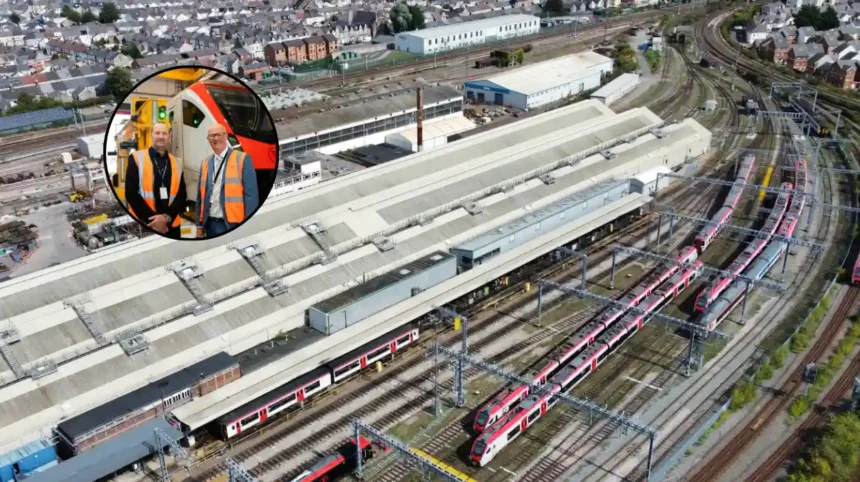
Cardiff (Cardiff Daily) July 21, 2026 – A custom-made bogie drop supplied by Mechan has been installed at Cardiff Canton depot to speed up maintenance work on TfW Rail trainsets, enabling staff to remove and refit heavy underframe components more quickly and reducing the need to transfer vehicles to other maintenance centres.
- Key Points
- What components can the new bogie drop handle, and which train types will benefit?
- How will the bogie drop change maintenance operations at Cardiff Canton depot?
- Will the unit help TfW cope with seasonal maintenance pressures?
- Who supplied the bogie drop and what technical features does it include?
- What operational benefits did TfW highlight for passengers and fleet availability?
- Are there safety or technical reasons for installing a bogie drop rather than using alternative methods?
- What does the installation mean for Cardiff Canton depot’s role in regional maintenance?
- How might this affect maintenance staff workload and training needs?
- What are the broader implications for network resilience and timetable reliability?
- Background of the particular development
- Prediction — how this development can affect passengers, staff and operations
What components can the new bogie drop handle, and which train types will benefit?
As reported by Mechan, the supplier, the unit is designed to remove underframe equipment including bogies, wheelsets, transformers and cooling units from Stadler Flirt multiple-units and a range of other rolling stock. The bogie drop has a rollover capacity of 60 tonnes and incorporates mini jacks that act as car-body supports, a feature intended to accommodate Stadler’s articulated bogie arrangement.
How will the bogie drop change maintenance operations at Cardiff Canton depot?
Transport for Wales told local and national outlets that installing the bogie drop will reduce the time trainsets spend out of service by enabling maintenance staff to perform heavy underframe work on-site rather than sending vehicles elsewhere.
That change should cut turnaround times for vehicles requiring bogie or wheelset attention, allowing TfW to restore units to service more quickly and maintain schedule resilience.
Will the unit help TfW cope with seasonal maintenance pressures?
Transport for Wales has said the new equipment will be especially important in autumn, when leaf mulch adheres to rails and combined with adverse weather conditions increases the frequency of faults that require rapid intervention. By allowing staff to complete complex underframe tasks on-site, the depot can respond faster during periods of heightened demand.
Who supplied the bogie drop and what technical features does it include?
Mechan, the supplier, described the unit as custom-made for Cardiff Canton depot. The installation’s key specifications include a 60-tonne rollover capacity and integrated mini jacks that support the car body while bogies are removed — an arrangement suited to the articulated bogies used on Stadler Flirt trains. Mechan’s statement framed the installation as enabling the removal and refit of heavy components safely and efficiently.
What operational benefits did TfW highlight for passengers and fleet availability?
Transport for Wales emphasised that shorter downtime for trainsets should improve fleet availability, reducing the number of units unavailable for timetabled services.
By avoiding transfers of vehicles to distant workshops, the operator expects savings in time and operational disruption, which could lead to more reliable services for passengers.
Are there safety or technical reasons for installing a bogie drop rather than using alternative methods?
Mechan’s description of the equipment highlights both capacity and the means to support car bodies while bogies are removed, addressing the technical challenge posed by articulated bogies on certain multiple units. Performing such work in a purpose-built facility reduces the risks and logistical complexity inherent in moving heavy components between sites.
What does the installation mean for Cardiff Canton depot’s role in regional maintenance?
With the new bogie drop, Cardiff Canton depot strengthens its capability to undertake intermediate to heavy underframe maintenance on TfW’s fleet, particularly Stadler Flirt units.
This enhances the depot’s strategic role in maintaining regional rolling stock readiness and could reduce pressure on other maintenance centres previously relied upon for bogie and wheelset work.
How might this affect maintenance staff workload and training needs?
Mechan and TfW have indicated the equipment will be operated by depot staff. Using a custom bogie drop with mini jacks tailored for articulated bogies may require specific training and updated safety procedures for engineers and workshop teams.
TfW’s operational briefings will likely include training on the unit’s safe use to ensure efficient turnaround and compliance with maintenance standards.
What are the broader implications for network resilience and timetable reliability?
Faster on-site turnaround for bogie and underframe repairs should contribute to improved fleet resilience and fewer service cancellations or short-notice alterations caused by out-of-service units.
By reducing transit times to distant workshops and expediting repairs, the depot can help maintain more consistent service patterns across TfW’s network.
Background of the particular development
Transport for Wales has steadily invested in depot infrastructure to support the modernisation of its fleet since franchising and fleet renewal projects accelerated in the 2010s and early 2020s.
Cardiff Canton depot is a principal maintenance hub for TfW, servicing a variety of units used across the Wales and Borders network. Stadler Flirt multiple-units form a significant portion of TfW’s newer fleet;
their articulated bogie design delivers operational benefits but requires specialised maintenance approaches. Historically, heavy underframe work such as bogie exchanges or wheelset removals often necessitated sending vehicles to specialised workshops.
That process extended out-of-service times and introduced additional transport and scheduling complexity.
The installation of a custom bogie drop at Cardiff Canton follows similar depot upgrades elsewhere intended to decentralise maintenance capability and reduce reliance on a small number of heavy overhaul facilities. Suppliers such as Mechan design bespoke lifting and support equipment when operators adopt mixed fleets with differing bogie and underframe arrangements, ensuring safe, repeatable procedures for critical maintenance tasks.
Seasonal challenges—particularly autumn leaf fall leading to rail contamination and traction or braking faults—have long been a predictable pressure on train maintenance regimes, prompting operators to seek faster on-site solutions.
Prediction — how this development can affect passengers, staff and operations
- Passengers: Reduced out-of-service time for trainsets should lead to improved fleet availability and potentially fewer last-minute cancellations or service alterations. Over time, that could enhance punctuality and reliability, particularly during autumn when maintenance demand rises.
- Depot staff: The new equipment should streamline workflows for engineers and fitters who undertake bogie and wheelset work, but it will require targeted training and updated safety protocols. Workload may shift toward more concentrated, on-site heavy maintenance rather than vehicle transfers.
- Operations: Faster turnaround will cut the logistical burden and resource costs of moving vehicles to external workshops. This could allow TfW to respond more promptly to faults and to maintain a higher proportion of its fleet in traffic, improving timetable resilience.
- Network resilience: With a primary depot able to carry out complex underframe repairs, TfW can reduce dependency on scarce external facilities, making the network less vulnerable to bottlenecks in the maintenance supply chain.
- Seasonal readiness: The depot will be better equipped to handle autumn-related faults caused by leaf mulch and adverse weather, reducing peak-period disruptions and improving short-term operational stability.